Echoes of Aincrad Combat Guide: Systems, Mechanics, and Strategies
For years, every Sword Art Online game has let us step into Kirito’s shoes. That was fun for a while, but it never truly captured what many longtime fans imagined while watching the anime: What if I were one of the players trapped inside Aincrad? What weapon would I choose? Which guild would I join? Would I survive the higher floors?
That’s exactly why Echoes of Aincrad immediately grabbed my attention.
After spending time studying the combat mechanics, watching gameplay demonstrations, reading community discussions, and comparing impressions from players, one thing became very clear: this isn’t another flashy button-masher. The combat system actually expects you to think before every fight.
If you’ve played games like Monster Hunter, Elden Ring, or even older SAO titles, you’ll recognize some familiar ideas, but Echoes mixes them together in a way that feels surprisingly fresh. Winning isn’t about dealing the highest damage possible—it’s about managing your resources, understanding enemy patterns, and knowing when not to attack.
Here’s what stood out to me the most.
Combat Is Really About Three Resources, Not One
One of the smartest design decisions is that you’re constantly watching three different gauges instead of only your HP.
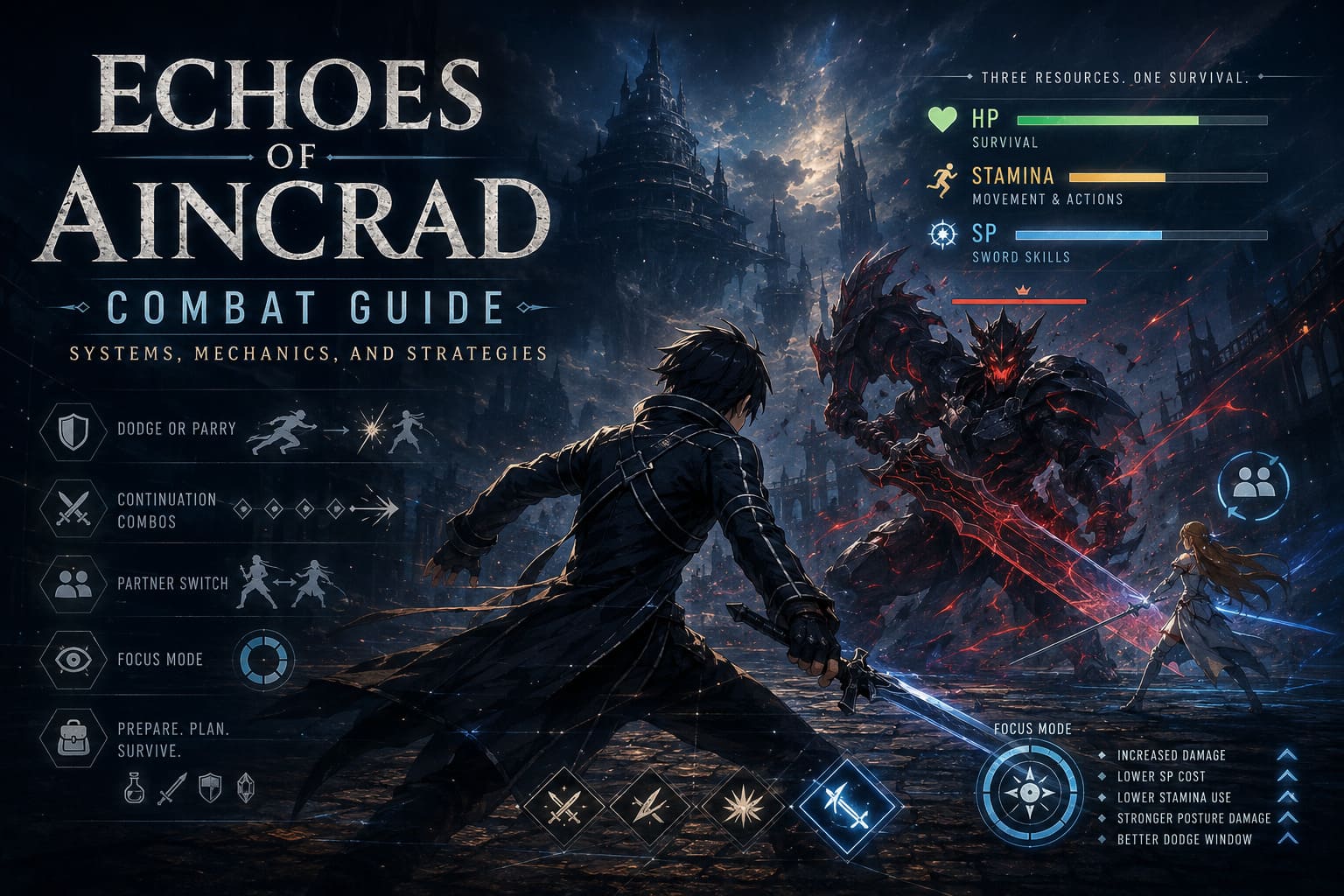
| Resource | Why It Matters | Biggest Mistake |
|---|---|---|
| HP | Your survival | Getting greedy against bosses |
| Stamina | Movement, dodging and attacks | Emptying the bar completely |
| SP | Powers Sword Skills | Spending it without building enough first |
At first glance this sounds pretty standard, but the balance between them changes everything.
Stamina disappears much faster than many players expect. Sprinting across the arena, rolling multiple times, then throwing out heavy attacks can leave you completely exhausted.
Once that happens…
You’re basically standing still waiting for the boss to punish you.
Personally, I started treating stamina like a survival resource instead of an offensive one. I always try to keep roughly a third of the bar available, especially during boss phases. That extra reserve has saved me more than any healing item.
Basic Attacks Matter More Than Flashy Sword Skills
Most action RPGs eventually become “spam your strongest ability.”
Echoes of Aincrad doesn’t really encourage that.
Since SP doesn’t regenerate automatically, your regular attacks become incredibly important.
Every successful combo is building toward your next powerful Sword Skill.
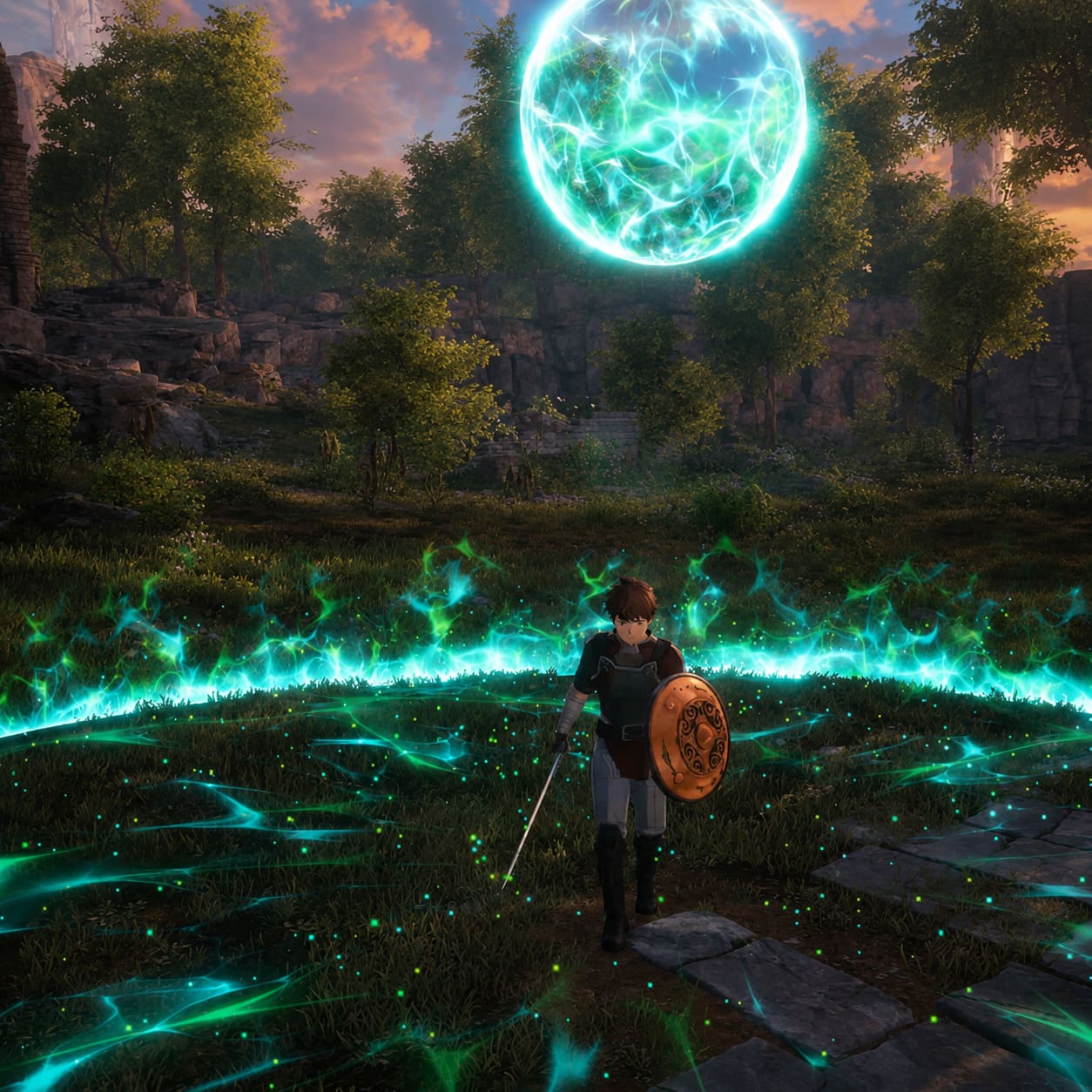
That creates a nice rhythm:
- Build SP safely.
- Look for an opening.
- Spend SP on a Sword Skill.
- Return to normal attacks.
- Repeat.
It sounds simple, but during hectic encounters it becomes surprisingly satisfying.
Instead of waiting for cooldowns, you’re actively earning your strongest attacks through good play.
Hidden Combo Finishers Are Worth Learning
One mechanic I absolutely love is the Continuation Combo system.
The game never feels like it’s forcing complicated fighting-game inputs, but players who learn each weapon’s combo routes get rewarded with noticeably stronger finishers.
For example, several weapons can chain four light attacks directly into a heavy strike that transforms into a unique finishing attack.
Those finishers don’t just hit harder.
They also deal significantly better posture damage, making them excellent for creating stagger opportunities.
It’s one of those mechanics casual players can ignore while experienced players slowly master.
I honestly hope the developers expand this system after launch because it adds depth without becoming overwhelming.
Dodging Is Usually Better… Until It Isn’t
This has been one of the biggest debates I’ve seen across the community.
Should you dodge?
Or should you parry?
My answer is…
Both are fantastic—but for different situations.
Perfect Dodge
A well-timed dodge grants invincibility frames.
Against giant floor bosses with sweeping attacks, I actually think dodging sideways is the safest option.
Rolling backward often keeps you inside the attack’s hitbox.
Side dodges feel much more reliable.
True Parry
Parrying has a much higher skill ceiling.
Landing the timing perfectly completely negates incoming damage while staggering the enemy.
Even better…
It creates opportunities for your AI companion to immediately jump in with extra damage.
If you’re confident with timing, parrying becomes incredibly rewarding.
If you’re still learning attack patterns, dodging is probably the safer habit.
The Partner System Is More Interesting Than I Expected
I originally assumed companions would just be background damage dealers.
Thankfully, that’s not the case.
The Switch mechanic gives them an actual purpose during difficult fights.
Instead of constantly attacking, your partner can remain ready until you create an opening.
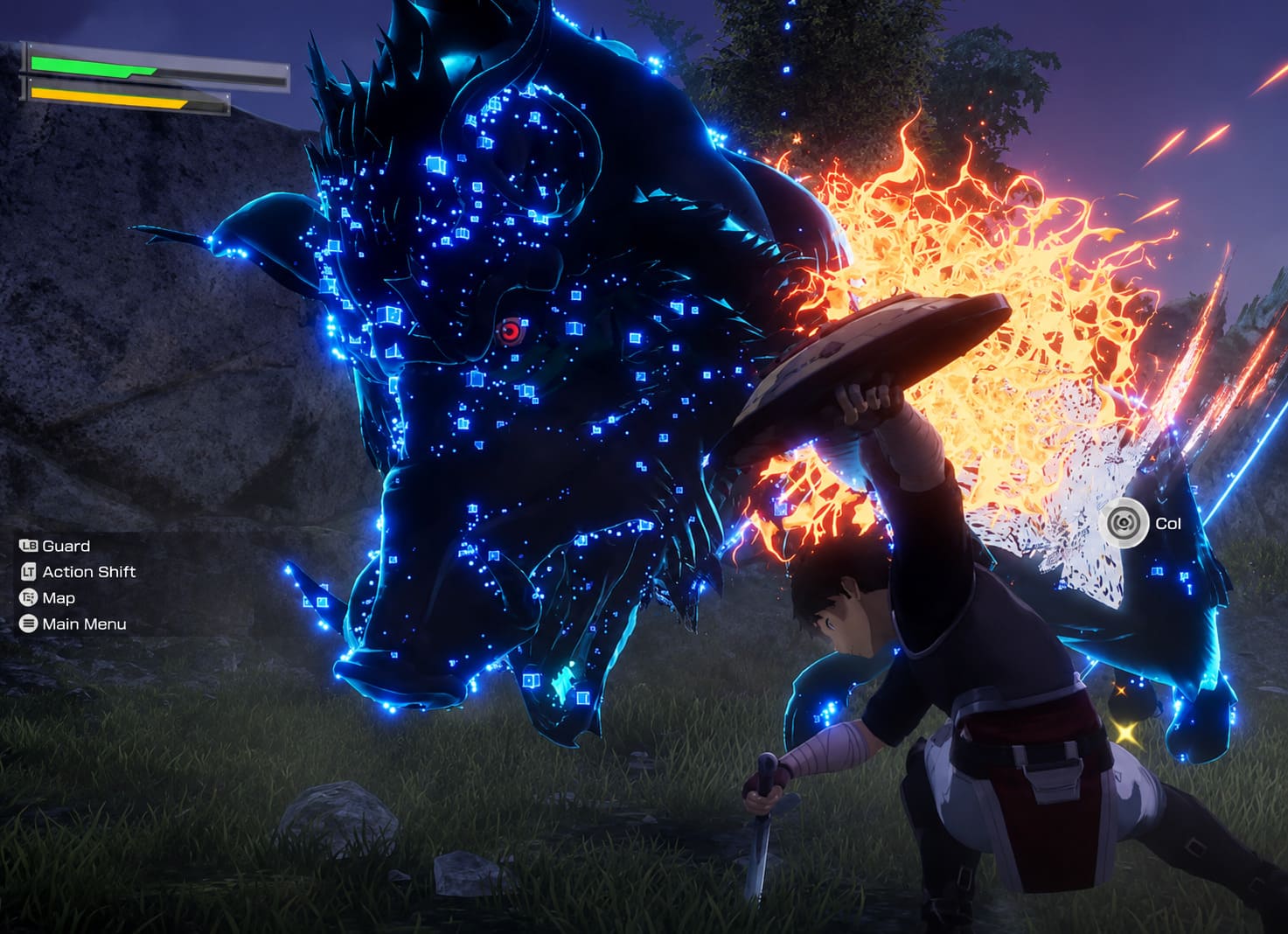
When executed correctly, switching allows your companion to:
- draw enemy attention;
- interrupt pressure;
- create healing opportunities;
- give you time to recover stamina.
That’s much deeper than simply having an AI teammate swinging a sword nearby.
It actually feels tactical.
I especially like how it captures one of the defining ideas from the anime—the importance of trusting your party members.
Focus Mode Rewards Consistency Instead of Luck
One feature that surprised me is Focus Mode.
Unlike traditional “rage modes” that activate after taking damage, this one rewards clean gameplay.
Avoid getting hit.
Maintain pressure.
Stay aggressive without making mistakes.
Do that long enough, and your character enters a much stronger combat state.
The benefits are substantial:
- increased damage;
- cheaper stamina usage;
- reduced SP costs;
- stronger posture damage;
- better dodge timing.
From a design perspective, I think this is brilliant.
Good players naturally become even stronger because they’re already playing well.
Instead of encouraging reckless aggression, the game rewards discipline.
Every Weapon Feels Like Choosing a Different Class
Although there aren’t traditional RPG classes, your weapon essentially becomes your identity.
Here’s how each one feels based on everything currently available.
| Weapon | Playstyle | Recommended For |
|---|---|---|
| One-Handed Sword | Balanced | Beginners |
| Rapier | Speed and precision | Aggressive players |
| Dagger | Mobility and status effects | Fast combo lovers |
| Mace | Heavy stun damage | Defensive players |
| Two-Handed Sword | Massive burst damage | Experienced players |
| Bow | Safe ranged attacks | Methodical players |
Personally…
I’d probably start with the One-Handed Sword.
Not because it’s the strongest.
Because learning enemy behavior is easier when your weapon doesn’t punish every small mistake.
After mastering the combat flow, switching to something slower like the Two-Handed Sword seems much more enjoyable.
Planning Before the Dungeon Actually Matters
One mechanic that reminds me of classic RPGs is the preparation phase.
Once you leave town, you’re largely committed to your setup.
You can’t endlessly swap equipment during missions.
That means every expedition starts before the first monster appears.
Questions become important:
- Do I have enough healing?
- Is this the right weapon?
- Which Sword Skills am I bringing?
- Have I upgraded my equipment?
- Is my partner the best choice?
It creates tension that many modern RPGs simply don’t have.
Preparation becomes part of the gameplay instead of just another menu.
Never Ignore Status Effects
Bosses aren’t only dangerous because they hit hard.
Many enemies inflict debilitating conditions that can quickly spiral out of control.
Poison slowly drains your health.
Bleeding increases pressure during longer fights.
Paralysis can completely stop your movement.
Stun is arguably the scariest because it often leads directly into devastating follow-up attacks.
Because of that, carrying status-cleansing items feels almost mandatory.
It’s tempting to fill every inventory slot with healing potions, but that’s usually a mistake.
A balanced item loadout gives you far more flexibility during long dungeon runs.
Echoes of Aincrad Weapon Tier List: Best Weapon Types Ranked (2026 Meta Guide)
My Biggest Piece of Advice for New Players
If I had to give only one recommendation after analyzing everything we’ve seen so far, it would be this:
Don’t chase damage numbers. Chase consistency.
The players who survive the longest probably won’t be the ones landing the biggest Sword Skills.
They’ll be the players who:
- preserve stamina;
- recognize boss animations;
- know when to switch partners;
- build SP efficiently;
- stay calm under pressure.
Echoes of Aincrad feels designed around patience.
Every mechanic—from Focus Mode to Continuation Combos and True Parries—rewards players who learn the system instead of trying to overpower it.
That’s honestly refreshing.
Too many modern action RPGs eventually become gear checks.
This one looks like it’ll remain a skill check.
Echoes of Aincrad Cardinal Level Guide: How to Level Up Fast and Rule the System
Final Thoughts
As a longtime Sword Art Online fan, this is probably the first game in the franchise that truly captures the fantasy of surviving inside Aincrad rather than simply replaying Kirito’s story. The combat encourages deliberate decision-making instead of reckless button mashing, and nearly every system—from stamina management to the Switch mechanic—pushes players to improve through practice rather than luck.
Will there be balance patches after release? Almost certainly. Some weapons will likely emerge as community favorites, and experienced players will undoubtedly discover optimized combo routes. Still, the foundation already looks impressively solid.
If the full game maintains the same level of depth shown so far, Echoes of Aincrad could end up being not only one of the strongest Sword Art Online games ever released, but also one of the most satisfying anime action RPGs in recent years. And honestly, that’s exactly the kind of challenge many SAO fans have been waiting for.