Aniimo Multiplayer Guide: How to Play Co-Op With Friends in 2026
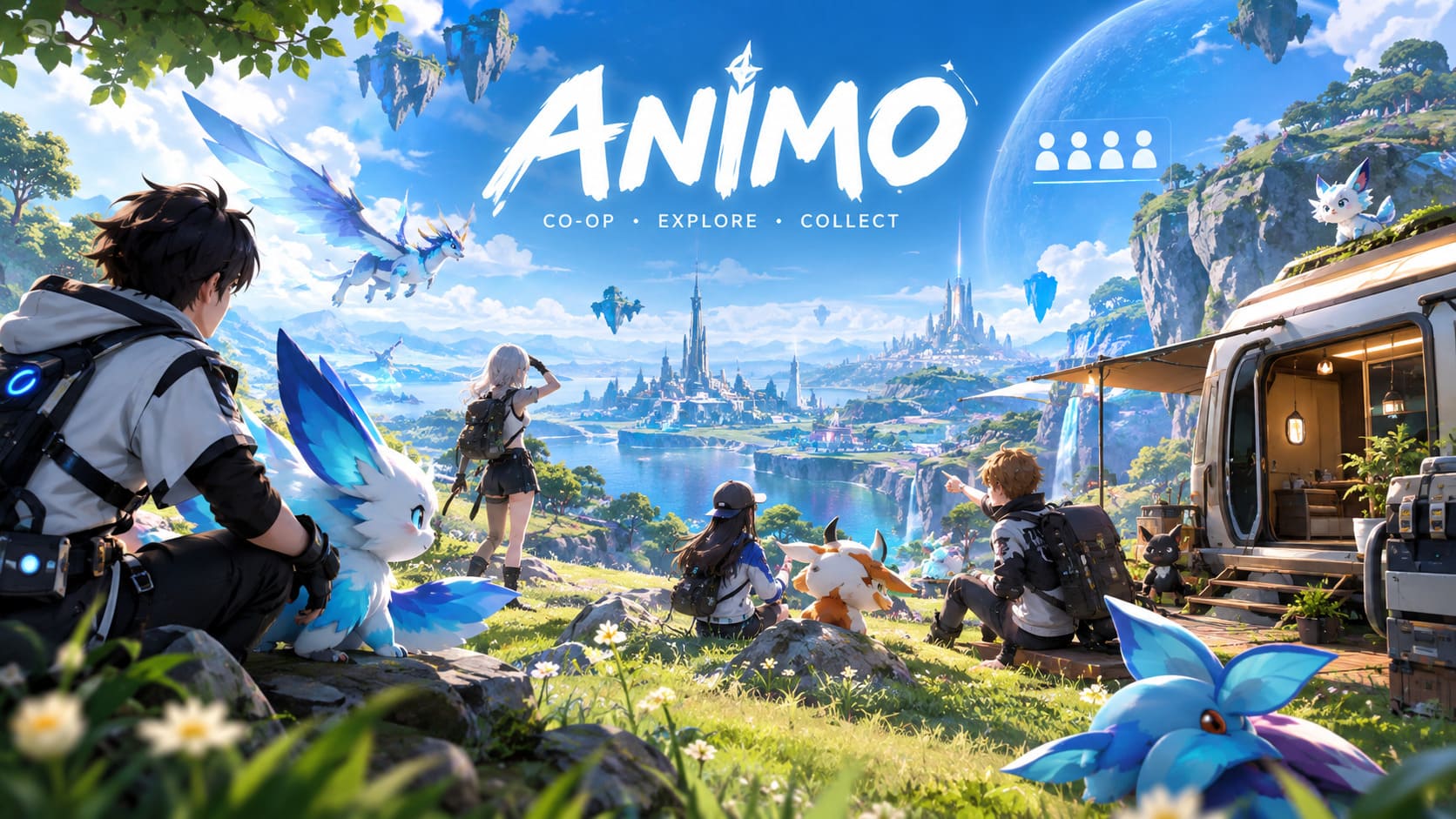
Aniimo is the kind of game that almost feels like it was designed around the question, “Why am I exploring this place alone?” Pawprint Studio’s creature-catching action RPG combines open-world exploration, real-time combat, monster collecting, traversal abilities, and a surprisingly cozy homeland system. On paper, that is already a lot. Once you bring a few friends into the picture, though, the whole experience starts to make much more sense.
I have always thought creature-collecting games are at their best when you can actually show your friends what you found instead of simply sending them a screenshot. Aniimo leans into that idea with four-player co-op, shared activities, boss fights, exploration, and even some useful interactions back at your personal RV.
The multiplayer system isn’t completely frictionless, though. There are progression restrictions, regional-server limitations, and a few things that guests simply don’t carry over from the host’s world. So, if you are planning to start Aniimo with a group, understanding how co-op works before everyone jumps in will save you a lot of confusion.
When Does Multiplayer Unlock in Aniimo?
You cannot immediately invite your friends after creating your Pathfinder.
Aniimo first sends you through a short introductory section in Starfall Valley. This tutorial introduces the game’s most important systems, including catching creatures with Aniipods and using the Twining mechanic to temporarily merge with an Aniimo and gain its unique abilities.
Personally, I think locking co-op behind this opening section is a reasonable choice. There are enough systems flying at you during the first hour that adding three other players immediately would probably turn the introduction into chaos.
To unlock multiplayer, you generally need to:
- Complete the opening story and tutorial quests.
- Learn the basic catching and Twining mechanics.
- Reach the first major settlement/camp progression point.
- Unlock your Pathfinder’s RV and the associated social functions.
- Open the newly available Co-Op/Social menu.
The initial progression takes roughly 30–45 minutes for most players who stick to the main objectives.
Once multiplayer becomes available, you can start creating sessions or joining friends.
How Aniimo Multiplayer Actually Works
Aniimo uses a host-based four-player world structure. One player owns the active world instance, while up to three additional players join as guests.
That means your group can have:

| Multiplayer Feature | Aniimo Co-Op |
|---|---|
| Maximum players | 4 |
| Host + guests | Yes |
| Online co-op | Yes |
| Crossplay | Yes |
| Main quest sharing | Limited |
| Exploration together | Yes |
| Boss fights | Yes |
| Homeland visits | Yes |
| Regional server restrictions | Yes |
The important part is that four players means four total players, not four guests plus the host. If your group has five people, somebody is going to have to sit this particular adventure out or create a second session.
For a small group of friends, however, the limit feels pretty comfortable. Four players is enough to create those fun “everyone is doing something different” moments without making the world feel completely overcrowded.
How to Host an Aniimo Co-Op Session
If you want to create the world that everyone else joins, the process is relatively straightforward.
Open the pause menu and find the Social or Co-Op section. From there, check your account information and locate your unique UID.
You should then configure your world permissions.
There are generally three useful options:
- Invite Only — best for a private friend group.
- Friends Only — allows people already connected to you to join.
- Public/Open — useful if you want other players to enter your world.
For a normal group of friends, I’d stick with Invite Only. Public sessions sound fun until random players start wandering around while you’re trying to complete something important.
Once your permissions are set, select a friend from your in-game list and send the invitation.
After they accept, they should appear in your world as a guest.
How to Join a Friend in Aniimo
Joining someone else’s world works in roughly the same way.

Open the Co-Op menu and check the available sessions. If your friend has selected Friends Only and you are already connected, their world should appear in the list.
Select it and choose Join World.
If the host is using Invite Only, you will instead need to accept their invitation when it appears.
You can also use the search functionality to enter the host’s UID manually if the session isn’t appearing automatically.
This is one of those systems where I recommend exchanging UIDs before everyone starts troubleshooting. It is much easier than having three people repeatedly restart the game and ask, “Can you see me now?”
Does Aniimo Have Crossplay?
Yes. One of Aniimo’s biggest multiplayer advantages is its cross-platform approach.
Players on supported PC, console, and mobile versions can play together as long as they are connected to the same regional server infrastructure.
That means your group does not necessarily need to own the same platform.
A PC player can join a PlayStation player, for example, while players on Xbox or mobile can participate as well.
However, there is an important catch: regional servers matter.
If one player is connected to the America region while another is playing on APAC or Europe, they may not be able to join the same world.
So before blaming the matchmaking system, check everyone’s selected server region.
Cross-Progression: What Happens to Your Character?
Aniimo also uses account-based progression, allowing players to access their progress across supported platforms when using the same official account.
Your important personal progression can follow you between devices, including things such as:
- Caught Aniimo.
- Inventory.
- Character attributes.
- Unlocks and personal progression.
The major thing to remember is that regional server data is treated separately. Moving between completely different regional infrastructures is not the same thing as simply switching from PC to console.
If you are planning to play Aniimo on several devices, it is worth deciding on your main region early rather than discovering later that your progress is separated.
The Biggest Co-Op Catch: Story Progression
This is probably the most important thing to understand before starting Aniimo with friends.
Joining somebody else’s world does not mean your entire story progresses alongside theirs.
The host’s world remains the primary progression state for that session. If you help a friend defeat a major story encounter or complete a significant quest objective, the host receives the corresponding progression.
Your own Pathfinder may still need to complete that story content in your own world.
This can sound annoying at first, but I actually prefer this system to having a shared campaign where one person accidentally advances a story everyone else wanted to experience together.
The easiest approach is to decide whose story you are progressing before launching a session.
If one friend is significantly behind the rest of the group, make that player the host. Everyone else can then join and help them catch up.
That simple habit should prevent most progression-related headaches.
What Can You Actually Do Together?
This is where Aniimo’s multiplayer becomes much more interesting.
Co-op isn’t just about having three extra characters standing next to you during combat. Several systems are designed around cooperation.
Exploration and Twining
The Twining mechanic is especially interesting in multiplayer because Aniimo can provide different movement abilities.
Some creatures can help with:
- Gliding.
- Underwater traversal.
- Burrowing.
- Reaching difficult terrain.
- Accessing environmental areas.
This creates situations where players can approach the same area in completely different ways.
I can already imagine the classic co-op moment: one player discovers a hidden route, another realizes their Aniimo has the exact traversal ability required, and suddenly the entire group is trying to figure out how to reach a previously inaccessible ruin.
That is the sort of multiplayer interaction I want from an open-world creature game.
Alpha Bosses and Dungeons
Combat is another obvious reason to bring friends.
Alpha Aniimo and dungeon encounters can become much more manageable when your group coordinates elemental advantages, positioning, and combat abilities.
Instead of four players simply attacking the same target, a coordinated party can divide responsibilities and exploit weaknesses.
The encounters also scale around the number of active players, making group play more practical than simply overwhelming every enemy with additional bodies.
And honestly, boss fights are probably where the four-player limit makes the most sense. Any larger and the screen would quickly become a mess of effects, creatures, attacks, and people yelling about cooldowns.
Your Homeland Is More Than a Decoration
Every Pathfinder has access to a personal mobile RV and associated Homeland.
This acts as your own customizable space rather than a gigantic shared survival-game base.
Friends can visit your Homeland and interact with some of its systems, including farming and other activities.
That makes the RV feel more useful than a simple menu disguised as a home.
One particularly interesting interaction involves Aniimo eggs.
Visiting friends can interact with incubating eggs and provide a temporary benefit that can reduce the remaining hatching time. The effect is small, but when you are managing several eggs, those little bonuses start adding up.
It is a clever example of Aniimo making social interaction useful without forcing players to spend their entire playtime together.
Egg Heist: When Co-Op Gets Competitive
If traditional co-op isn’t enough, Aniimo also has Egg Heist, a more competitive mode built around three-player teams.
Instead of simply exploring your own world, squads enter the Lost Isles looking for valuable Aniimo eggs.
The catch is that other players are hunting for the same rewards.
So you are dealing with both:
PvE threats from wild creatures and the environment, and PvP competition from rival teams.
This changes the atmosphere completely. A normal co-op expedition can be relaxed, while Egg Heist introduces the kind of “do we fight or run?” decisions that can turn a simple loot run into a disaster in about thirty seconds.
For groups that enjoy a little tension, this could end up being one of Aniimo’s most replayable multiplayer activities.
What Doesn’t Work the Way You Might Expect?
Before inviting everyone into your world, keep these limitations in mind:
- Main story progression is not fully shared.
- Only four players can occupy one overworld session.
- Regional servers need to match.
- New players need to finish the initial tutorial progression before accessing multiplayer.
- Your personal story progression still needs attention in your own world.
The good news is that most of these restrictions make sense once you understand Aniimo’s structure.
The game is essentially combining a personal RPG campaign with a shared multiplayer playground. The two systems overlap, but they aren’t identical.
Quick Troubleshooting for Aniimo Co-Op
If your friend can’t join, don’t immediately assume the servers are broken.
Check these things first:
1. Are you on the same regional server?
America, Europe, APAC, and other regional infrastructures need to match.
2. Has everyone unlocked multiplayer?
A brand-new Pathfinder may still be stuck in the introductory section.
3. Is the host already at four players?
The overworld session has a maximum capacity of four.
4. Are the world permissions correct?
Check whether the host selected Invite Only, Friends Only, or Public.
5. Are you using the correct UID?
If the friend doesn’t appear naturally in the list, manually searching their UID can help.
These are basic checks, but they cover most of the problems you’ll run into when setting up your first Aniimo session.
Aniimo System Requirements: Storage Size, PC Specs, and Gameplay Guide (2026)
Is Aniimo Better With Friends?
In my opinion, yes — but with one important qualification.
I wouldn’t recommend treating Aniimo as a permanently shared campaign where everyone expects every quest and story milestone to synchronize perfectly. That’s simply not how the progression system is designed.
Instead, think of co-op as a shared adventure layered on top of individual progression.
Do your major story milestones in your own world. Then bring your friends in for exploration, bosses, dungeons, creature hunting, resource gathering, Homeland activities, and those moments where the game suddenly throws something ridiculous at the entire party.
That’s where Aniimo seems strongest.
The combination of creature abilities and open-world traversal also gives multiplayer a little more personality than simply adding extra players to standard combat encounters. When one player can glide somewhere, another can dive underwater, and somebody else discovers a hidden route, the group starts feeling like an actual expedition team rather than four people occupying the same server.
And that’s probably the biggest reason I’d recommend trying Aniimo multiplayer in 2026.
You don’t need a full squad every time. Even two players can make the world feel different. But with four friends, the systems start to overlap in ways that make exploration, boss fights, and Homeland activities considerably more entertaining.
Just remember one rule before you start: decide whose world you’re progressing first. Once everyone understands that the host controls the active world state, Aniimo’s co-op becomes much easier to enjoy.