Echoes of Aincrad Cardinal Level Guide: How to Level Up Fast and Rule the System
If you’ve jumped into Sword Art Online: Echoes of Aincrad, you’ve probably realized something within the first few hours—this isn’t another action RPG where endless monster farming magically solves every problem. I went into the game expecting the classic JRPG loop: defeat monsters, level up, equip stronger weapons, repeat. Instead, the Cardinal System completely flipped that expectation on its head.
The game quietly teaches one of its most important lessons early on: your Character Level isn’t what truly determines your power. The real gatekeeper is the Cardinal Rank, a progression system deeply connected to Aincrad’s lore that controls nearly every meaningful upgrade you’ll unlock throughout your adventure.
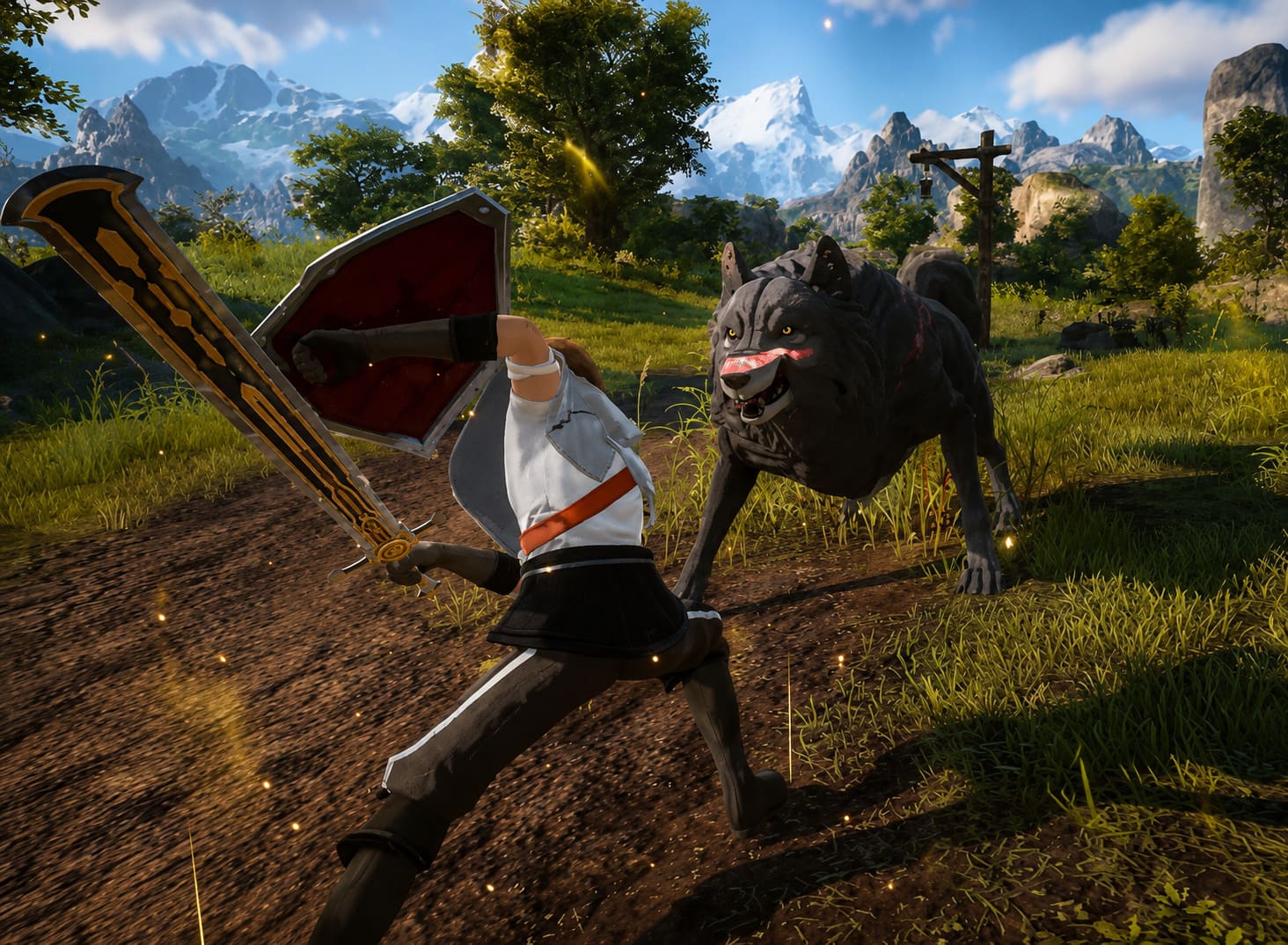
I’ve seen countless players waste hours farming wolves, boars, and random field enemies wondering why new weapons refuse to appear in shops or why the Blacksmith keeps rejecting advanced crafting requests. If that sounds familiar, you’re grinding the wrong thing.
This guide explains exactly how the Cardinal System works, how to increase your Cardinal Rank efficiently, how weapon proficiency fits into the equation, and why understanding the game’s progression loop makes the difference between cruising through Aincrad and constantly feeling underpowered.
Understanding Character Level vs. Cardinal Rank
One of the biggest misconceptions surrounding Echoes of Aincrad is assuming both progression systems accomplish the same thing.
They absolutely don’t.
The game separates personal growth and world progression into two completely different mechanics.

| Progression System | Purpose | Increased By |
|---|---|---|
| Character Level | Raises stats through Growth Points | Defeating enemies and earning experience |
| Cardinal Rank | Unlocks game progression, equipment tiers, crafting, companions, and shops | Story progression, exploration, boss milestones |
Many newcomers spend hours focusing exclusively on Character Level because that’s how almost every RPG has conditioned us to play.
Echoes of Aincrad refuses to reward that mindset.
You can reach a respectable player level, collect piles of crafting materials, and still discover that the game’s systems simply won’t let you use the equipment you’ve earned until your Cardinal Rank catches up.
It feels strange initially, but once everything clicks, the design actually makes sense.
Why Cardinal Rank Is the Most Important Progression System
Think of Cardinal Rank as your authorization level inside the world’s automated operating system.
The higher your authorization becomes, the more Aincrad allows you to access.
Increasing Cardinal Rank affects almost every important gameplay feature.
Equipment Unlocks
Perhaps the most obvious benefit is weapon progression.
Higher-quality swords, rapiers, heavy weapons, armor sets, and accessories simply remain unavailable until you’ve reached the required Cardinal Rank.
Grinding for money won’t bypass these restrictions.
Neither will collecting rare materials.
Blacksmith Progression
Crafting is equally restricted.
The Blacksmith gradually expands available blueprints as your global progression advances.
Advanced synthesis, stronger enhancement options, and powerful EX-MOD transfers won’t appear until your Cardinal authorization reaches the appropriate tier.
If you’ve ever wondered why certain recipes refuse to unlock despite having every required material, your Cardinal Rank is almost certainly the missing requirement.
Companion Improvements
Your AI companions don’t remain static throughout the game.
Characters like Iori naturally become stronger alongside your Cardinal progression.
Higher ranks improve their combat effectiveness, defensive values, Focus Gauge efficiency, and overall battlefield performance.
Ignoring Cardinal Rank means weakening your entire party—not just your own character.
Better Loot Drops
Another surprisingly noticeable benefit comes from the loot system.
As your Cardinal Rank increases, the game gradually begins rewarding:
- Higher rarity materials
- Better weapon modifiers
- Improved crafting resources
- More valuable equipment drops
The difference isn’t subtle during later floors.
Players progressing normally often receive significantly better rewards than players endlessly farming early maps.
Enemy Scaling
There is one important catch.
Enemies also evolve.
The world recognizes your increasing authorization and begins scaling encounters accordingly.
Monsters gain:
- Larger health pools
- Improved aggression
- Faster attack tracking
- Stronger damage output
This dynamic scaling keeps exploration challenging while encouraging players to constantly upgrade equipment rather than relying purely on stat growth.
The Fastest Ways to Increase Cardinal Rank
One thing became obvious after spending dozens of hours exploring Aincrad.
Grinding random enemies is an incredibly inefficient way to progress.
Instead, nearly every major Cardinal Rank increase comes from structured content.
Prioritize Main Story Progression
If your Cardinal Rank feels stuck, the solution is usually simple.
Continue the main story.
Major quest chapters award enormous progression boosts after important milestones.
Story bosses, narrative checkpoints, and floor completions all contribute directly toward raising your authorization level.
Whenever you’re unsure what to do next, advancing the story is almost always the correct answer.
Discover Every Settlement
Exploration matters much more than many players realize.
Entering previously undiscovered settlements, activating safe zones, and reaching new regional hubs all reward substantial Cardinal progression.
Whenever you unlock a fresh region, don’t immediately start farming monsters.
Instead:
- Search for nearby settlements.
- Activate checkpoints.
- Register newly discovered towns.
- Reveal major landmarks.
These activities often provide progression that ordinary combat simply cannot match.
Defeat Ark Bosses
Each floor features special encounters designed around advancing the narrative.
These Ark Bosses are far more important than optional minibosses scattered throughout open areas.
Completing these battles for the first time frequently unlocks entirely new Cardinal tiers while simultaneously opening additional shops, recipes, and equipment options.
Waiting too long before challenging them usually slows overall progression rather than helping it.
The Progression Loop You Should Never Ignore
This is probably the mechanic that surprised me the most.
Unlike many RPGs, Echoes of Aincrad intentionally limits what players can do while exploring.
You cannot freely rebuild your character inside active missions.
Growth Point allocation.
Weapon mastery upgrades.
Major build adjustments.
All of these happen only after returning safely to town.
The intended gameplay cycle looks like this:
| Step | Objective |
|---|---|
| 1 | Accept a mission or enter an exploration zone |
| 2 | Defeat enemies and collect equipment |
| 3 | Complete area objectives and story milestones |
| 4 | Return safely to the nearest town |
| 5 | Rest at the Inn to spend Growth Points |
| 6 | Upgrade weapons and visit the Blacksmith |
At first this feels restrictive.
Later, it becomes surprisingly satisfying because every successful expedition feels meaningful.
One important warning deserves mentioning.
Many experienced players have reported that abandoning certain active quests before completion may reset objective progress.
Whenever possible, finish your current mission before heading back to town.
It saves frustration later.
Building Your Character the Right Way
The game encourages specialization.
Trying to create a balanced “master of everything” build usually leads to mediocre performance.
Each weapon category favors different attributes, and leaning into those strengths produces dramatically better results.
One-Handed Swords and Rapiers
These weapons primarily benefit from Dexterity (DEX).
Higher DEX improves overall damage while also increasing precision and critical effectiveness.
Players who enjoy traditional swordplay will spend most of their Growth Points here.
Daggers
Daggers revolve around Agility (AGI).
High AGI creates an incredibly mobile playstyle built around quick attacks, evasive movement, and constant pressure.
Blocking becomes less reliable, but experienced players can overwhelm enemies through speed alone.
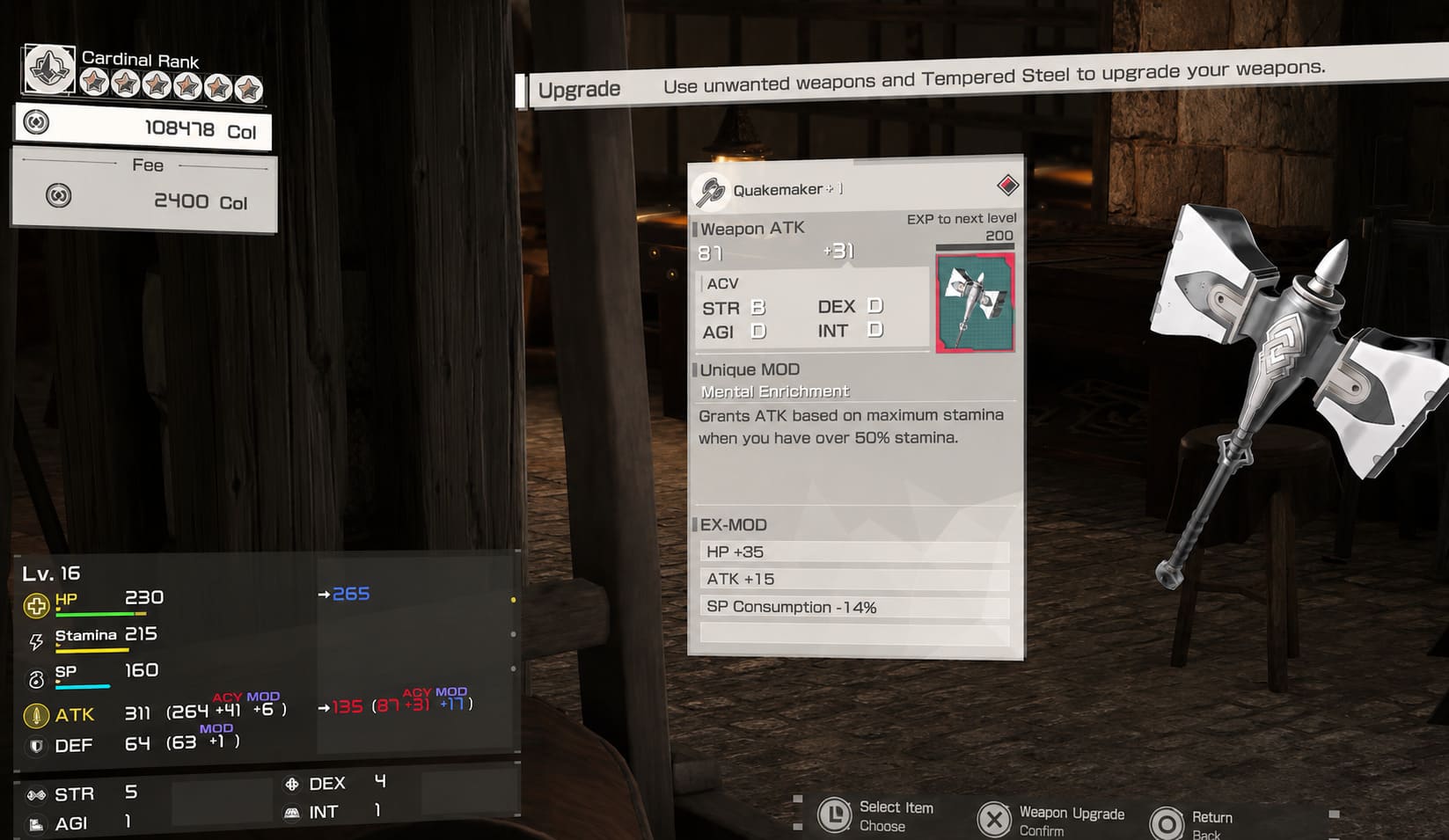
Greatswords and Axes
Heavy weapons aren’t always straightforward.
Several early-game variants scale unexpectedly with Dexterity or hybrid offensive values instead of pure Strength.
Before investing large amounts of Growth Points, always inspect each weapon’s scaling information at the Blacksmith.
Assuming every giant sword only uses STR can easily lead to a weak build.
Never Ignore Defensive Attributes
Many aggressive players make the same mistake.
Every point goes into offense.
Then the first difficult boss deletes half their health bar in one combo.
No matter which weapon you choose, invest consistently into defensive survival stats.
Vitality (VIT) increases maximum HP.
Endurance (END) expands stamina while improving survivability during guards and perfectly timed defensive actions.
This becomes absolutely essential on Hard Mode and especially in Death Game Mode, where careless builds can disappear in seconds.
Weapon Proficiency Is Its Own Progression System
Cardinal Rank unlocks equipment.
Weapon Proficiency unlocks mastery.
They’re connected but completely separate.
Each weapon type develops independently through active combat.
Successful actions that improve proficiency include:
- Normal attacks
- Heavy attacks
- Perfect dodges
- Timed guards
- Successful parries
A surprisingly effective strategy is finding durable enemies near an early checkpoint.
Instead of defeating them instantly, focus on practicing combat mechanics.
Longer fights naturally generate much more proficiency experience than short encounters.
Once you’ve reached your current proficiency cap, return to the Inn and unlock your newly available Sword Skills.
Skipping this step leaves valuable combat abilities unused.
How to Fix SAO Echoes of Aincrad Black Screen on Launch (PS5 Guide)
Practical Tips for Staying Ahead of the Difficulty Curve
Keeping pace with Echoes of Aincrad’s progression system becomes much easier once you develop good habits.
Remember these priorities during every expedition:
- Advance the story before spending hours farming ordinary enemies.
- Unlock settlements whenever entering a new region.
- Upgrade equipment immediately after every Cardinal Rank increase.
- Match Growth Points to your weapon’s scaling rather than distributing them evenly.
- Keep an eye on your stamina bar because exhaustion often leads directly to defeat.
- Visit the Blacksmith after every successful exploration run.
- Don’t neglect companion progression, especially before major boss encounters.
Following these principles keeps your equipment, attributes, and overall progression synchronized with the game’s scaling system.
Final Thoughts
Echoes of Aincrad doesn’t reward the traditional RPG mentality of endlessly defeating low-level monsters until every challenge disappears. Instead, it asks players to think like survivors trapped inside Aincrad’s automated world, where the Cardinal System determines what the game will actually allow you to accomplish.
Once you stop treating Character Level as the main indicator of strength and begin focusing on Cardinal Rank, exploration milestones, story progression, and smart equipment upgrades, the entire progression system starts making perfect sense. Your weapons improve at the right pace, the Blacksmith opens new crafting options, companions become noticeably stronger, and each new floor feels like a genuine step forward instead of an artificial grind.
Master the balance between Character Level, Cardinal Rank, weapon proficiency, and efficient resource management, and you’ll stay comfortably ahead of Aincrad’s ever-scaling dangers—whether you’re casually clearing story content or testing your limits in the unforgiving Death Game Mode.