The Left Behind Survival Guide: Master Food, Water, Health Bars, and Efficient Food Storage
Survival games usually reward players who can fight well, but The Left Behind quickly taught me that combat is only half of the challenge. The real enemy isn’t always the infected wandering the streets or the creatures waiting for sunset—it’s poor planning.
After spending plenty of time exploring abandoned buildings, losing promising runs, and learning from my own mistakes, I realized something important: the players who survive the longest are rarely the best shooters. They’re simply better at managing resources.
Food, clean water, organized storage, and smart preparation determine whether you’ll still be alive when another brutal night arrives. If you’re constantly running out of supplies or wondering why your character suddenly feels weak, this guide should help you avoid the same mistakes I made.
Why Resource Management Matters More Than Combat
One thing I appreciate about The Left Behind is that survival feels meaningful. Every decision has consequences.
Running across town just because you spotted a nice piece of loot might seem like a great idea until you notice your hunger bar dropping, your stamina disappearing, and darkness approaching faster than expected.
Instead of treating food and water like emergency consumables, I eventually started viewing them as permanent buffs. Keeping these meters full makes every other activity easier.
A healthy survivor can:
- Sprint farther.
- Recover stamina faster.
- Fight more efficiently.
- Explore longer before returning home.
- Survive unexpected encounters.
Ignoring those basic needs almost always leads to unnecessary deaths.
Understanding the Three Survival Bars
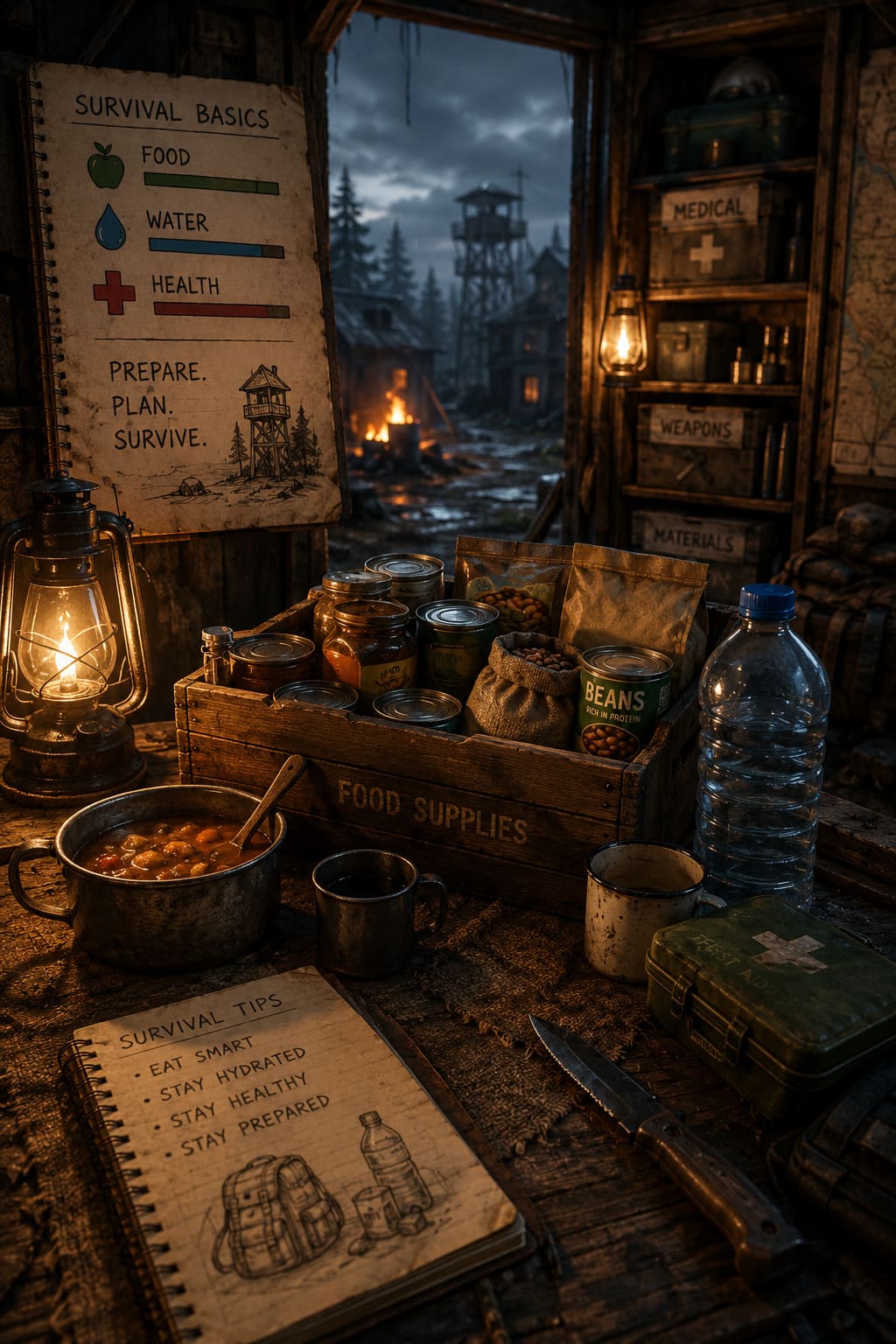
Although the interface looks simple, every survival meter affects the others.
| Survival Stat | Why It Matters | What Happens If You Ignore It |
|---|---|---|
| Food | Maintains stamina and overall condition. | Starvation slowly damages health and reduces endurance. |
| Water | Supports stamina recovery. | Dehydration dramatically slows stamina regeneration. |
| Health | Keeps you alive. | Reaching zero ends your run because of permanent death. |
The biggest lesson I learned is that health should never become your first warning sign.
If you’re already healing damage, something probably went wrong several minutes earlier.
Hunger Is More Dangerous Than It Looks
At first, I treated food casually.
I’d eat whatever I found whenever the meter dropped slightly.
That turned out to be a terrible strategy.
Physical activity burns through calories surprisingly fast. Long-distance sprinting, heavy backpacks, and frequent melee combat all speed up hunger loss.
Eventually I changed my routine.
Instead of constantly eating low-quality food, I started saving ingredients for better recipes. The difference was immediate.
Higher-quality meals last longer, restore more nutrition, and reduce the number of inventory slots you dedicate to emergency snacks.
Never Underestimate Water
Water became my biggest problem during the early hours.
Unlike food, dehydration seems to arrive much faster, especially after long scavenging trips.
The moment your thirst reaches dangerous levels, everything becomes harder.
Simple tasks like escaping enemies, climbing obstacles, or returning to base suddenly feel stressful because stamina recovery slows dramatically.
Now I never leave camp without checking my water supply first.
It’s one of those habits that sounds obvious, but forgetting it usually ends badly.
Health Isn’t Meant to Be Your Backup Plan
Many survival games allow players to recover health automatically after avoiding combat.
The Left Behind isn’t nearly as forgiving.
Health represents your final safety net, not something you casually refill after every fight.
Once I accepted that idea, I became much more careful during exploration.
Instead of pushing one more building or taking unnecessary risks, I learned when it was smarter to head home.
That decision alone dramatically increased my survival time.
Storage Organization Saves More Time Than You Think
One mistake almost every new player makes is creating one giant storage chest filled with everything.
I’ve done it.
Finding medicine while your inventory is overflowing with random junk becomes frustrating incredibly quickly.
Now I organize my base using dedicated containers.
For example:
- Food and cooking ingredients
- Medical supplies
- Crafting materials
- Weapons and ammunition
- Building resources
It sounds simple, but during nighttime emergencies you’ll appreciate knowing exactly where everything is.
Less searching means more surviving.
Stop Hoarding Raw Food the Wrong Way
Another lesson I learned the hard way involves raw ingredients.
When I first started playing, I ate berries immediately after finding them.
It felt efficient.
It wasn’t.
Many basic ingredients become significantly more valuable later once cooking stations are upgraded.
Instead of providing minor nutrition, they become components for recipes that restore both food and hydration while offering useful bonuses.
That completely changed how I approached gathering resources.
Now I treat raw ingredients like crafting materials rather than emergency meals.
Upgrade Your Kitchen Earlier
If I could restart my first playthrough, upgrading the kitchen would become one of my highest priorities.
At first, it doesn’t seem exciting.
New weapons are more tempting.
Extra storage feels more useful.
But once better recipes unlock, the entire survival experience changes.
Improved meals generally offer:
- Better nutrition.
- Longer-lasting effects.
- Improved inventory efficiency.
- Useful combat bonuses.
- Reduced resource waste.
A single advanced meal can replace several lower-quality food items.
That leaves valuable backpack space available for loot instead.
Better Drinks Make Exploration Easier
Water bottles are useful early on, but they quickly become inefficient.
As better crafting options become available, drinks become much stronger.
Special recipes provide hydration while also offering additional benefits that basic bottled water simply cannot match.
Once I unlocked these recipes, long-distance exploration became noticeably easier because I carried fewer consumables without sacrificing survivability.
Small improvements like this really add up over dozens of in-game days.
My Favorite Looting Strategy
I’ve experimented with different exploration routes, and one approach consistently gives me the best results.
Instead of wandering randomly, I prioritize buildings that naturally contain survival supplies.
My usual order looks something like this:
- Residential kitchens.
- Small grocery stores.
- Restaurants.
- Medical locations.
- Utility buildings.
These locations regularly provide food, drinks, cooking ingredients, and healing supplies.
Random warehouses can still be worthwhile, but I usually save them for later once my immediate survival needs are covered.
Don’t Get Greedy Before Nightfall
This is probably the hardest lesson for experienced survival players.
We’ve all said it: “Just one more building.”
That’s exactly how many successful runs end.
The moment daylight starts disappearing, I begin heading back.
No exceptions.
Nighttime changes everything.
Enemy numbers increase.
Visibility drops.
Escape routes become limited.
Running home with full health and organized supplies is always better than dying because you wanted one extra container.
Surviving the Night
Night combat rewards patience more than aggression.
Whenever possible, I avoid open streets and use buildings to control enemy movement.
Doorways, broken windows, narrow hallways, and tight corners can prevent groups from surrounding you.
If you’re playing cooperatively, communication becomes just as important as equipment.
Staying together almost always produces better results than everyone exploring independently after dark.
Sometimes survival simply means knowing when not to fight.
The Left Behind Co-Op Guide: How to Invite Friends on Steam (2026 Tutorial)
Common Beginner Mistakes
| Mistake | Better Alternative |
|---|---|
| Eating every berry immediately. | Save ingredients for advanced recipes. |
| Carrying too many random items. | Prioritize survival resources first. |
| Leaving base without checking vitals. | Always refill food and water beforehand. |
| Returning after dark. | Plan your route around daylight. |
| Throwing everything into one storage chest. | Organize supplies by category. |
| Ignoring crafting upgrades. | Improve cooking stations early. |
The Left Behind Weapon Guide: Full Melee & Ranged Unlock List + Best Early Game Firearms (2026)
Final Thoughts
What keeps bringing me back to The Left Behind isn’t just its hostile world—it’s the constant feeling that every decision matters.
The game rewards preparation far more than reckless bravery.
The longer I played, the less survival became about reacting to emergencies and the more it became about preventing those emergencies from happening in the first place.
Keep your storage organized. Invest in better cooking before chasing fancy equipment. Respect the day-and-night cycle, and never underestimate how quickly hunger or dehydration can ruin an otherwise perfect run.
Most importantly, don’t measure success by how many enemies you defeat. Measure it by how many mornings you live to see.
In The Left Behind, that’s the real victory.