How to Fish (Dazed Games) Guide: Unlock New Islands, Upgrade Your Boat, and Get the Best Gear
If you looked at How to Fish and thought, “Oh, this is going to be a relaxing fishing game,” I have some bad news for you.
It absolutely is not.
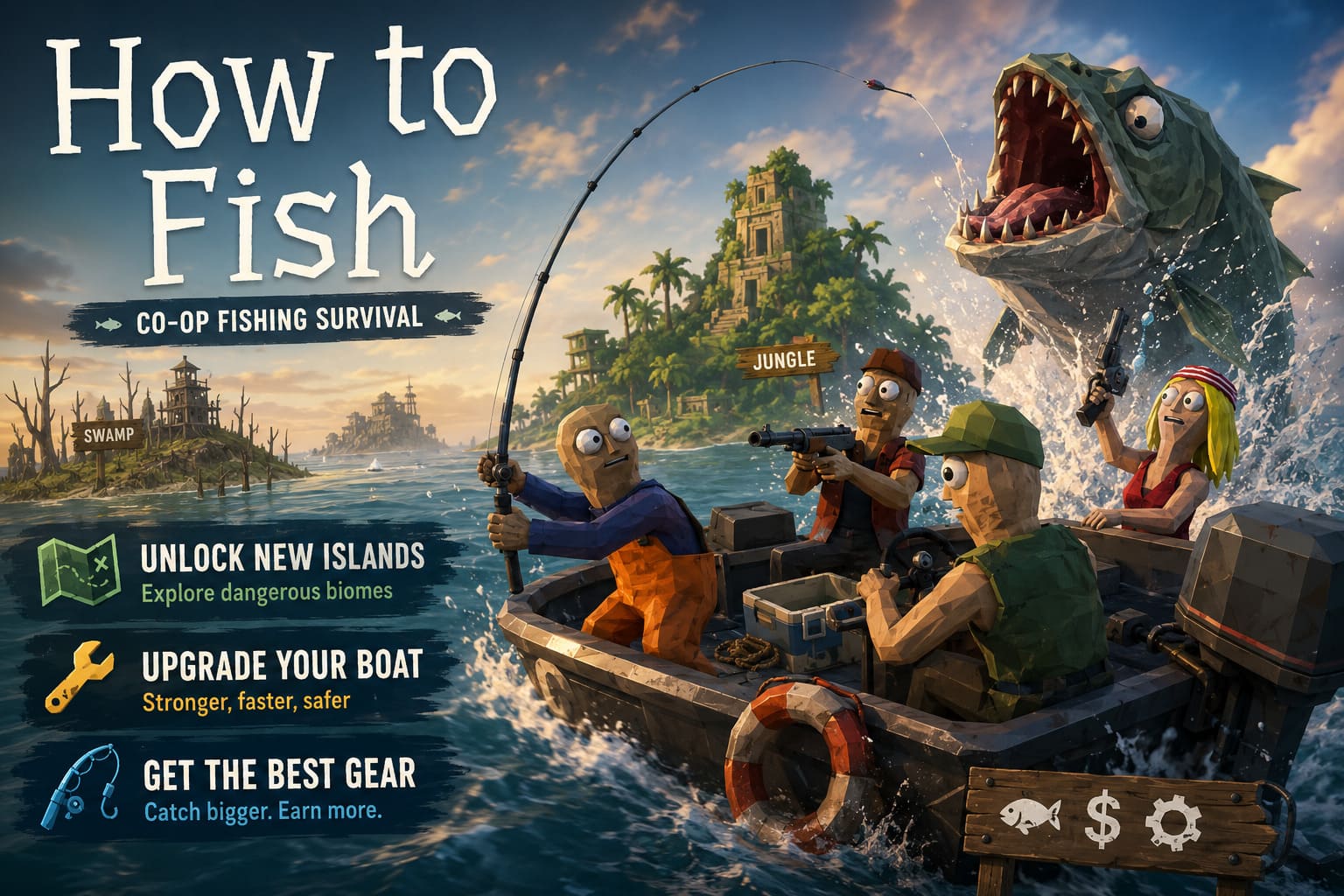
What starts as a goofy little fishing trip with friends quickly turns into a physics-driven disaster where your boat is falling apart, a giant fish is trying to murder you, somebody is waving a shotgun around, and another friend is probably gambling away the money you were saving for an engine upgrade.
And honestly? That is exactly why I like it.
Dazed Games has taken the familiar idea of cooperative fishing and twisted it into something much more unpredictable. You are not simply casting a line, waiting for a bite, and admiring your catch. You are constantly juggling fishing, combat, exploration, money, boat upgrades, and the occasional completely ridiculous physics accident.
After spending time digging into the game’s progression systems and thinking about what actually matters when you’re playing with a group, I think the biggest lesson is simple: don’t treat How to Fish like a traditional fishing simulator. Treat it like a survival game where fishing happens to be the best way to make money.
And once you understand that, the whole progression system starts making much more sense.
The Real How to Fish Gameplay Loop
The basic loop sounds simple:
Catch → Secure → Sell → Upgrade → Explore → Repeat.
But every part of that process can go spectacularly wrong.
Your first catches are mostly about learning the game’s physics. Casting isn’t something you can completely ignore, and managing line tension becomes increasingly important once you start targeting larger fish. The bigger the catch, the more likely you are to find yourself fighting the game’s physics rather than simply reeling in a fish.
Then comes the part that really separates How to Fish from ordinary fishing games: getting the fish secured.
A hooked fish isn’t necessarily a safe fish. Some creatures can fight back, drag players around, or create complete chaos near the shoreline or boat. That’s where cooperative play becomes incredibly useful.
One player handles the rod while another watches the water and prepares to deal with the creature. With the right timing, the process feels less like fishing and more like a badly organized hunting expedition.
That’s one of my favorite things about the game.
Don’t Go Solo-Minded in Co-op
If you’re playing with three other people, don’t have everyone doing exactly the same thing.
A good team naturally falls into roles:
- Angler: Concentrates on casting and controlling line tension.
- Defender: Watches for aggressive creatures and helps secure dangerous catches.
- Helmsman: Keeps the boat positioned correctly and gets everyone out when things go sideways.
- Flexible Player: Switches between fishing, combat, loot collection, and whatever emergency has just appeared.
You don’t have to follow these roles religiously, but having some organization makes a huge difference.
Four players all trying to operate the boat at once is funny.
It is also usually a terrible idea.
Island Progression: Don’t Rush the Next Biome
One of the more interesting parts of How to Fish is how exploration is tied to progression rather than simply allowing you to sail wherever you want from the beginning.
The starter area is essentially your training ground. It gives you time to learn the fishing mechanics, earn your first money, experiment with equipment, and figure out just how dangerous the wildlife can become.
Eventually, you’ll start looking toward more dangerous areas such as the Swamp and Jungle regions.
Here’s how I’d think about the progression:
| Area | Main Purpose | What You Should Focus On |
|---|---|---|
| Starter Island | Learning the basics | Money, basic gear, fishing |
| Swamp | First serious progression step | Better equipment and survival |
| Jungle | Advanced exploration | Strong gear, boat upgrades, valuable catches |
| Later Areas | Endgame-style progression | Optimization and high-value fishing |
The important thing is not to view each new island as simply another place to fish.
Every new region effectively raises the stakes.
The creatures become more dangerous, navigation gets harder, and your starting equipment becomes increasingly inadequate. If you arrive with a weak boat and low-tier gear, the game has a pretty direct way of telling you that you weren’t ready.
Upgrade before you explore.
That’s probably the most boring advice in this entire article, but it will save you a lot of frustration.
Boss Fights Are Where the Game Gets Completely Ridiculous
If you thought fishing and boat management were already chaotic, boss encounters take things to another level.
Large aquatic creatures aren’t simply bigger versions of ordinary fish. They turn the fishing system into a cooperative fight where everyone needs to contribute.
The angler has to maintain control of the line while the rest of the crew deals with the creature itself. This is where having stronger line, better equipment, and a coordinated team really starts paying off.
The first time your group encounters one of these fights, don’t expect everything to go according to plan.
It probably won’t.
You’ll miss shots. Someone will fall into the water. The boat will move at exactly the wrong moment. The fish will suddenly change direction. And, inevitably, somebody will yell that they had the situation completely under control.
They did not.
But successfully defeating a major creature can open the way to further progression, making these encounters more than just entertaining distractions.
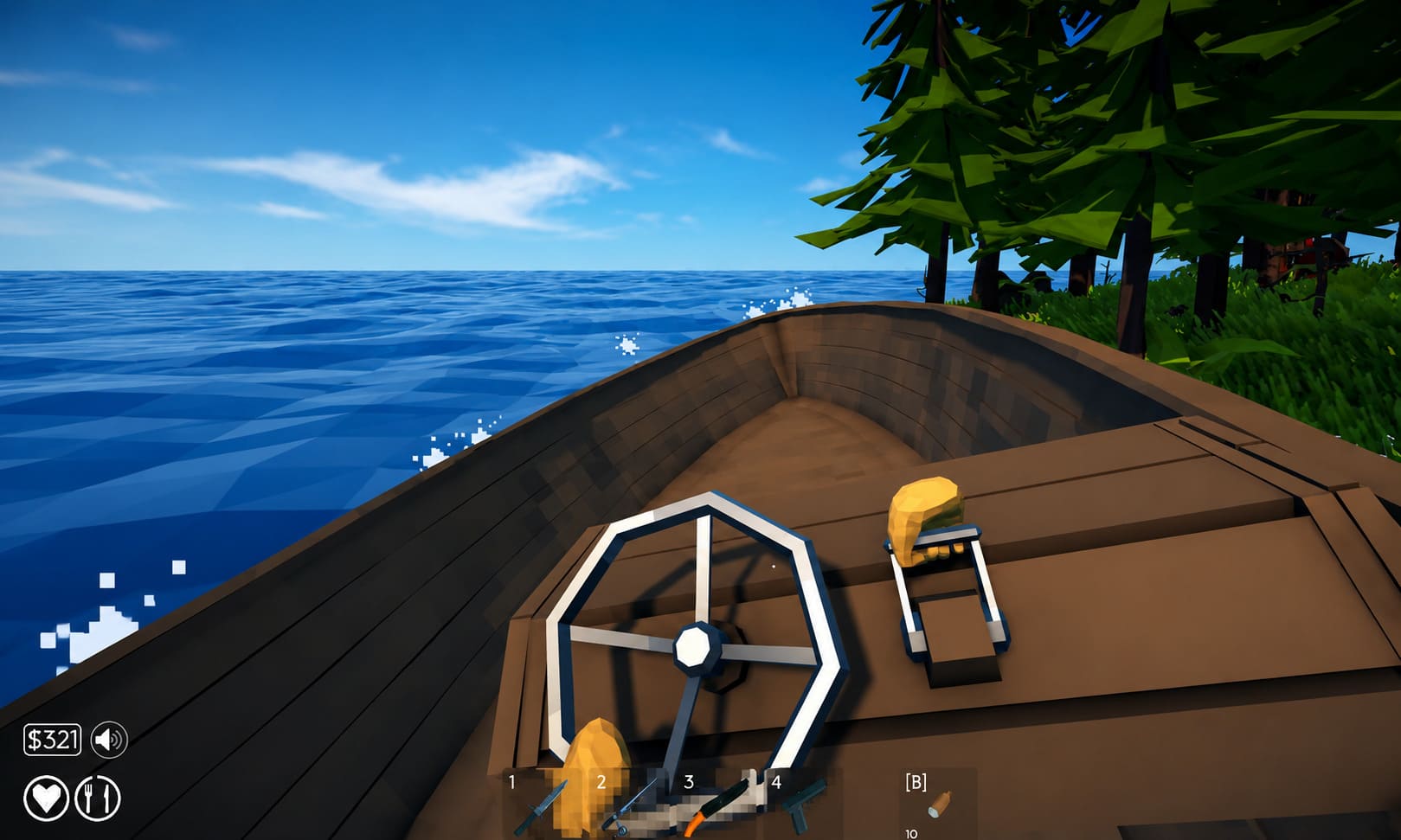
Boat Upgrades Are Probably More Important Than You Think
If I had to pick one mistake that new players are likely to make, it would be spending too much money on personal equipment while ignoring the boat.
Your boat isn’t just transportation.
It’s your mobile fishing platform, escape route, storage space, and occasionally the only thing keeping your entire team alive.
There are three upgrade areas I’d prioritize.
1. Hull Strength
This should be high on your shopping list once you’re moving into more dangerous waters.
A stronger hull gives your crew more room for mistakes when larger creatures start hitting the boat. And in a game based so heavily around physics, you’re going to make mistakes.
2. Engine and Mobility
Speed isn’t just about getting from point A to point B faster.
A more capable engine helps you reposition around fishing areas, escape dangerous situations, and respond when the conditions change. It also makes the boat feel dramatically less frustrating to operate.
3. Stability and Anchoring
This is the upgrade I think players may underestimate.
When you’re trying to fish in a particular area, constantly drifting away from your target is incredibly annoying. Better anchoring gives your team a much more reliable platform for fishing and combat.
My general priority would be:
Hull → Engine → Stability → Everything else.
The exact order can change depending on your playstyle, but having a boat that doesn’t immediately become a disaster zone is worth the investment.
Fishing Gear: Spend Money Where It Actually Matters
The same principle applies to rods and lines.
There’s no point having a fancy lure if your line is so weak that the first serious fish immediately turns your expensive equipment into underwater decoration.
For early progression, I’d focus on improving line strength and casting capability before chasing every fancy piece of equipment available.
Better rods can help you reach more productive areas, while stronger lines give you a larger margin for error when dealing with heavier catches.
And that margin matters.
The game gets much less stressful when you stop treating every large fish like a guaranteed catastrophe.
Bait Is Where Things Get Interesting
Once you’ve got the fundamentals under control, start experimenting with different bait and lure types.
Don’t assume the most expensive option is automatically the best one.
If you’re playing with friends, there’s an easy way to experiment: split your fishing areas between players and test different bait setups simultaneously.
Instead of four people throwing identical bait into the same water, try four different approaches.
You’ll learn much faster.
Weapons Aren’t Optional
This is probably the sentence that sounds the strangest when describing a fishing game:
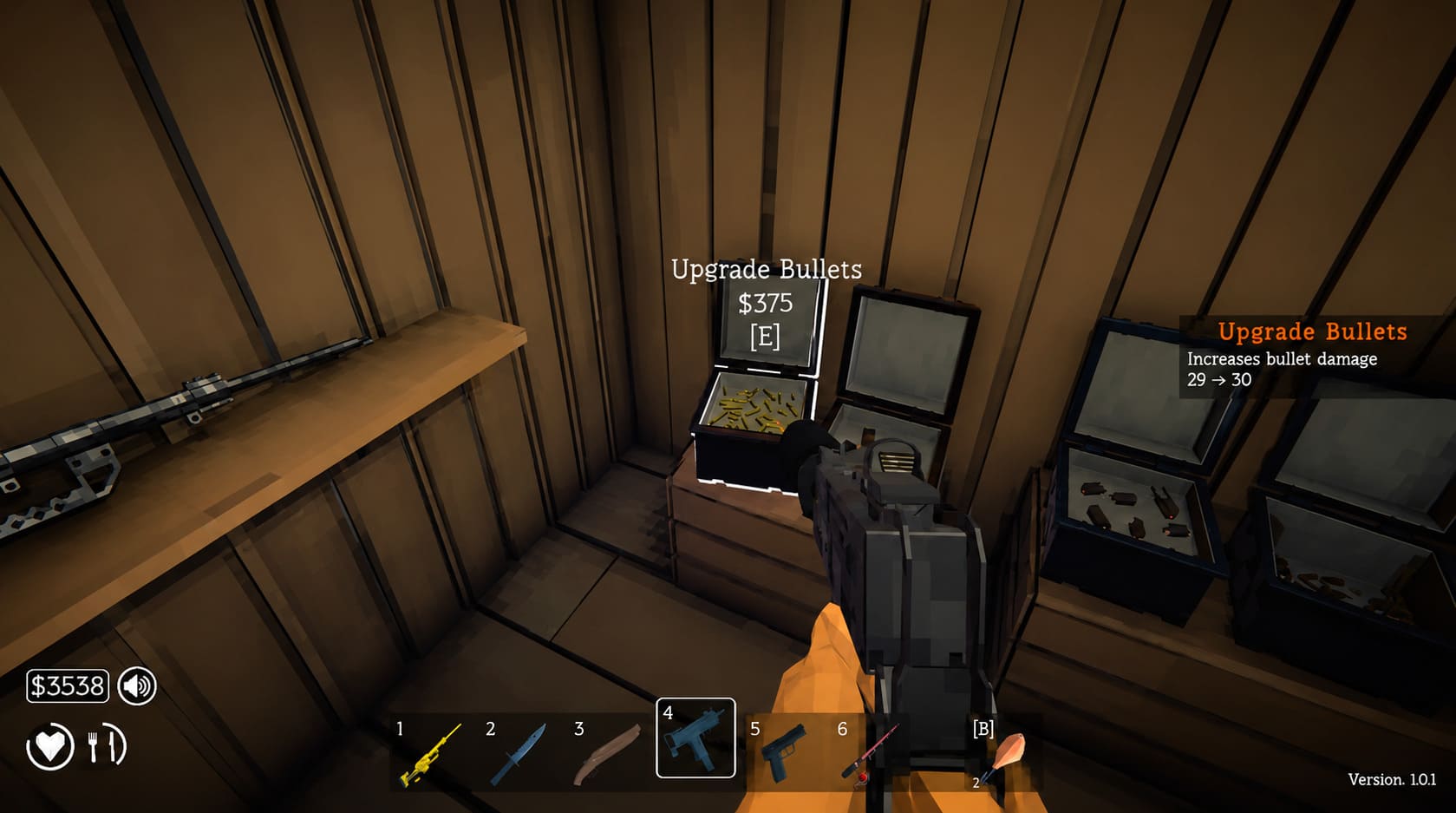
Buy better weapons.
But in How to Fish, combat equipment can be just as important as fishing gear.
The basic knife has its uses, especially early on, but getting close to aggressive creatures is not exactly my definition of a good fishing strategy.
As you progress, stronger firearms become increasingly useful for controlling dangerous encounters and helping teammates secure difficult catches.
I wouldn’t recommend completely neglecting fishing upgrades in favor of weapons, though. Your economy still depends on catching valuable fish.
Think of weapons as insurance.
You hope you don’t need them.
You absolutely want them when something enormous starts attacking the boat.
The Fastest Way to Make Money? Stop Playing Like You’re in a Hurry
This sounds contradictory, but rushing your fishing trips can actually slow progression down.
One of the easiest ways to improve your income is simply to become more consistent.
Pay attention to casting timing. Learn which areas produce better catches. Rotate your fishing locations instead of stubbornly sitting in one spot forever. And don’t waste your entire bankroll on a single upgrade just because it looks cool.
A Few Habits I’d Recommend:
- Learn the casting timing. A better cast can make a noticeable difference over a long session.
- Rotate fishing locations. Don’t treat one favorite spot as the only place worth fishing.
- Pool resources in co-op. One excellent boat can benefit four players more than four mediocre setups.
- Prioritize useful upgrades. Survivability and mobility generally beat flashy purchases early on.
- Experiment with bait. Especially when you’re hunting more valuable or unusual catches.
- Don’t gamble money you need for progression. The casino-style mechanics are fun, but your boat won’t care how exciting the bet was when you’re stuck with an underpowered engine.
My Favorite Part: The Physics
The progression systems are important, but I don’t think they’re what makes How to Fish memorable.
The real magic is the physics.
There is something uniquely entertaining about watching a completely normal fishing trip turn into a chain reaction of increasingly stupid decisions.
Someone hooks a massive fish.
The fish pulls the angler toward the water.
Another player tries to help.
The boat shifts.
The helmsman panics.
Someone fires a shotgun.
Nobody knows what happened.
And somehow, five minutes later, you’re standing on a different part of the island holding a dead fish worth enough money to buy your next upgrade.
That’s How to Fish.
It isn’t polished into a perfectly controlled simulation where everything behaves exactly as expected. The unpredictability is part of the appeal.
How to Fix How to Fish (Dazed Games) Not Loading, Crashing, and Black Screen Errors on PC
Final Thoughts: Fish Smart, Upgrade Smarter
The best way to approach How to Fish is to embrace the chaos without letting it completely control your progression.
Learn the fishing mechanics first. Build up your economy. Upgrade your line and rod. Invest in the boat before your crew starts venturing into genuinely dangerous waters. Give every player a job during difficult expeditions, and don’t underestimate the value of combat equipment.
Most importantly, don’t forget that you’re supposed to have fun.
There are plenty of games where optimizing every second is the entire point. How to Fish feels better when you allow yourself to experiment, make ridiculous mistakes, and occasionally turn a perfectly ordinary fishing trip into a full-scale aquatic firefight.
If your group can survive the early-game learning curve, coordinate its boat upgrades, and resist spending every coin on something shiny, the progression system becomes surprisingly satisfying.
And if you can’t?
Well, at least you’ll probably have a great story about the time your friend tried to fight a giant fish with a knife while the rest of you watched from a sinking boat.
That’s not exactly efficient progression.
But it sounds like a pretty good evening to me.