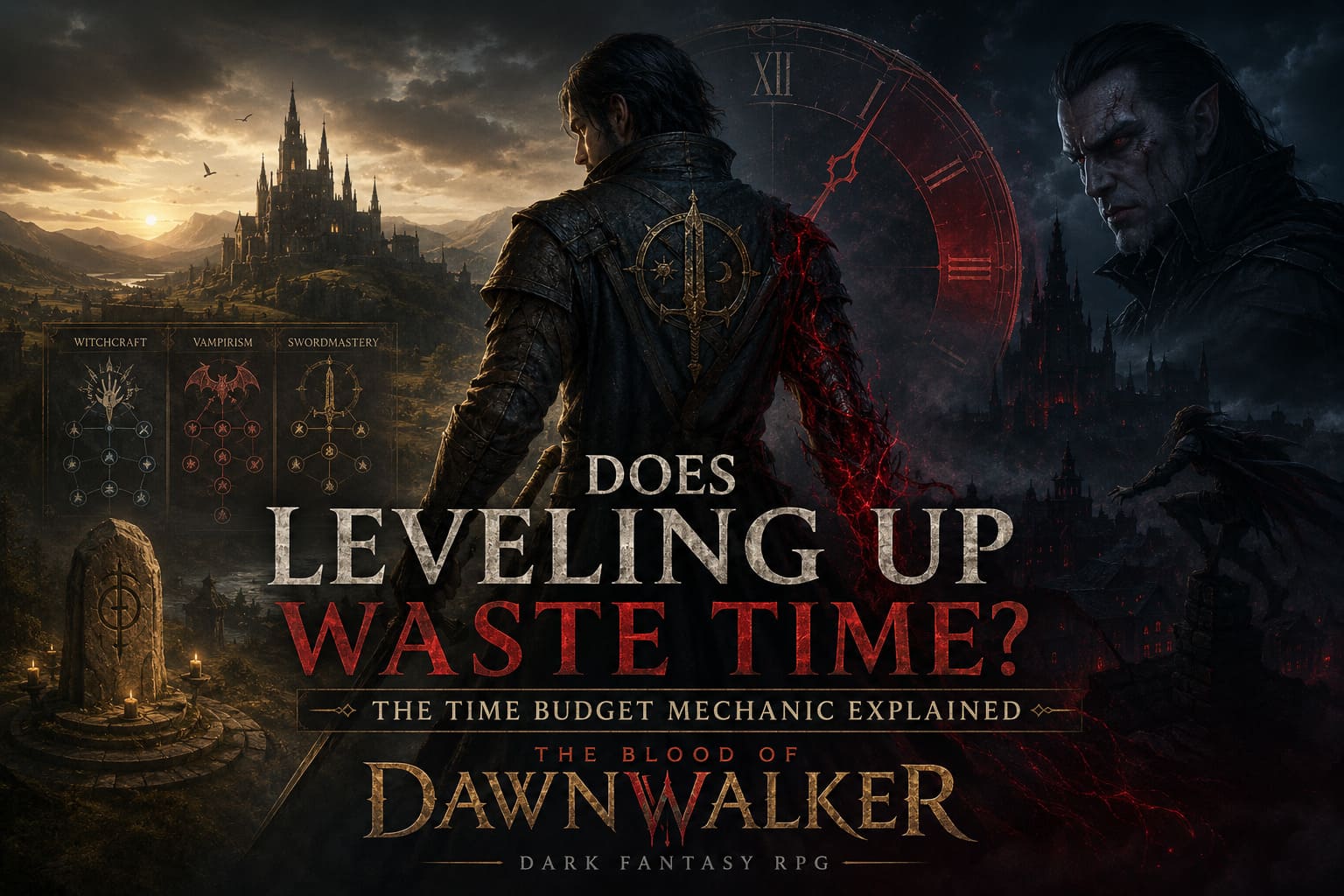
Does Leveling Up Waste Time in The Blood of Dawnwalker? The Time Budget Mechanic Explained
There is a habit I have picked up from years of playing RPGs: the moment a game gives me a huge map, I immediately stop caring about the main story.
The world can be ending. A king can be dying. My family can be in immediate danger. It doesn’t matter. If there is a suspicious-looking cave on the other side of the map, I’m going there. If a bandit camp gives me experience, I’m clearing it. If there is a skill point waiting to be spent, I’m probably spending it.
That approach has worked for me in countless RPGs.
It does not work particularly well in The Blood of Dawnwalker.
Rebel Wolves’ dark fantasy RPG takes one of the most comfortable habits in modern open-world games—grinding until you’re ridiculously overpowered—and turns it into something much more interesting. Here, time itself is part of your progression system.
You don’t simply decide whether a new perk is worth your XP. You also have to ask whether it is worth spending part of the limited time you have left.
And honestly? I love that idea.
The Blood of Dawnwalker’s Most Interesting Resource Isn’t XP
The central premise of The Blood of Dawnwalker is brutally simple: you don’t have forever.
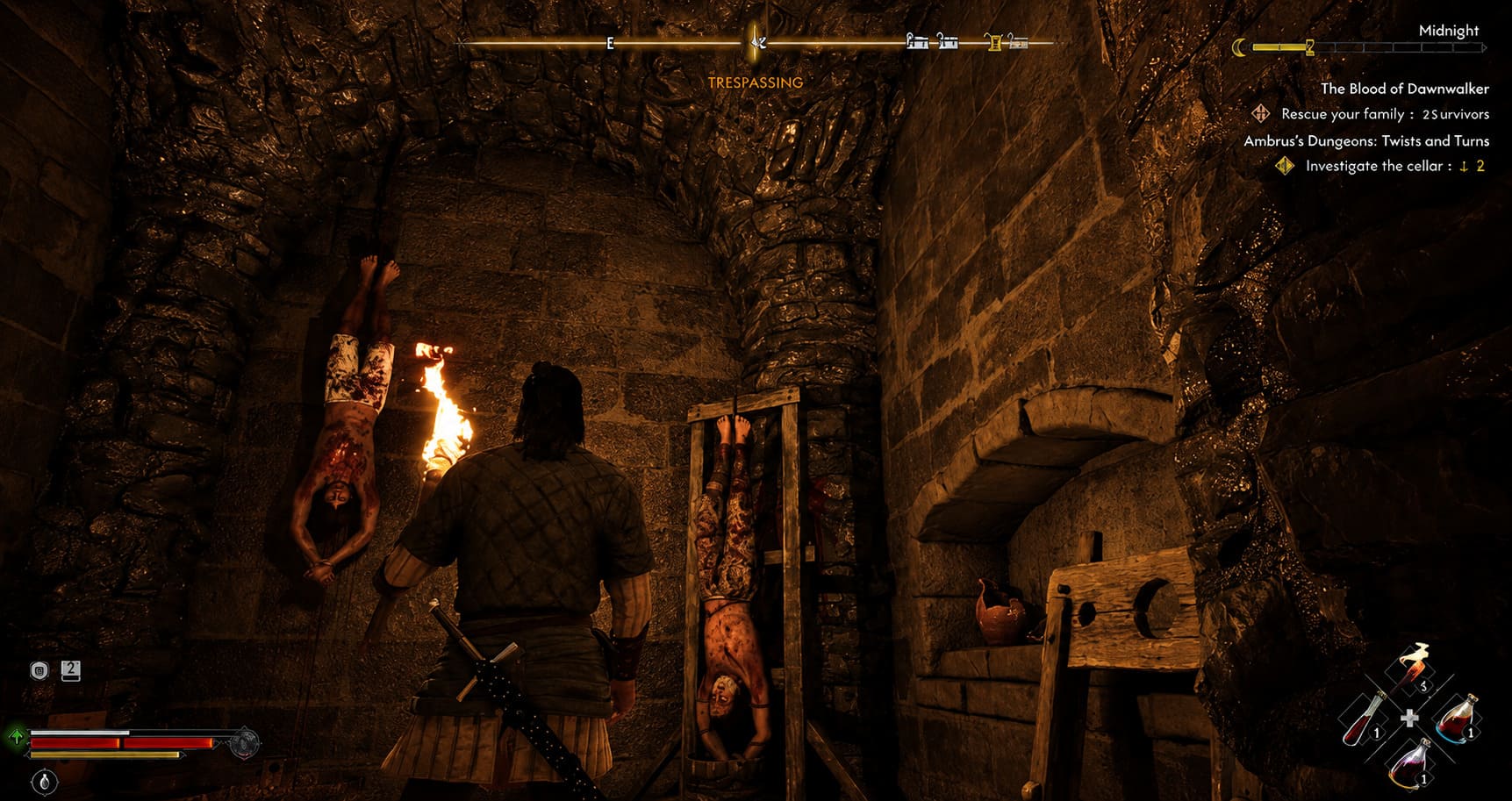
Coen has a limited number of days and nights to deal with the vampire lord Brencis, while also trying to save his family and navigate everything else happening in Vale Sangora. The game doesn’t treat this deadline like the fake urgency we have seen in so many RPGs.
You know the type.
“Hurry! The kingdom is about to fall!”
Then you spend 40 hours collecting herbs.
The Blood of Dawnwalker approaches the idea differently. Your time is structured into meaningful segments, and important actions can advance the clock. The result is an RPG where exploration and progression don’t always have the same relationship.
That distinction is incredibly important.
You can spend a surprising amount of real-world time wandering through Vale Sangora without necessarily burning through your in-game deadline. Exploring, climbing, fighting certain enemies and searching for hidden locations can be relatively safe from a time-management perspective.
The problem starts when you turn exploration into progression.
And that is where the shrine system becomes one of the game’s most important mechanics.
Yes, Leveling Up Can Cost You Valuable Time
At first glance, the progression system looks familiar.
You fight enemies.
You complete objectives.
You discover things.
You earn XP.
Then you use that XP to unlock abilities.
Nothing revolutionary there.
The twist is that you don’t simply open a menu whenever you feel like becoming stronger.
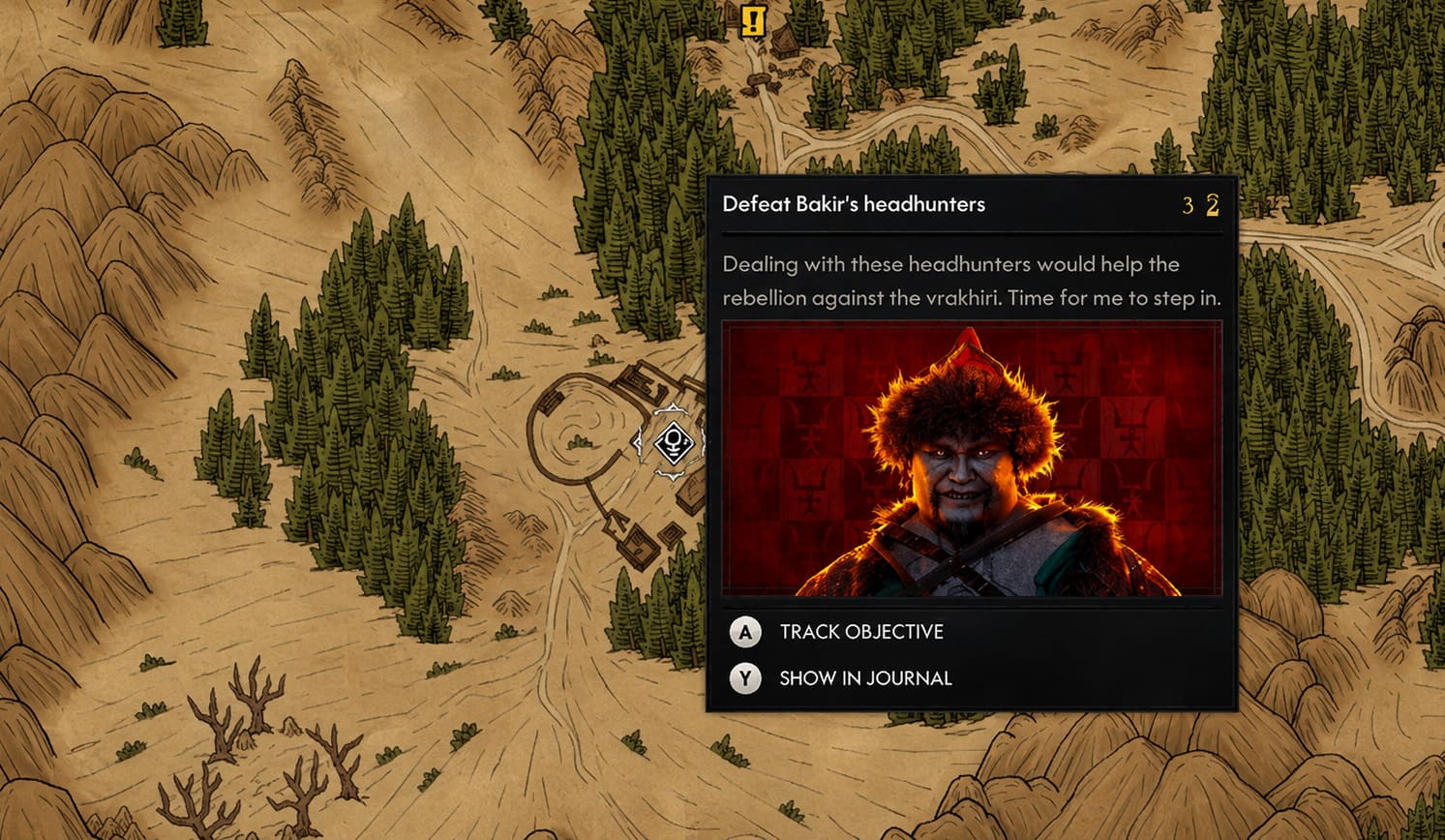
Progression is tied to specific locations and actions, and using those opportunities can consume chunks of your limited time budget.
That changes the way I think about XP completely.
In most RPGs, seeing that I have enough XP for another perk makes me think:
“Great. Free upgrade.”
In The Blood of Dawnwalker, my reaction is closer to:
“Do I actually need this right now?”
That tiny change in thinking is surprisingly powerful.
The Basic Progression Loop
| Step | What You Do | Time Impact |
|---|---|---|
| 1 | Earn XP through exploration and combat | Generally no direct time cost |
| 2 | Find skill books and manuals | Usually part of exploration |
| 3 | Reach a shrine | Requires planning |
| 4 | Spend XP on abilities | Can consume valuable time |
| 5 | Return to the world with a stronger build | Time budget continues |
This creates an unusual situation where being stronger isn’t automatically the correct choice.
Sometimes the smartest move is to keep your XP.
That feels strange if you’ve spent hundreds of hours playing traditional RPGs.
The Three Sides of Coen’s Build
One of the reasons this system works is that Coen isn’t simply another fantasy hero with a giant universal skill tree.
His abilities reflect his strange existence between humanity and vampirism.
1. Witchcraft: The Human Side
During the day, Coen remains closer to his human nature.
This side of the progression system focuses heavily on magical abilities, survival and the costs associated with using supernatural powers while still maintaining a human body.
The important thing here is that Witchcraft isn’t simply a collection of flashy spells.
It can fundamentally change how you approach encounters.
If you enjoy preparation, controlled combat and abilities that let you manipulate situations rather than simply charge into enemies, this is probably the branch you’ll find most interesting.
The catch is that supernatural power isn’t free.
Coen pays for some of his abilities with his own health, which makes build decisions much more meaningful than simply picking whichever skill has the biggest damage number.
2. Vampirism: Where Things Get Weird
This is probably the branch that immediately caught my attention.
At night, Coen’s vampire abilities open up a completely different style of play.
Instead of relying on conventional healing and human resources, his supernatural nature becomes the center of his combat and traversal.
And this is where The Blood of Dawnwalker starts looking much less like a traditional medieval RPG.
Some vampire abilities aren’t just combat upgrades. They affect how you move through the world.
Depending on your progression, Coen can gain abilities associated with supernatural movement, including transformations and unusual traversal options.
That matters because mobility can sometimes be more valuable than raw damage.
Why spend several minutes fighting through a heavily guarded location if an ability allows you to approach it from somewhere the enemies simply aren’t expecting?
For me, that’s where the vampire tree becomes particularly appealing.
3. Swordmastery: The Reliable Option
Then there is Swordmastery.
Compared with Witchcraft and Vampirism, this branch sounds almost boring.
It isn’t.
Swordmastery represents the fundamentals that remain useful regardless of what form Coen happens to be in.
Better melee combat, improved defensive options, stamina management and weapon-related abilities provide the foundation for a more reliable build.
And I suspect this is the tree many players will underestimate.
It is very easy to become distracted by spectacular vampire abilities. But when you’re dealing with a difficult encounter and your fancy supernatural solution isn’t available—or simply isn’t practical—having strong fundamentals can save you.
Personally, I’d rather have a focused supernatural build backed by a handful of excellent Swordmastery abilities than spread my resources evenly across everything.
Why Grinding Can Actually Hurt You
This is the part that I think will frustrate some traditional RPG players.
The game doesn’t necessarily punish you for exploring.
It punishes you for treating every activity as equally important.
There is a difference.
Imagine spending several in-game days:
- Clearing every enemy camp you encounter.
- Completing every minor side objective.
- Collecting every skill book.
- Returning to shrines after every small XP gain.
- Buying whatever perk happens to be available.
At the end of that process, you might have a fantastic character.
But what if the main objective has moved forward without you?
What if Brencis’ influence has grown while you’ve been busy perfecting Coen’s build?
That’s the interesting trade-off.
The Blood of Dawnwalker doesn’t ask, “Can you become powerful?”
It asks:
“How much are you willing to sacrifice to become powerful?”
That is a much more interesting RPG question.
The Best Strategy: Explore First, Upgrade Later
If I were starting a fresh playthrough, I wouldn’t constantly stop what I’m doing to spend every available skill point.
I’d treat progression more like a shopping trip.
You don’t go to the store every time you remember you need one item. You wait until you have a reason to go.
The same logic works here.
My preferred approach would be:
- Explore freely. Take advantage of the fact that simply wandering around isn’t necessarily burning through your limited narrative time.
- Collect XP and progression resources. Don’t feel obligated to spend them immediately.
- Find skill books. Knowledge and access to higher-level abilities are just as important as the XP itself.
- Decide what you actually need. Before visiting a shrine, look at the challenges coming next.
- Spend aggressively but selectively. When you finally commit time to progression, make those upgrades count.
This is what I mean by batching upgrades.
If you’re going to spend valuable time developing Coen, I’d rather make several meaningful improvements during that progression session than repeatedly interrupt the adventure for tiny upgrades.
Don’t Build Everything
This is probably my biggest piece of advice.
Don’t look at three skill trees and think:
“I’m going to unlock everything.”
That’s exactly the mentality that open-world RPGs have trained us to develop.
Instead, pick a direction.
Maybe you want Coen to be primarily a terrifying vampire who dominates nighttime encounters.
Maybe you prefer the human side and want to lean into Witchcraft.
Or perhaps you want a more conventional melee build with supernatural abilities supporting your swordplay.
Whatever you choose, let the build have an identity.
A focused character isn’t necessarily weaker than a generalist. In a game where progression has an opportunity cost, specialization can actually be the smarter choice.
Day and Night Should Influence Your Build
Another thing I really like about the concept is that Coen’s transformation isn’t merely a visual gimmick.
It affects how you should think about progression.
If you’re preparing for a major nighttime infiltration, it makes sense to prioritize abilities that improve your vampire form.
If the next section of the story is likely to involve human enemies during daylight, perhaps your Witchcraft or Swordmastery options deserve more attention.
This creates a relationship between character development and the actual world around you.
You’re not just asking which perk has the highest numerical value.
You’re asking:
“What am I going to do with this ability?”
That is a much healthier way to approach RPG progression.
What About Players Who Want Everything?
This is where New Game Plus becomes important.
If you’re the kind of player who looks at a skill tree and immediately experiences the uncontrollable urge to fill every single node, your first playthrough probably isn’t the place to do it.
A time-limited campaign naturally creates incomplete builds and missed opportunities.
That’s not necessarily a flaw.
In fact, I think it could become one of the best reasons to replay the game.
Your first run can be about making difficult decisions.
A later playthrough can be about experimenting.
You can try a completely different build, make different narrative choices and investigate content you ignored the first time.
That’s much more appealing to me than having one playthrough where I’ve already seen and unlocked absolutely everything.
The Blood of Dawnwalker 30-Day Time Management Guide: How to Beat the Clock and Save Your Family
Is The Time Limit Actually Fun?
This is ultimately the biggest question.
And personally, I think it depends on what you want from an RPG.
If your favorite thing about open-world games is spending 100 hours clearing the map before touching the story, The Blood of Dawnwalker may feel uncomfortable.
But if you enjoy games that force you to make meaningful choices, the time system could be one of its strongest features.
The deadline creates something most RPGs struggle to create: consequences for wasting time.
Normally, exploring a random cave is almost always beneficial.
There is treasure inside.
There is XP.
There is probably a new weapon.
So why wouldn’t you explore it?
Here, the answer can genuinely be:
“Because I have something more important to do.”
That is a surprisingly powerful feeling.
The Blood of Dawnwalker Price Guide: Standard vs Eclipse Edition (2026)
Final Thoughts: Stop Playing Like You Have Forever
The biggest mistake you can make in The Blood of Dawnwalker is probably approaching it like a traditional open-world RPG.
Don’t assume every side activity deserves to be completed.
Don’t assume every XP point needs to be spent immediately.
And definitely don’t assume that becoming stronger is always worth the time required to do it.
The clock is part of the game.
Once you accept that, the entire progression system starts making more sense.
Explore when you can.
Prepare before major objectives.
Collect the resources you need.
Choose a build with a clear purpose.
And when you finally sit down at a shrine, make sure the abilities you’re buying are actually worth the time you’re sacrificing.
For me, that’s what makes the system exciting.
The best RPG progression usually isn’t about watching numbers go up. It’s about making a decision and feeling that it mattered.
The Blood of Dawnwalker turns that idea into an actual mechanic.
And if Rebel Wolves can make the rest of the game support that philosophy as well as its progression system does, Vale Sangora could be one of the most memorable RPG worlds in years.
Don’t grind just because you can. In Dawnwalker, time is power—and wasting it might be the most expensive mistake you can make.