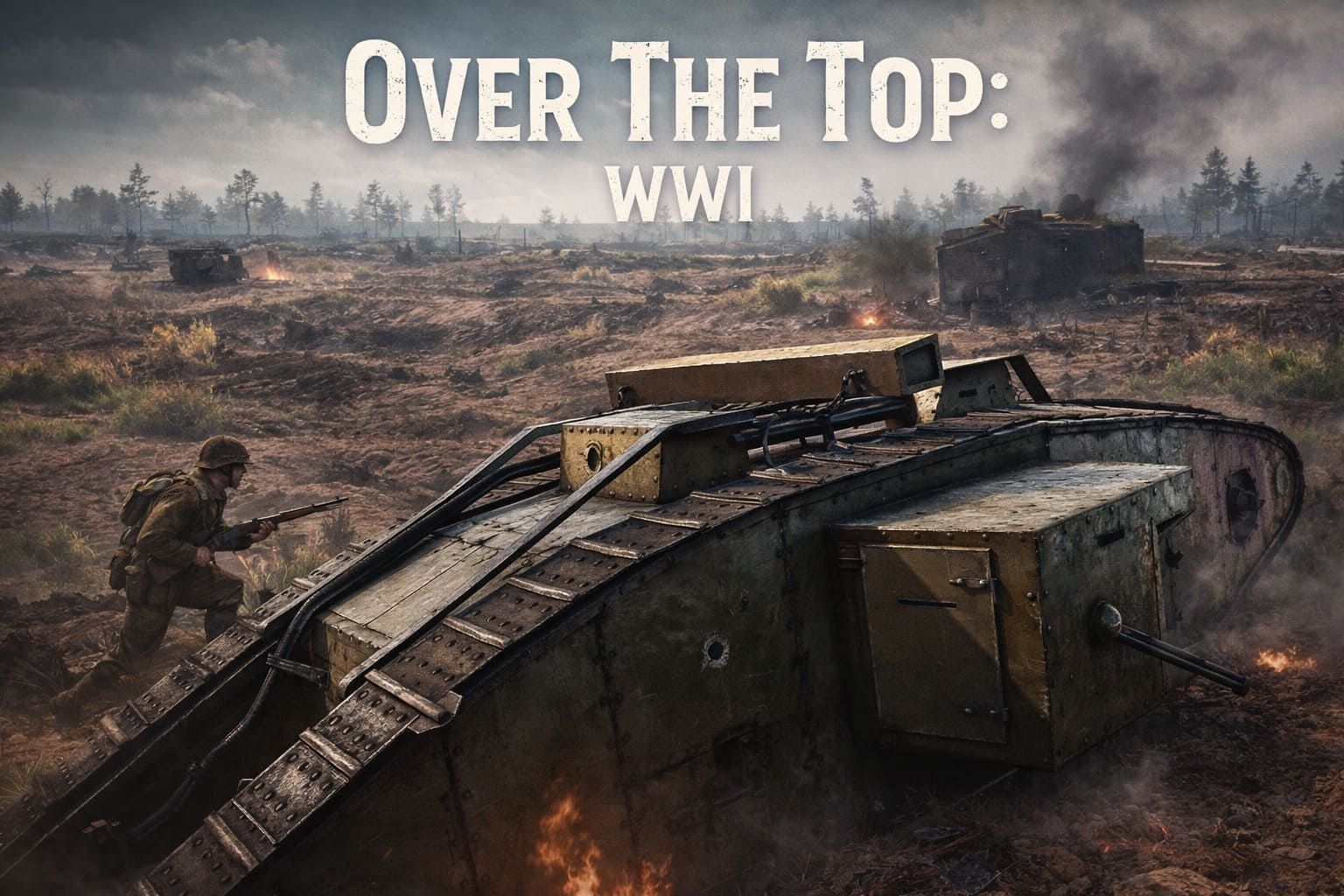
Over The Top: WWI Destructible Environments Explained, Bot Settings for Single Player (2026 Guide)
On March 6, 2026, a new World War I shooter quietly appeared on Steam, and within days players across gaming communities and forums like Reddit began discussing it as one of the most interesting battlefield sandboxes in years.
The game is Over The Top: WWI, created by Flying Squirrel Entertainment, the studio known for Battle Cry of Freedom.
At first glance it looks like another historical multiplayer shooter. But once you actually start playing, you realize something important: the terrain itself is the real gameplay system. Buildings collapse, trenches appear where there were none, artillery reshapes entire sectors of the map, and suddenly every match becomes unpredictable.
For players who have spent years chasing the chaotic destructive gameplay that older battlefield shooters once delivered, this title feels like a refreshing return to that philosophy.
Total Battlefield Destruction — Not Just a Gimmick
Many modern shooters advertise destructible environments, but in practice the destruction is often limited to scripted events or a few breakable walls.
Over The Top: WWI takes a completely different approach.
Nearly everything on the battlefield can be damaged or destroyed, which dramatically changes how players approach combat.
- Bridges can be blown apart to cut off enemy movement routes.
- Buildings can be breached to create new firing positions.
- Fences and trees collapse under artillery fire.
- Bunkers and sandbags can be completely leveled by heavy weapons.
The most important result of this system is simple: maps evolve naturally during the match.
A village that provided reliable cover early in the game might be reduced to rubble later after sustained shelling.
Terrain That Actually Changes the Fight
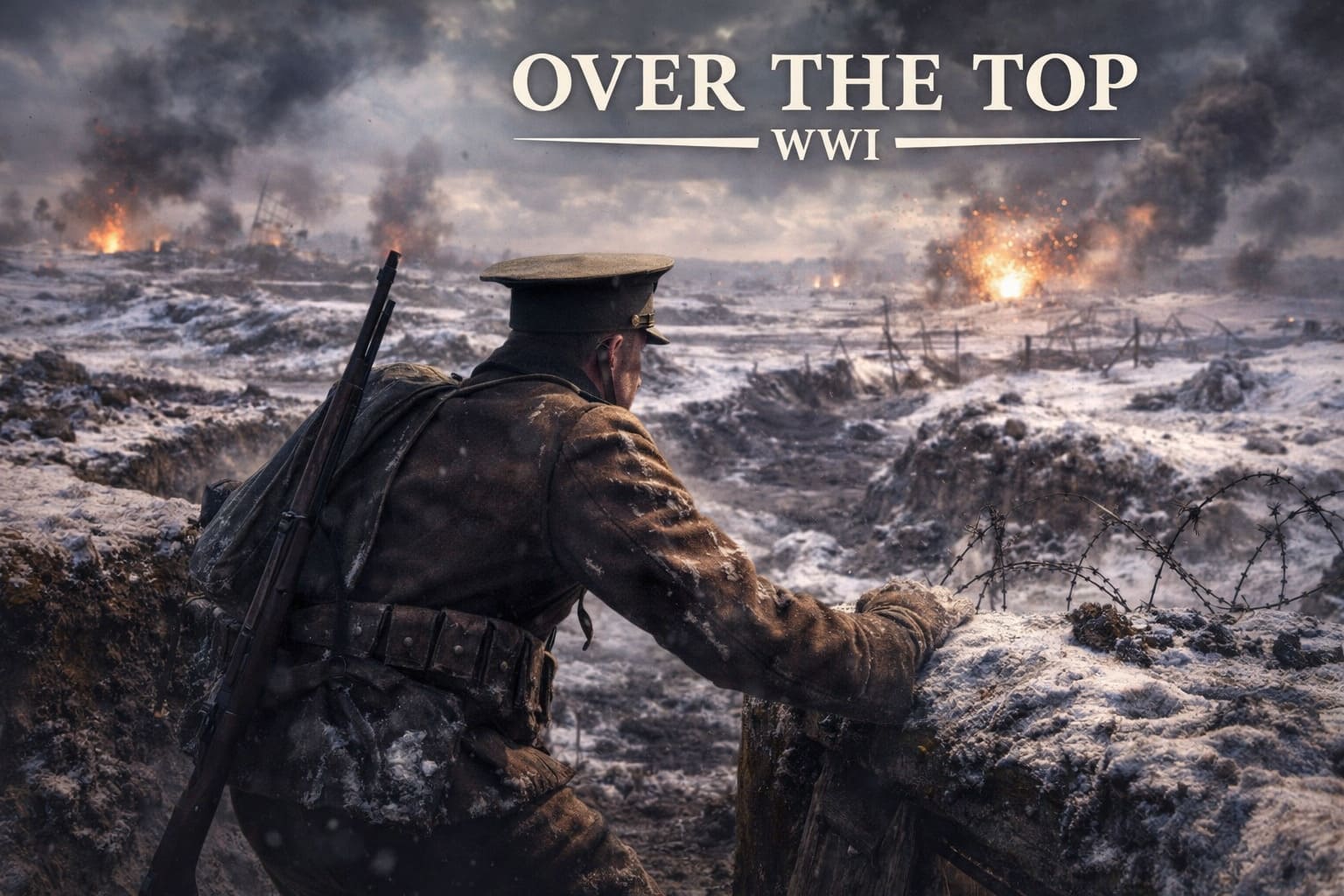
One of the most impressive mechanics in the game is terrain deformation.
Explosions do not simply leave visual scorch marks. Instead, they physically reshape the ground and create new tactical opportunities.
Over The Top: WWI System Requirements 2026 – Can Your PC Handle the Great War?
Craters Become Cover
Artillery shells and grenades leave deep craters that soldiers can dive into during dangerous charges across No Man’s Land.
Rather than a flat open killing field, the terrain gradually transforms into a chaotic network of small defensive positions.
- Crater fields created by artillery barrages
- Improvised foxholes from grenade impacts
- Broken trench lines formed by repeated explosions
This creates a battlefield that constantly evolves and rewards quick tactical thinking.
Dig Your Own Trenches
Another standout feature is the ability for players to manually reshape the battlefield.
Every soldier has access to simple tools such as shovels or pickaxes that allow them to alter the terrain directly.
- Dig trenches for protection
- Create defensive pits and foxholes
- Build new cover lines during combat
This means no two matches ever develop the same way.
A defensive trench that did not exist at the start of the match may become the most important chokepoint on the entire map later in the battle.
Massive Battles: 100 vs 100 Players
Scale is another defining feature of the game.
Each battlefield can support up to 200 players or AI bots simultaneously, dramatically increasing the scale of destruction and chaos.
During a typical battle, players encounter several major battlefield roles working together.
| Battlefield Element | Role in Combat |
|---|---|
| Heavy Artillery | Reshapes terrain from long distances and destroys fortifications |
| Tanks and Armored Cars | Break through structures and defensive lines |
| Engineers | Build defenses and reinforce positions |
| Flamethrower Troops | Clear enemy trenches and fortified positions |
With hundreds of players interacting with the environment at the same time, the battlefield rarely looks the same from one moment to the next.
Weather and Ballistics Add Another Layer
The environment in Over The Top: WWI is not only destructible but also reactive.
The game includes a dynamic system for weather, wind, and seasonal conditions that directly influence gameplay.
- Wind affects bullet trajectory at longer distances.
- Storms can break trees and change available cover.
- Seasonal variations alter visibility and environmental conditions.
These mechanics make long-range shooting and artillery positioning significantly more tactical.
PC System Requirements
To support large-scale destruction and environmental simulation, the game requires a reasonably capable PC system.
| Component | Minimum (1080p Low) | Recommended (1080p High) |
|---|---|---|
| Operating System | Windows 10 64-bit | Windows 10 / 11 |
| Processor | Intel i3-8300 / Ryzen 3 3100 | Intel i7-8700 / Ryzen 5 3600 |
| Memory | 8 GB RAM | 16 GB RAM |
| Graphics Card | GTX 1060 (6GB) / RX 570 | RTX 3060 / RX 6600 XT |
| Storage | 8 GB SSD | 8 GB SSD |
Why This Game Feels Different
Large AAA shooters have gradually moved away from full environmental destruction because it is difficult to balance and expensive to implement.
Smaller independent studios, however, often have the freedom to experiment with mechanics that larger publishers avoid.
Flying Squirrel Entertainment appears to be focusing on player-driven battlefield chaos rather than scripted cinematic moments.
For players who miss the sandbox destruction once popular in classic Battlefield titles, this game brings that feeling back in a modern form.
Over The Top: WWI Beginner’s Guide 2026 — Master the Trenches and Conquer the Frontline
Conquering the Trenches: My Favorite Single-Player Bot Setup for Over The Top: WWI (2026)
When Over The Top: WWI launched in March 2026, I honestly didn’t expect the single-player mode to hook me as much as it did. But after a few evenings experimenting with bot settings, I realized the game becomes something completely different when you push the AI and battlefield scale to their limits.
If you want the trenches to feel like a chaotic World War I battlefield instead of a quiet skirmish, the right bot configuration makes all the difference. Below is the setup I personally use to create huge, cinematic battles that actually feel like the Great War.
My Favorite Bot Settings for Massive WWI Battles
After a lot of testing in Build a Battle and Instant Battle, these settings gave me the most immersive results.
| Setting | Recommended Value | Why It Works |
|---|---|---|
| Bot Density | 200 Bots | Maximum chaos and huge frontline pushes |
| Friendly Fire | 10–15% | Reduces accidental bot teamkills |
| Bot Equipment | Ranged Weapons Only | Prevents bots from standing idle |
| Build-Up Timer | 2–3 Minutes | Allows defenses and coordinated assaults |
With 200 bots, the battlefield suddenly feels alive. Machine guns chatter nonstop, artillery explodes everywhere, and trench lines constantly shift. It’s the closest thing I’ve seen to a WWI “meat grinder” simulation in a sandbox game.
Adjusting AI Difficulty for a Better Solo Experience
Since single-player relies completely on AI behavior, difficulty settings really matter.
My recommendation:
- Challenging – Best balance for most players
- Hard – AI becomes smarter with flanking and artillery
- Impossible – Brutal but surprisingly satisfying once you learn the mechanics
One tweak I love is the “realism approach”.
- High bot accuracy
- Lower health values
This makes every push across open ground terrifying—exactly how a WWI battlefield should feel.
Tactical Tricks That Help You Survive
Playing solo means you’re often the one keeping the frontline from collapsing. A few habits helped me a lot.
1. Build Zig-Zag Trenches
Straight trenches are basically invitations for machine-gun fire.
A zig-zag layout reduces line-of-sight and prevents a single enemy from wiping your entire squad.
2. Avoid Clumping Together
Bots love throwing explosives and officer abilities.
If everyone hides in the same crater, one strike can erase your whole squad.
3. Use Strategic Call-Ins Smartly
These abilities can turn a stalemate into a breakthrough.
- Smoke Screens – perfect for crossing exposed terrain
- Creeping Barrage – clears trenches before your AI begins charging
When timed right, watching your bots advance behind artillery feels incredibly cinematic.
Best Single-Player Modes
Different modes change how the battle plays out.
| Mode | Best Use | Max Bots |
|---|---|---|
| Instant Battle | Fast large-scale fights | 200 |
| Build a Battle | Full sandbox control | 200 |
| Random Maps | Endless replayability | Varies |
A Quick Note for Steam Deck Players
If you’re playing on Steam Deck, the game currently has a “Playable” compatibility rating on Steam, but recent updates are steadily improving controller support. Performance in large battles is already decent if you tweak graphics settings.
Final Thoughts
Over The Top: WWI is more than a traditional historical shooter.
It functions as a tactical battlefield simulator where terrain itself becomes part of the strategy.
By the end of a large 100 vs 100 battle the environment can change dramatically.
- New trenches appear across the battlefield
- Buildings collapse into ruins
- Crater fields replace once-flat terrain
When the match finally ends, the battlefield often looks completely different from the map players first spawned into.
That level of dynamic warfare is something the genre has lacked for years, and Over The Top: WWI demonstrates how powerful fully destructible environments can be when they are placed at the center of the gameplay experience.
What surprised me most about Over The Top: WWI is how much depth its single-player mode has once you start experimenting with bots.
With the right setup—200 soldiers, coordinated charges, artillery, and brutal trench warfare—the game transforms into a chaotic WWI sandbox that’s incredibly fun to watch and play.
If you enjoy tactical shooters or historical battle simulations, dialing in these settings can turn your solo matches into epic frontline battles that feel straight out of a history documentary.