The Blood of Dawnwalker 30-Day Time Management Guide: How to Beat the Clock and Save Your Family
The Blood of Dawnwalker has one of those game mechanics that sounds terrifying on paper.
Thirty days. Thirty nights. One family to save.
If you’ve spent any time around RPG communities, you already know what happens when developers announce a hard time limit. Players immediately start thinking about everything they might miss. Did I waste a day? Should I skip that quest? Am I already ruining the best ending because I decided to explore a random cave?
Honestly, I had the same reaction.
But after looking at how the 30-day time limit in The Blood of Dawnwalker is actually designed, I think the biggest mistake is treating it like a traditional countdown timer. This isn’t Dead Rising where every second feels like it’s personally attacking you. The clock is much closer to a strategic resource — something you’re supposed to spend.
And that’s a much more interesting idea.
Set in the plague-ravaged Carpathian region of Vale Sangora, the game puts you in the role of Coen, a young man transformed into a Dawnwalker. During the day, he’s still connected to his human side. At night, his vampiric nature takes over.
Meanwhile, his family is in the hands of the vampire lord Brencis.
So yes, there is a deadline.
But there is also freedom.
The trick is learning when to spend your time and when to simply stop worrying about the clock.
First: Stop Thinking of the 30 Days as a Real-Time Countdown
This is probably the single most important thing to understand.
The Blood of Dawnwalker does not constantly burn through your 30 days while you’re walking around the map.
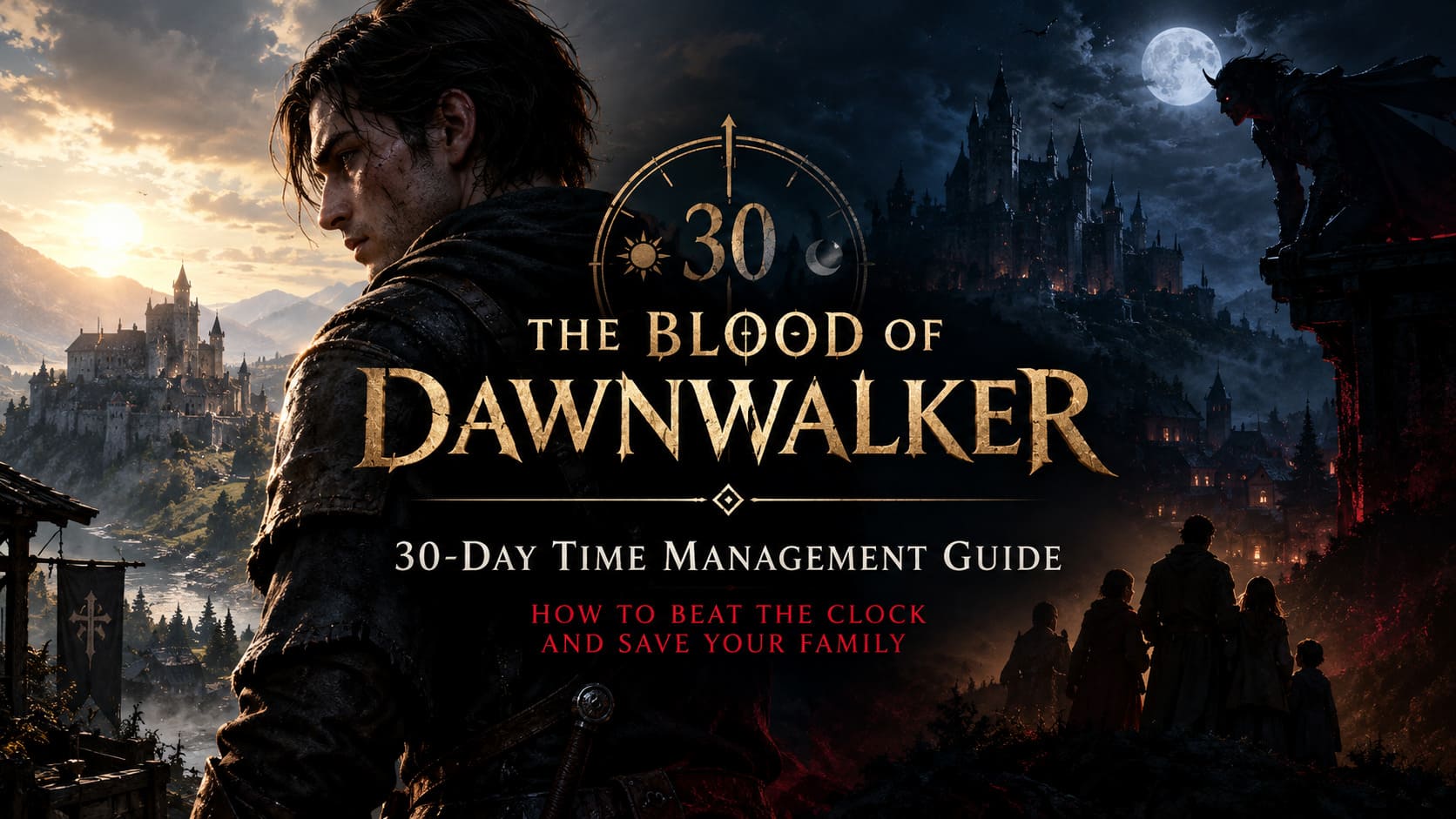
Exploring, fighting enemies, looking for hidden locations and generally messing around in Vale Sangora isn’t the same thing as advancing the narrative clock. Time is primarily consumed by specific major actions, quests and story decisions.
That’s a huge distinction.
It means you can spend an evening exploring a ruined settlement, testing your combat build, collecting resources or looking for secrets without constantly thinking, “Oh God, I’ve just wasted another three hours.”
You haven’t.
The game wants you to explore.
In fact, I’d argue that exploration is one of the best ways to make the 30-day system work in your favor. Instead of immediately throwing yourself into every major quest marker, use your freedom to become stronger before you start spending valuable chunks of time.
That’s where the system starts getting interesting.
Think of Time Like Money
I wouldn’t call the 30 days a timer.
I’d call them your campaign budget.
Every major decision has a price. Some things are worth paying for. Others simply aren’t.
Before committing to an action that costs time, ask yourself:
- Does this make Coen significantly stronger?
- Does it help me reach or weaken an important enemy?
- Does it unlock a valuable character relationship?
- Does it open a meaningful story branch?
- Am I doing this because I actually want to, or because a quest marker told me to?
That last question is surprisingly important.
Day and Night Are Basically Two Different Playstyles
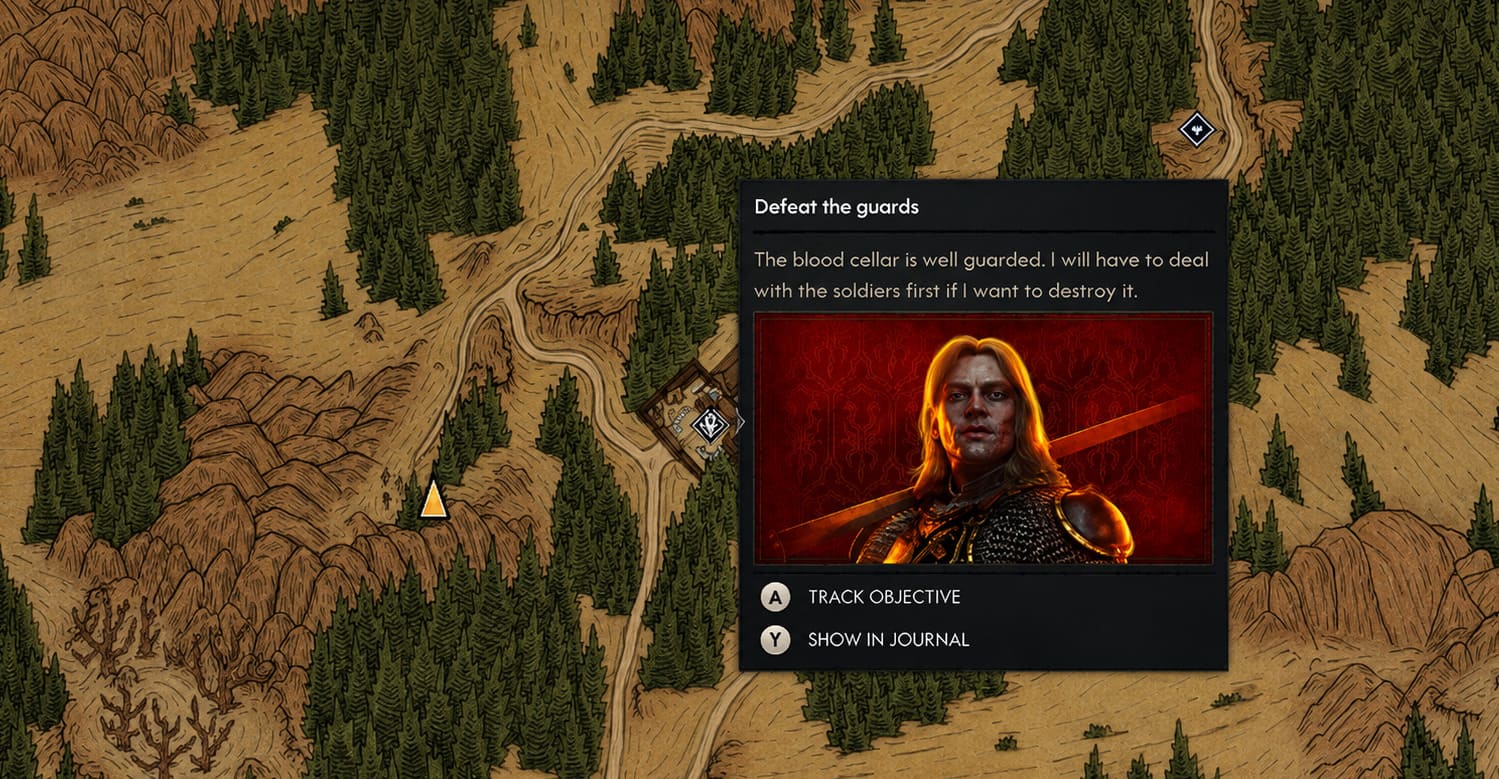
The other thing I really like about Dawnwalker’s design is that the 30-day mechanic isn’t isolated from gameplay. The day/night cycle changes how you approach the world.
Coen isn’t simply a vampire with a darker character model at night. His abilities and priorities shift dramatically.
| Time | Best Use | General Playstyle |
|---|---|---|
| Day | Exploration, settlements, witchcraft | Human combat, stealth, preparation |
| Sunset | Transition and repositioning | Prepare for stronger enemies |
| Night | Traversal, hunting, combat | Vampiric abilities and aggressive play |
| Late Night | High-risk encounters | Maximum supernatural potential |
During the day, Coen’s human side becomes much more important. Traditional weapons, swordplay, stealth and witchcraft give you a more grounded toolkit.
This is where I’d personally spend time exploring settlements and hunting for magical knowledge.
Witchcraft can give you some nasty options, including spells and hexes designed to control or destroy groups of enemies. Abilities such as Acrit Dust and Burning Blood can make the human side of Coen’s skillset much more dangerous than it initially appears.
Then the sun goes down.
And everything gets weird.
Nighttime Is When Coen Really Feels Like a Monster
The first time you properly start using Coen’s vampire abilities, you’ll probably understand why the day/night split is so important.
At night, movement itself changes.
Vertical surfaces suddenly become opportunities rather than obstacles. Coen can use supernatural traversal, move rapidly through the environment and take advantage of abilities that simply aren’t available during the day.
And combat becomes considerably more vicious.
Instead of relying exclusively on conventional swordplay, you can use vampire attacks, stuns, mobility and health recovery to overwhelm enemies.
Piercing Shriek can interrupt opponents, while Voracious Bite provides an extremely useful way to recover during fights.
But there is a catch.
Blood.
You can’t simply treat vampiric abilities as an unlimited super mode. Your supernatural power comes with a cost, and feeding on humans introduces another layer of consequence into the game.
That’s where Dawnwalker starts feeling less like a standard action RPG and more like a game about making uncomfortable choices.
My Preferred Way to Approach the 30 Days
If I were starting a fresh playthrough, I wouldn’t divide the game into “main quest” and “side quests.”
I’d think about it in three broad stages.
Days 1–10: Become Dangerous Before Spending Time
The early game should be about preparation.
Don’t immediately burn through major narrative objectives just because they’re sitting in front of you.
Instead, explore.
Learn how combat works. Find useful equipment. Experiment with Coen’s abilities. Look for lore and magical resources. Clear smaller encounters and get comfortable with the directional combat system.
The combat deserves special attention here.
If you’re coming from games where you can simply mash the attack button until something dies, the directional system can take a little adjustment. Attacks and defensive actions come from different directions, so learning to read enemy animations and respond correctly is incredibly useful.
Use the early, relatively low-pressure portion of the game to practice parries.
Once those reactions become automatic, harder encounters become much less intimidating.
If you have access to early equipment such as the Sangoran Wayfarer’s Armor Set, I’d use it rather than obsessing over finding the perfect legendary gear immediately. Get yourself into a comfortable position first, then start hunting for the really good stuff.
There are also hidden weapons and valuable loot scattered throughout the world, so exploration can pay off much more than simply following the next objective marker.
Days 11–20: Start Cutting Into Brencis’s Power
This is where I’d start spending the clock more aggressively.
By now, Coen should have a build that actually feels like your character rather than a collection of random abilities.
Maybe you’re leaning heavily into swordplay.
Maybe you’ve invested in witchcraft.
Maybe you’ve decided that embracing the vampire side is simply too much fun to resist.
Whatever your approach, this is the point where major objectives become worthwhile.
Go After the Lieutenants
Don’t think of Brencis as the only target.
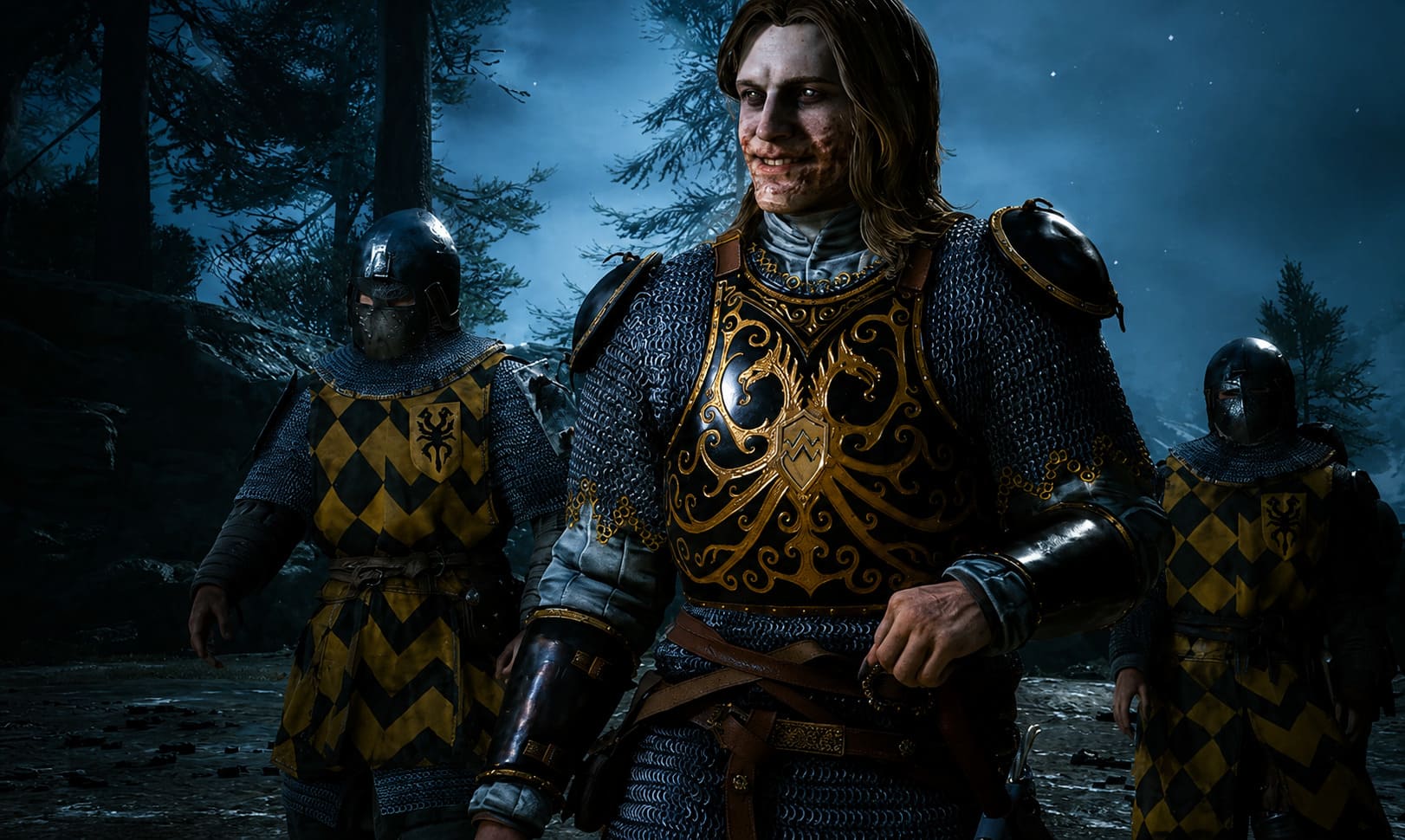
Characters such as Bakir and other high-ranking vampires represent opportunities to weaken the larger enemy structure before the final confrontation.
This is exactly the sort of content I’d prioritize because it feels like your preparation actually matters.
Instead of simply leveling up because RPGs tell you to level up, you’re dismantling the forces that stand between Coen and his family.
That’s much more satisfying.
This is also the period where I’d invest in important relationships and companions.
The narrative sandbox means you probably won’t experience every possible storyline in one playthrough. That’s not a flaw. It’s the point.
Some decisions close doors.
Others open completely different ones.
Don’t try to create a perfect checklist of every character arc.
You’ll probably have a better experience if you follow the characters and stories that genuinely interest you.
Days 21–30: Stop Collecting and Start Finishing
This is where I’d become much more selective.
If you’ve reached the final third of your 30-day window, don’t suddenly decide you need to complete every remaining side activity on the map.
You don’t.
Look at your quest log and ask a simple question:
“Will this actually help me?”
If the answer is no, move on.
The final days should be about completing the objectives that matter most to your particular playthrough and making sure Coen is prepared for the endgame.
This is also where gear optimization starts becoming more important.
You’ve had plenty of time to experiment with abilities and equipment. Now you should know what works for you.
If you’re going into a difficult boss encounter with a build you haven’t tested, that’s on you.
Don’t Be Afraid to Explore
One of the funniest things about time-limit games is that players often become afraid of doing exactly what the developers want them to do.
Exploring.
Dawnwalker is built around a narrative sandbox philosophy. The world isn’t simply a collection of corridors connecting one quest to another.
There are secrets.
There are optional characters.
There are enemies you can hunt.
There are locations you might never discover on a first playthrough.
And that’s okay.
Personally, I would rather finish my first playthrough knowing I missed some content than spend the entire game staring at the clock and turning an atmospheric open-world RPG into a checklist simulator.
You are supposed to miss things.
That’s what makes a second playthrough interesting.
Fast Travel, Infamy and the Little Decisions That Matter
There are also a few systems that can quietly affect how you manage your time.
Travel choices deserve some attention. If a particular shortcut or travel option costs valuable time, consider whether you actually need it.
At night, Coen’s supernatural mobility gives you an alternative. Moving through the world using his vampiric abilities can be more than just a cool animation — it can become part of your overall strategy.
Then there’s Infamy.
The more aggressively you embrace Coen’s darker nature, the more the world can react to you.
And this is exactly the kind of system I want in a vampire RPG.
If you decide to solve every problem with claws and blood, there should be consequences. Towns, factions and individual characters shouldn’t necessarily treat you the same way they would treat a restrained Coen.
That makes your choices feel like more than dialogue options.
What About Trying to Get Everything in One Playthrough?
I wouldn’t.
At least not on your first run.
The temptation to chase 100% completion is understandable, especially when you know there’s a hard 30-day structure. But trying to experience every storyline, every faction and every possible outcome simultaneously defeats the purpose of the narrative sandbox.
I’d aim for a strong, coherent playthrough instead.
Follow the characters you like.
Make decisions that feel right for your version of Coen.
Experiment with the vampire abilities.
Explore when you feel like exploring.
And when the clock starts getting low, commit to your most important objectives.
That’s a much better way to experience The Blood of Dawnwalker than constantly worrying about a hypothetical perfect run.
The Blood of Dawnwalker Price Guide: Standard vs Eclipse Edition (2026)
A Quick 30-Day Strategy
Here’s the version I’d keep beside me while playing:
| Period | Priority | What I’d Do |
|---|---|---|
| Days 1–5 | Learning | Explore, fight, test builds |
| Days 6–10 | Preparation | Find gear, lore and useful abilities |
| Days 11–15 | Power | Begin major objectives |
| Days 16–20 | Targets | Hunt important vampires and build alliances |
| Days 21–25 | Focus | Finish high-value quests |
| Days 26–30 | Endgame | Stop wasting time and prepare for the finale |
The exact order isn’t sacred.
That’s the beauty of the system.
The Clock Is Actually One of Dawnwalker’s Best Ideas
After looking at the whole design, I think the 30-day mechanic could end up being one of the game’s most memorable features.
Most open-world RPGs have a strange problem: the world is supposedly ending, but your character can spend 60 hours picking flowers.
Dawnwalker at least tries to solve that contradiction.
You have a real objective.
You have limited time.
But you’re also given enough freedom to decide what is worth your time.
That’s much more interesting than simply putting a countdown in the corner of the screen.
So if you’re worried about starting The Blood of Dawnwalker because of the 30-day limit, my advice is simple:
Relax.
Don’t rush through the opening.
Don’t obsess over perfect completion.
Explore the valley. Learn Coen’s human abilities. Enjoy becoming increasingly ridiculous at night. Pick the fights that matter. Build relationships with characters you actually care about.
And when you finally reach the point where the clock is running low, make your decisions count.
Because that’s what the 30 days are really about.
Not whether you can finish the game fast enough.
It’s about deciding what — and who — is worth saving.