Shift at Midnight Guide: How to Spot Every Doppelganger and Survive the Night Shift
When I first launched Shift at Midnight, I expected another short horror experience built around cheap jump scares. Instead, I found one of the most stressful indie games I’ve played in a long time. It takes familiar ideas from deduction horror games and mixes them with survival mechanics, time management, and psychological pressure in a way that constantly keeps you questioning every decision.
The biggest surprise isn’t the monsters themselves—it’s how much the game forces you to pay attention. Every customer could be completely harmless… or they could be waiting for one mistake before turning your quiet gas station into a nightmare.
After spending hours experimenting with different strategies, watching how the AI behaves, and learning from plenty of failed shifts, I’ve put together the guide I wish I’d had from the beginning.
Why Shift at Midnight Feels Different
Most horror games ask you to survive.
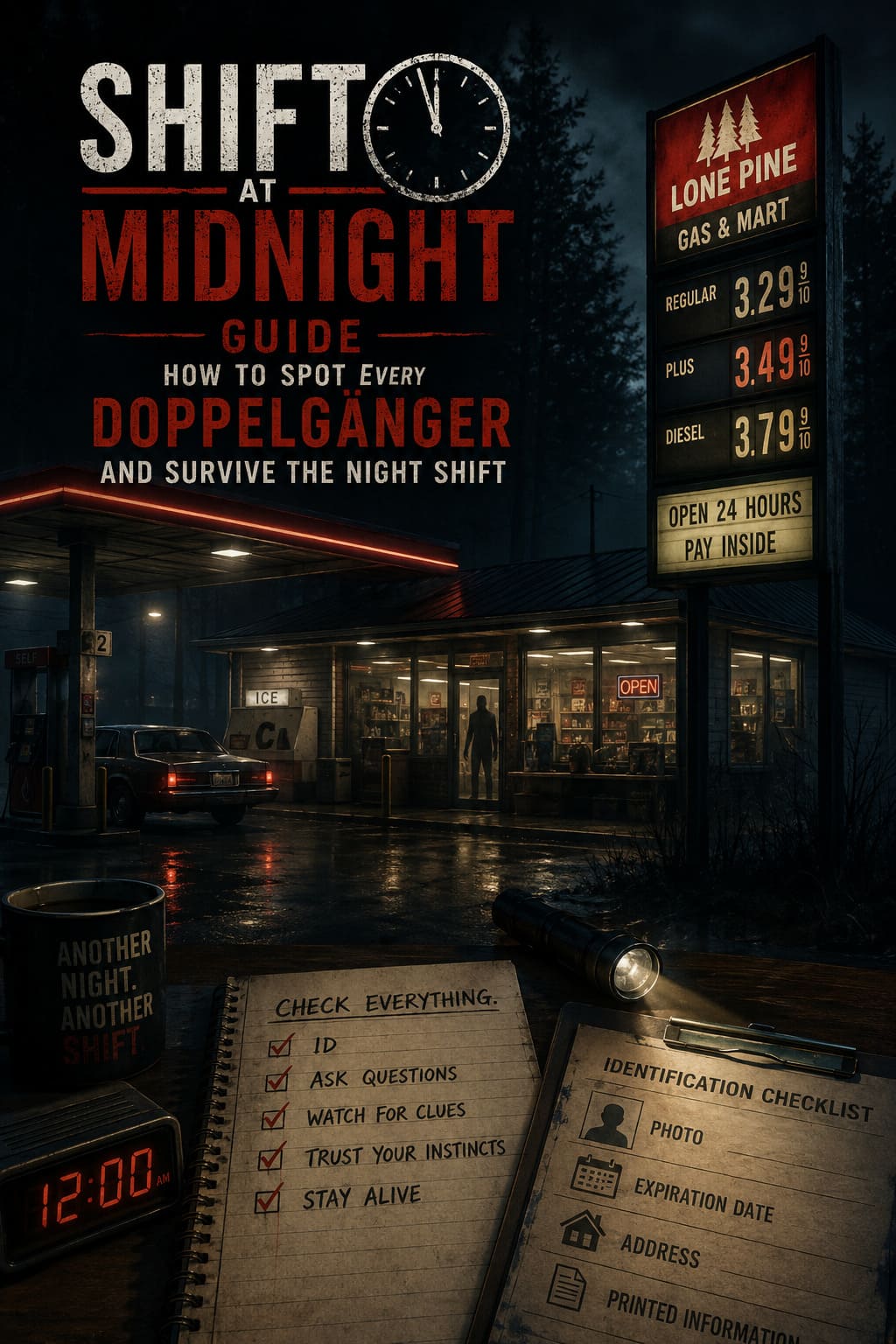
Shift at Midnight asks you to work.
That sounds simple, but it’s what makes the game so effective. You’re not hiding in an abandoned asylum or exploring a haunted mansion. You’re just trying to finish another overnight shift at a lonely gas station somewhere in the middle of nowhere.
While you’re stocking shelves, cleaning spills, organizing deliveries, and serving customers, you’re also expected to determine whether every single visitor is actually human.
That constant split in attention creates tension naturally. Even during quiet moments, you’re wondering whether you’re missing something important.
Personally, I think that’s where the game shines the most.
Your Job Isn’t Just Hunting Monsters
A lot of new players become obsessed with finding doppelgangers immediately.
That’s a mistake.
Ignoring the actual responsibilities of your shift will hurt your final performance almost as much as letting a fake customer escape.
During every night you should balance several priorities:
- Restock empty shelves.
- Accept deliveries.
- Keep the station clean.
- Watch your sales quota.
- Inspect every customer carefully.
Trying to rush through any of these usually comes back to punish you later.
The better your station is running early in the night, the easier it becomes to focus on investigations once things start getting chaotic.
Never Rush Customer Inspections
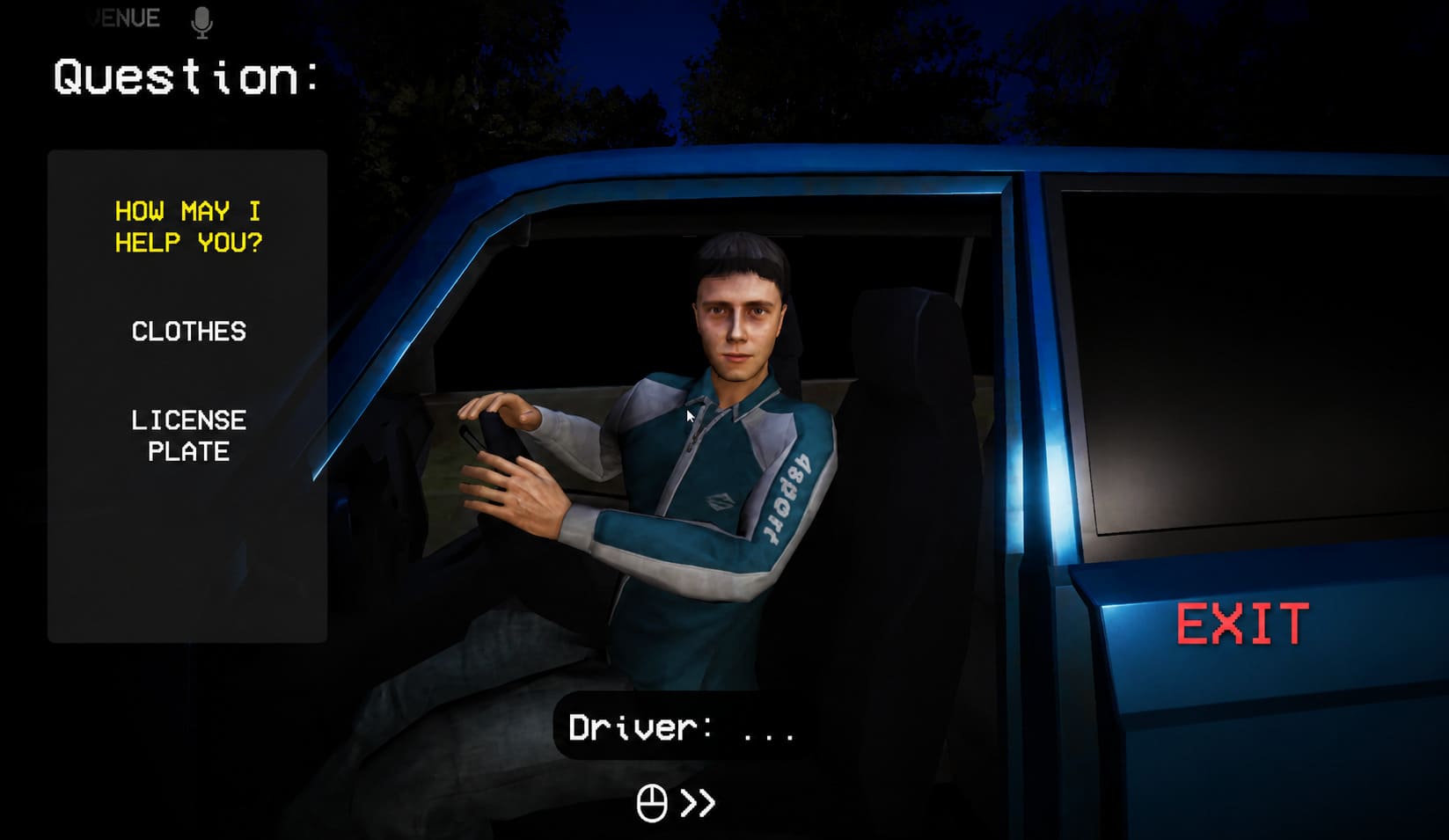
The interrogation system is probably my favorite mechanic in the entire game.
Instead of randomly guessing who looks suspicious, you’re encouraged to actually investigate people like a detective.
I developed a simple routine that has saved me countless times.
Step One: Check Every Document
Always inspect identification before doing anything else.
Pay attention to details like:
| What to Inspect | Why It Matters |
|---|---|
| Photo | Doesn’t match the customer’s appearance. |
| Expiration Date | Old or invalid documents are suspicious. |
| Address | Doesn’t match their story. |
| Printed Information | Small inconsistencies often reveal fakes. |
The game loves hiding tiny mistakes.
Sometimes they’re incredibly obvious.
Other times you’ll only notice them after staring for several seconds.
Step Two: Ask Smart Questions
Don’t waste your limited questions.
I usually focus on topics that naturally connect together.
For example:
- Where are you coming from?
- Where are you going?
- Why are you out this late?
- What are you buying?
- Why does your paperwork say something different?
The goal isn’t asking random questions.
You’re trying to create contradictions.
Once a customer’s story starts falling apart, you’re usually on the right track.
Step Three: Trust the Detection Warning
If your investigation triggers the Non-Human Detected notification, don’t second-guess yourself.
I’ve seen plenty of players hesitate because the customer “looks normal.”
That hesitation usually ends badly.
The system exists for a reason.
Once it’s confirmed, finish the encounter before the creature has a chance to react.
The Biggest Visual Clues I Always Watch For
Eventually you’ll start spotting doppelgangers without needing confirmation.
Some of the visual tells are surprisingly subtle.
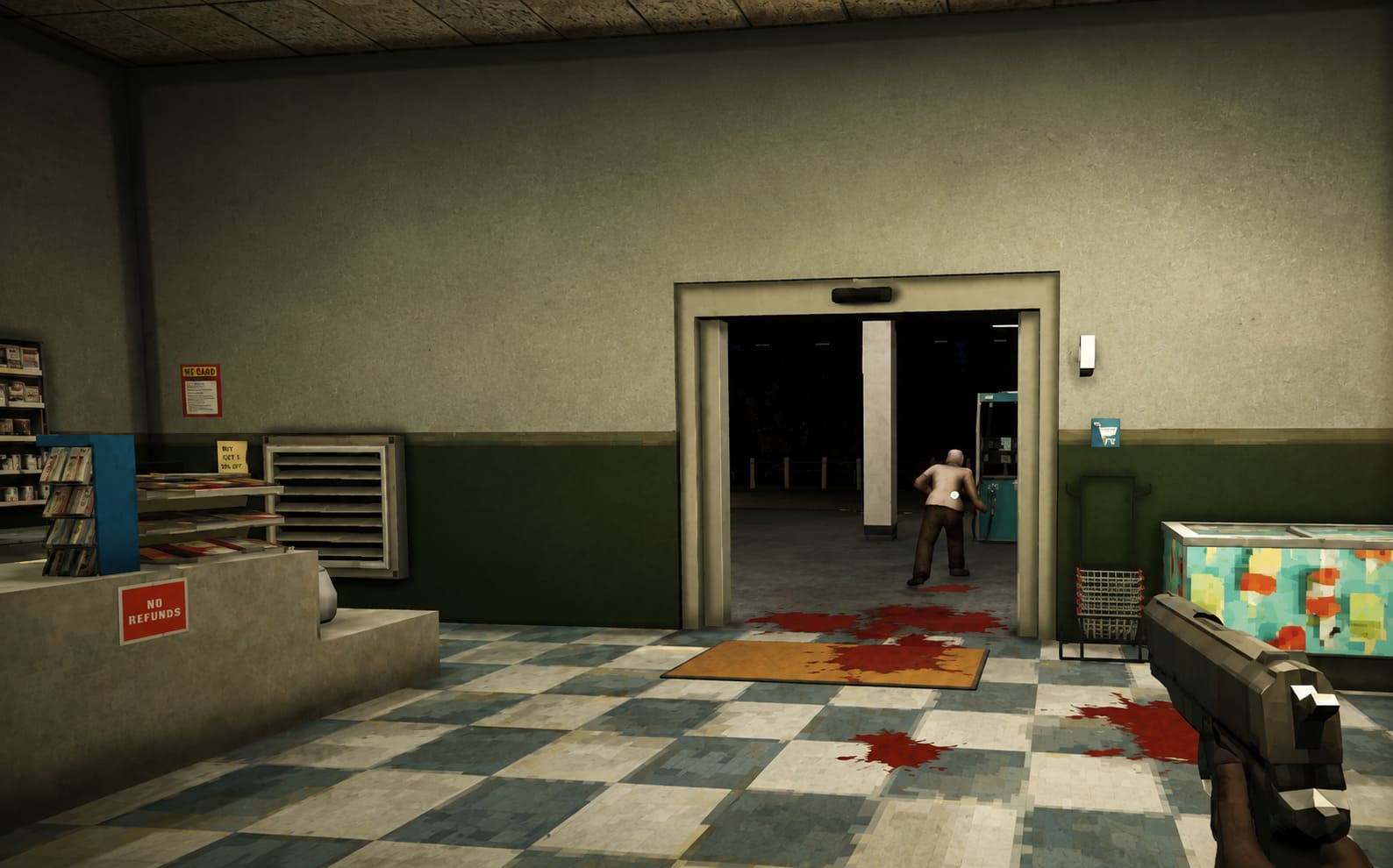
Facial Problems
This is usually the first thing I check.
Watch for:
- Eyes pointing in slightly different directions.
- Uneven ears.
- Distorted smiles.
- Strange jaw proportions.
- Expressions that never seem to change.
None of these automatically guarantee a monster, but several together should immediately raise suspicion.
Hands Tell the Truth
I’ve caught more fake customers by looking at their hands than their faces.
Watch for things like:
- Missing fingernails.
- Too many fingers.
- Fingers bending unnaturally.
- Oddly stretched joints.
The developers clearly spent a lot of time making these details unsettling without making them too obvious.
Body Language
Humans rarely stand perfectly still.
Doppelgangers often do.
Some warning signs include:
- Long periods without blinking.
- Sudden head jerks.
- Robotic posture.
- Unnatural movements after conversations pause.
Even if everything else looks normal, weird movement patterns deserve extra attention.
Listen Just As Carefully As You Look
Visual clues matter.
Dialogue matters just as much.
Over time I noticed fake customers often sound… wrong.
Sometimes they’ll:
- Repeat words.
- Answer questions strangely.
- Change emotional tone instantly.
- Ask for products the station clearly doesn’t sell.
- Respond with awkward pauses.
None of these clues are guaranteed on their own.
But when several appear together, I start preparing for trouble.
What Happens If You Let One Escape?
Unfortunately…
Everyone eventually misses one.
When that happens, the entire game changes.
Instead of working behind the register, you’re suddenly fighting for survival.
The escaped creature eventually returns in its true form, and that’s when Shift at Midnight becomes full survival horror.
Build Defenses Quickly
The moment you realize you’ve made a mistake, stop thinking like a cashier.
Think like you’re defending a fortress.
Prioritize:
- Boarding windows.
- Blocking entrances.
- Slowing monster movement.
Even a few extra seconds can completely change the outcome of an encounter.
Don’t Forget About Traps
One thing I really appreciate is that traps aren’t overpowered.
They’re useful because they buy time.
| Trap | Best Use |
|---|---|
| Motion Alarm | Reveals movement. |
| Tripwire | Slows approaching enemies. |
| Electrical Trap | Stuns monsters near entrances. |
They’re strongest when combined instead of used individually.
Sometimes Running Is the Best Strategy
Many players try to fight every encounter.
I don’t recommend it.
If you’re running low on ammunition, hiding is often the smarter decision.
Good hiding locations include:
- Ventilation shafts.
- Storage rooms.
- Behind supply shelves.
- Employee bathroom.
Turning off your flashlight and remaining completely silent has saved more of my runs than perfect aim ever has.
If you’re playing co-op, remember something many people forget:
Your microphone can betray you.
Talking loudly while hiding can attract attention far faster than expected.
Campaign Nights vs Endless Mode
One thing the community figured out fairly quickly is that not every game mode behaves the same way.
Campaign
Early story nights contain several scripted encounters.
Certain customers appear in fixed positions, making them somewhat predictable after repeated playthroughs.
This can help new players learn the investigation system without complete randomness.
Endless Mode
Everything changes here.
Past experience only helps so much.
The customer who was completely harmless yesterday might become the first monster of your next run.
That’s exactly why Endless Mode stays entertaining even after dozens of hours.
You can never rely on memory alone.
Every inspection matters.
Shift At Midnight Release Date: Xbox Game Pass, Gameplay Trailers, and 2026 Survival Guide
My Personal Advice After Spending Hours With the Game
There are plenty of guides explaining mechanics.
Here are the habits that actually improved my survival rate.
Clean Immediately
Whenever a doppelganger is eliminated, don’t ignore the aftermath.
Cleaning the area keeps customer panic low and helps maintain your overall performance score.
Don’t Waste Bullets
Your weapon isn’t unlimited.
Missing shots because you’re nervous often creates bigger problems later.
Only fire when you’re confident.
Finish Chores Early
The first part of every shift is usually the safest.
Use that time wisely.
By the middle of the night, investigations become much more frequent, leaving very little time for inventory management.
Protect Your Sanity
This mechanic surprised me.
Spending too much time staring into darkness or interacting with disturbing anomalies eventually affects your perception.
Hallucinations make it much harder to trust your own observations.
When everything starts looking suspicious, take a moment to reset before making another life-or-death decision.
Final Thoughts
What impressed me most about Shift at Midnight isn’t the monsters or the jump scares.
It’s the constant pressure.
You’re never fully comfortable.
Even after learning dozens of visual clues, you’ll still occasionally question yourself before pulling the trigger. That uncertainty is exactly what keeps every shift exciting.
I also appreciate that the game rewards patience rather than fast reactions. Careful observation almost always beats panic, and every successful investigation feels genuinely earned instead of scripted.
If you’re jumping into the game for the first time, don’t expect perfection during your first few nights. You’ll misread customers, waste ammunition, forget to restock shelves, and probably let at least one doppelganger slip away. That’s part of the experience. Each failure teaches you something new, whether it’s recognizing a subtle facial inconsistency or realizing that a strange conversation wasn’t random after all.
Stick to a consistent inspection routine, don’t ignore small visual details, and never become overconfident just because the previous customer turned out to be human. Shift at Midnight punishes complacency more than anything else, and that’s exactly why every successful shift feels so satisfying. Survive long enough, trust your instincts only after checking the evidence, and you’ll gradually become the kind of night-shift attendant that even the doppelgangers should fear.