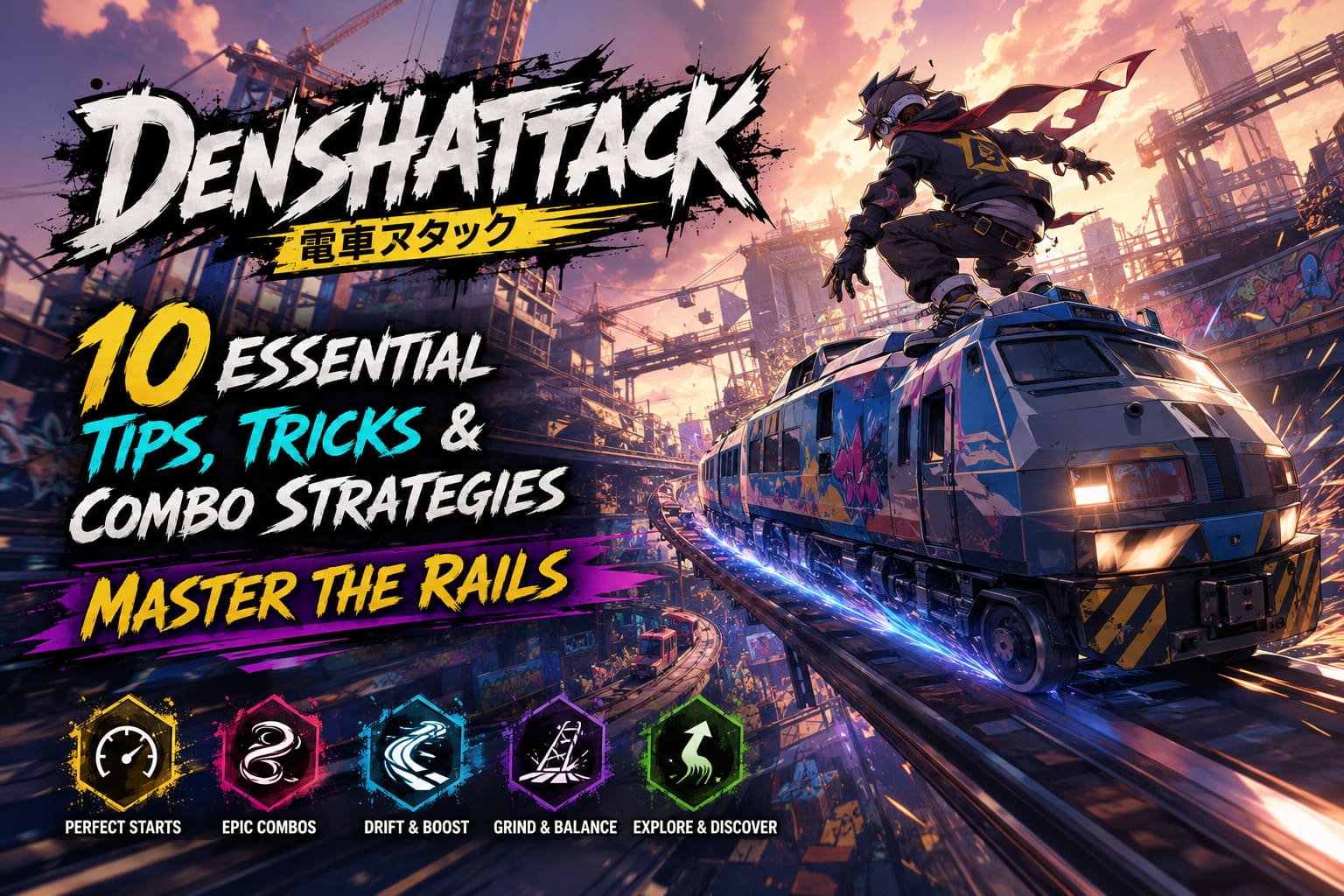
Denshattack Guide: 10 Essential Tips, Tricks, and Combo Strategies to Master the Rails
When I first saw Denshattack, I honestly thought it was one of those games built entirely around a ridiculous joke. A train doing kickflips? Grinding on rails while fighting giant mechanical bosses? It sounded like someone mixed Tony Hawk’s Pro Skater, Jet Set Radio, and an arcade racer after staying awake for three days.
Then I played it.
A few hours later I completely understood why people were talking about it. Beneath the absurd premise is a surprisingly technical arcade game with a skill ceiling that’s much higher than it initially appears. The more time you spend with it, the more you realize that raw speed alone won’t carry you very far. Good scores come from rhythm, consistency, route planning, and understanding how every mechanic connects with the next.
If you’re just starting your journey—or you’re trying to earn better rankings without endlessly restarting levels—these are the biggest lessons that helped me improve.
1. Treat Every Race Like It Starts Before You Move
One habit I picked up early completely changed my runs.
Instead of waiting for the countdown to finish, pay attention to the exact timing of the starting sequence. Hitting the launch input at precisely the right moment gives you an immediate acceleration boost.
It may not sound like much, but that extra burst of speed lets you reach the first jump with more momentum, which often means:
- Longer airtime
- Better opening combos
- Faster overall stage times
Missing the timing isn’t the end of the world, but consistently landing perfect starts adds up surprisingly quickly.
2. Stop Repeating the Same Tricks
One mistake almost everyone makes is finding one trick that feels comfortable and repeating it every chance they get.
Denshattack quietly encourages creativity.
The scoring system rewards variety far more than repetition, so rotating between different flips, spins, and aerial movements produces noticeably larger combo values.
Whenever you’re airborne, experiment with different right-stick movements instead of relying on muscle memory.
A simple rule I follow:
| Situation | Better Choice |
|---|---|
| Small jump | Quick flip |
| Medium jump | Spin + flip |
| Large jump | Multiple rotations with varied inputs |
| Long airtime | Chain different tricks instead of repeating one |
You’ll earn higher scores while also becoming much more comfortable with the control system.
3. Drifting Is About Exit Speed, Not Cornering
At first I treated drifting like every arcade racer.
That was wrong.
The real objective isn’t simply making the turn—it’s leaving the corner with as much speed as possible.
Whenever the drift indicator appears, don’t panic. Instead, watch the timing meter carefully and release your drift when it reaches the ideal zone.
A clean release rewards you with a satisfying speed boost that feels almost like firing a miniature rocket.
Mess up the timing and you’ll either lose momentum or slow down enough to ruin your next combo opportunity.
After practicing for a while, you’ll start looking forward to corners instead of fearing them.
4. Your Combo Is More Fragile Than You Think
Nothing hurts more than building an incredible multiplier only to watch it disappear because of five seconds of empty track.
The game constantly wants you to stay active.
Even if there aren’t ramps nearby, small actions can keep your combo alive.
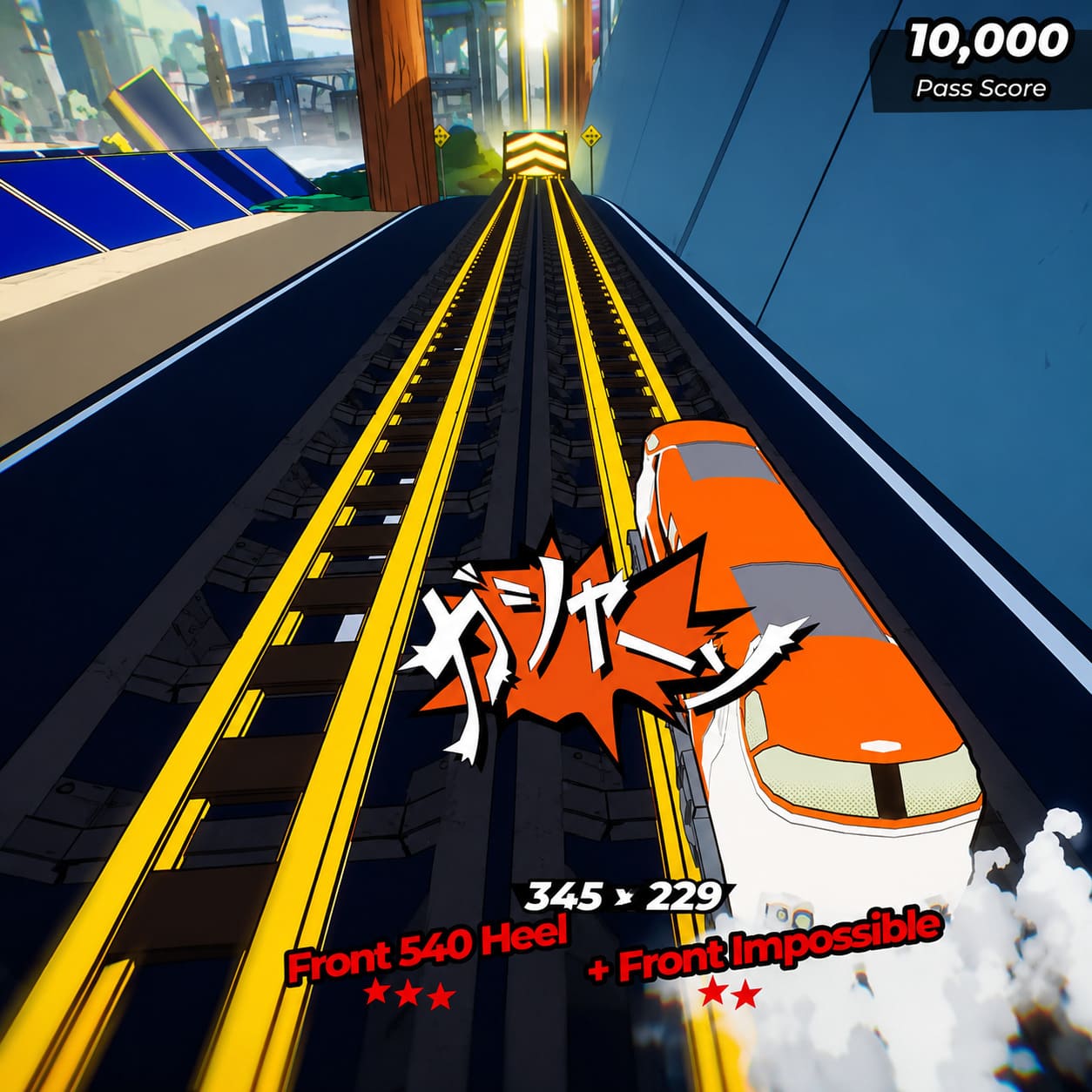
Some reliable ways include:
- Switching rails
- Performing quick jumps
- Linking grinds
- Taking alternate paths
Once I started thinking about maintaining momentum instead of chasing tricks, my scores immediately improved.
5. Charge Your Jumps Whenever You Can
The jump button isn’t simply an on/off command.
Holding it before launching creates much bigger airtime opportunities.
That extra height gives you enough room for:
- Additional trick rotations
- Longer combo chains
- Better positioning for rails
- Easier access to hidden routes
Early on I barely used charged jumps because regular hops felt faster.
Later levels completely changed my mind.
Some collectibles and alternate routes are practically impossible to reach without maximizing your jump height.
6. Grinding Is Surprisingly Technical
Grinding looks automatic.
It isn’t.
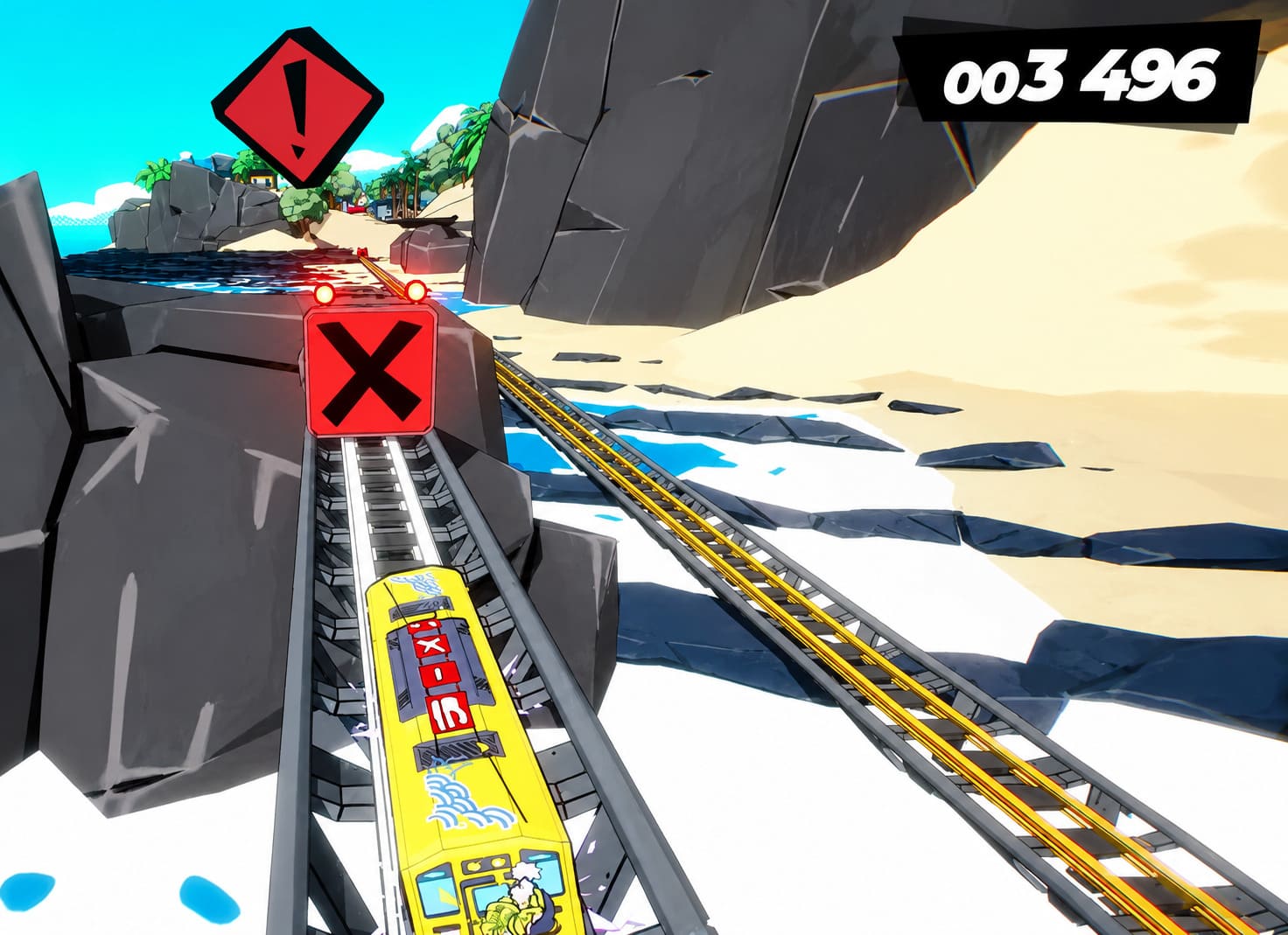
Once your train locks onto a rail, you’re responsible for maintaining balance until the very end.
Small corrections work much better than aggressive stick movements.
If you constantly overcorrect, you’ll end up bouncing between both sides of the balance meter before eventually falling.
I found it much easier after pretending I was balancing something fragile rather than wrestling with the controls.
Another habit worth developing is planning your exit before the rail actually ends.
Jumping off intentionally almost always feels smoother than waiting for the game to force you off.
7. Don’t Ignore Train Statistics
I made this mistake for several hours.
I assumed unlocking different trains was mostly cosmetic.
It definitely isn’t.
Each locomotive changes how the game feels.
Some prioritize:
- Stability
- Faster acceleration
- Better aerial control
- Easier grinding
- Improved handling
Here’s a quick comparison:
| Train Style | Strength | Weakness | Best For |
|---|---|---|---|
| Heavy | Stable grinds | Slower acceleration | Technical stages |
| Balanced | Reliable everywhere | No major specialty | First playthrough |
| Lightweight | Fast movement | Harder to control | Score chasing |
Eventually you’ll develop favorites, but don’t hesitate to swap trains depending on the stage.
Sometimes changing equipment is easier than forcing yourself to overcome a layout with the wrong setup.
8. Explore Above You, Not Just Ahead
One thing I absolutely love about Denshattack is how often it rewards curiosity.
The obvious route is rarely the best route.
Whenever you notice elevated rails, strange ramps, or unusual structures, there’s a decent chance they’re hiding something worthwhile.
Hidden paths frequently contain:
- Collectibles
- Safer routes
- Extra trick opportunities
- More score pickups
- Faster shortcuts
Some of my highest-scoring runs happened simply because I decided to jump toward a suspicious-looking rail instead of following the main track.
Exploration genuinely pays off.
9. Boss Battles Reward Patience
The bosses are spectacular, but they also catch many players off guard because they temporarily shift the game’s focus.
Instead of obsessing over trick scores, pay attention to attack patterns.
Most bosses clearly telegraph dangerous attacks before they happen.
Watch for:
- Flashing warning indicators
- Charging animations
- Laser preparation
- Moving hazards
- Vulnerable phases
Once you’ve learned their rhythm, every encounter becomes dramatically easier.
Trying to force damage while ignoring mechanics usually leads to unnecessary crashes.
Ironically, slowing down mentally often helps you finish these fights much faster.
10. Don’t Be Afraid to Replay Earlier Stages
There’s a strange pressure in modern games that makes players feel like moving forward is always the correct choice.
I don’t think that’s true here.
Some of my biggest improvements happened after revisiting the opening levels.
Without late-game chaos, you can focus entirely on one mechanic at a time.
For example:
- Practice only perfect starts.
- Spend one run learning drift timing.
- Ignore score and focus exclusively on grinding.
- Experiment with trick combinations.
- Test different train builds.
After twenty minutes of focused practice, I returned to later stages feeling far more confident than I did after hours of brute-force attempts.
Denshattack Game Climate Crisis: The Surprising Dystopian Lore Behind the High-Speed Train Skater
Final Thoughts
Denshattack looks chaotic from the outside, but underneath all the explosions, impossible train stunts, and futuristic style is a surprisingly thoughtful arcade experience that rewards precision more than luck.
What impressed me most wasn’t the visual style—it was how naturally every mechanic starts fitting together after a few hours. Suddenly you’re drifting through corners, charging jumps automatically, balancing grinds without thinking, and keeping one combo alive across an entire level almost by instinct.
That’s the moment the game truly clicks.
If there’s one piece of advice I’d leave every new player with, it’s this: don’t rush to copy world-record routes immediately. Learn how the systems interact first. Once the controls become second nature, you’ll naturally discover your own shortcuts, combo routes, and favorite train builds.
The leaderboard will always be there. Focus on becoming consistent first, and the high scores will come much sooner than you expect.