The Blood of Dawnwalker Combat Guide: Human Swordplay vs Vampire Abilities
The Blood of Dawnwalker immediately caught my attention for one simple reason: it does not treat its day-and-night cycle as a cosmetic gimmick. Instead, Rebel Wolves builds a huge part of the combat experience around it. Coen is effectively two different fighters depending on whether the sun is above Vale Sangora or darkness has taken over the Carpathian landscape.
That sounds great on paper, but after looking closely at how these systems fit together, I think the most interesting part is not simply that the vampire form is stronger. It is that daytime and nighttime combat encourage completely different mindsets.
During the day, you are thinking like a swordsman. At night, you are thinking like a predator.
And that distinction could become one of the defining features of The Blood of Dawnwalker.
A Combat System Built Around Coen’s Curse
The story already gives Coen an unusual position. He is neither completely human nor a conventional vampire. He is a Dawnwalker, forced to live between two worlds while racing against a 30-day deadline to rescue his family.

That setup gives Rebel Wolves a perfect excuse to make combat itself part of Coen’s transformation.
When daylight arrives, his supernatural side is restricted and he has to depend on steel, timing, positioning, stamina and technique. Once night arrives, those limitations largely disappear, opening the door to speed, mobility, blood-based abilities and much more aggressive attacks.
Personally, I like this approach far more than simply giving the player a vampire skill tree and letting them use everything whenever they want. The restriction creates anticipation. You start looking at the clock differently because nighttime is no longer just another part of the world.
It changes what Coen can actually do.
Daytime Combat: When Every Sword Swing Matters
Daytime combat looks like the side of The Blood of Dawnwalker that will reward players who enjoy slower, more deliberate melee systems.
Coen is vulnerable during daylight, so charging into a group of enemies and repeatedly pressing the attack button is not exactly a recipe for success. Spacing, stamina and defensive timing become just as important as damage.
The most interesting mechanic here is the directional attack system.

Four Directions, More Control
Instead of treating sword attacks as generic animations, the combat system allows Coen to attack from different angles. Depending on the situation, you can use:
- Left and right horizontal attacks
- Overhead strikes
- Underhand attacks
That might sound like a small detail, but directional attacks can make encounters considerably more engaging if enemies respond intelligently.
For example, an opponent with a large shield should not feel like a standard enemy with an oversized health bar. If their guard covers one angle particularly well, you should be encouraged to attack somewhere else.
That is the kind of combat design I want from a medieval RPG.
The goal should not be “find the strongest combo and repeat it.” It should be about reading the opponent and reacting.
Blocking, Parrying and Dodging
Defensive mechanics are equally important during the day.
Blocking gives you a reliable way to survive incoming attacks, but stamina prevents you from simply holding your guard forever. Heavy weapons and powerful enemies can put serious pressure on your defenses.
Parrying is where things become much more interesting.
A properly timed parry can interrupt an enemy attack and create an opening for a counter. For players who enjoy learning enemy attack patterns, this could become one of the most satisfying parts of the entire combat system.
Dodging is the safer alternative when an incoming attack cannot realistically be blocked. It is especially important against powerful attacks that leave little room for conventional defense.
The key word here is timing.
You cannot afford to burn through stamina with constant attacks, blocks and rolls. Once Coen becomes exhausted, his options become dramatically worse.
Why Stamina Could Make Daytime Encounters Better
One thing I particularly like about the concept is that stamina appears to influence almost every physical action.
Swinging your weapon costs stamina.
Blocking consumes stamina.
Dodging consumes stamina.
That creates a natural rhythm:
Attack → defend → reposition → recover → attack again.
It is much closer to a duel than a traditional action-RPG damage race.
The best encounters should therefore feel like a battle of patience. You wait for an enemy to overextend, punish the mistake, retreat before another opponent surrounds you and slowly regain control of the fight.
That is especially important because Coen is not supposed to feel like an unstoppable hero during the day.
He is surviving.
Human Battle Magic: A Useful Companion, Not a Replacement
Daytime combat is not completely grounded, however. Coen can also make use of battle magic.
The important distinction is that these abilities work better as support tools rather than replacements for swordplay.
Magic can potentially help with things such as:
- Temporarily enhancing weapons
- Disrupting enemy formations
- Slowing approaching enemies
- Creating defensive opportunities
- Giving Coen an advantage against supernatural targets
This is where I think the system could become really interesting.
Imagine entering a camp with several enemies, using a magical effect to disrupt the group, isolating one target and then relying on swordplay to finish the duel. That feels much more satisfying than simply throwing magical attacks until everything disappears.
Nighttime Combat: When Coen Becomes the Hunter
Then the sun goes down.
This is where The Blood of Dawnwalker combat system completely changes personality.
The careful swordsman becomes a supernatural predator. The methodical rhythm of daytime combat gives way to speed, mobility and aggression.
And honestly, this is probably the part I am most curious to play.
Vampire Claws Replace the Sword
At night, Coen no longer needs to depend on conventional weapons in the same way.

His supernatural claws become the primary offensive tool, allowing him to attack much faster and chain together aggressive combinations.
Instead of worrying about whether every swing is perfectly positioned, nighttime combat is about maintaining pressure.
You can imagine the difference immediately:
Day: Study the enemy.
Night: Become the enemy’s worst nightmare.
The vampire form should make Coen feel dramatically more powerful, and that contrast is essential. If nighttime combat played almost exactly like daytime combat, the entire day-night concept would lose much of its impact.
Vampire Mobility Changes Everything
Damage is only one part of Coen’s nighttime transformation.
Movement could be even more important.
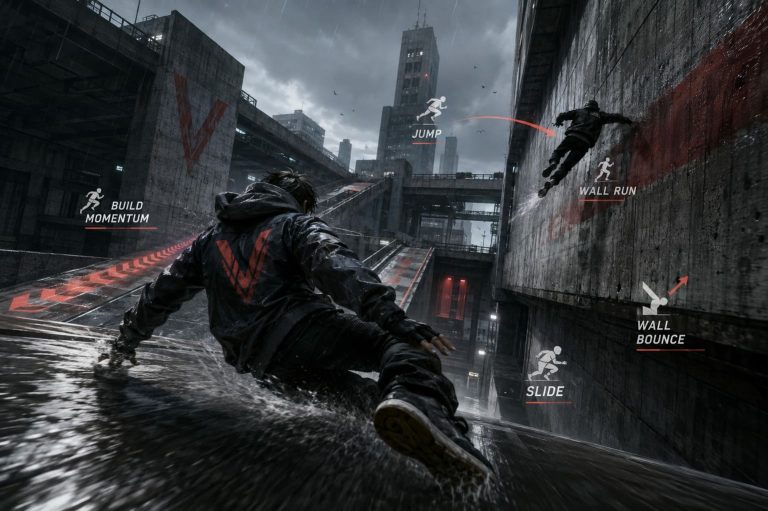
Enhanced speed, supernatural traversal and vertical movement give Coen access to areas and attack angles that simply are not available during daylight.
Instead of walking through the front gate of a guarded settlement, you can potentially approach from above, move across rooftops and attack isolated enemies from unexpected positions.
This creates another major difference between the two combat styles.
During the day, the environment is something you fight around.
At night, the environment becomes part of your weapon.
That is a fantastic concept for a gothic open-world RPG.
Wolf Form and Exploration
The supernatural transformation can also extend beyond ordinary combat.
The wolf form is particularly interesting because it can make traversal across Vale Sangora considerably faster while reinforcing Coen’s connection to the animalistic side of his curse.
I would personally love to see the game reward players for switching between forms creatively rather than treating transformations as simple movement shortcuts.
A wolf sprint through the forest followed by a rooftop approach and a supernatural ambush sounds far more memorable than another standard fast-travel system.
Bloodlust: The Resource That Keeps Vampire Power Under Control
Of course, giving Coen enormous supernatural power requires a balancing mechanism.
That is where Bloodlust comes into play.
Instead of the traditional stamina system used during daylight, nighttime abilities are tied to a resource connected directly to Coen’s vampiric nature.
Powerful supernatural abilities can consume Bloodlust, meaning you cannot necessarily use your strongest tricks without thinking.
The most interesting part is the relationship between combat and feeding.
When enemies become vulnerable, Coen can feed to replenish his supernatural resources and recover.
That creates a potentially addictive gameplay loop:
Hunt → weaken → feed → regain power → hunt again.
It also fits the character perfectly. Coen is not just using a mana potion to refill a bar. His supernatural power is connected directly to what he does to survive.
The Danger of Becoming Too Much of a Monster
This is where the system becomes more than a combat mechanic.
If Bloodlust affects Coen’s behavior and relationships, then the vampire side of the character could create consequences outside combat as well.
That possibility is extremely important for the role-playing side of The Blood of Dawnwalker.
You are not simply choosing between “weak human” and “strong vampire.”
You are potentially choosing how much of Coen’s humanity you are willing to sacrifice for power.
That makes the day-night split feel much more meaningful.
Human vs Vampire Combat: Quick Comparison
| Combat Element | Daytime Human | Nighttime Vampire |
|---|---|---|
| Main Weapon | Swords and Steel Weapons | Supernatural Claws |
| Main Resource | Stamina and Magic | Bloodlust |
| Combat Pace | Slow and Deliberate | Fast and Aggressive |
| Movement | Grounded Dodges and Positioning | Supernatural Speed and Vertical Mobility |
| Defense | Blocking, Parrying and Dodging | Mobility, Abilities and Feeding |
| Crowd Control | Tactical Magic and Positioning | Wide Attacks and Vampire Powers |
| Main Strength | Precision and Technique | Speed and Raw Power |
| Main Weakness | Limited Stamina | Bloodlust Management and Specialized Threats |
Looking at the two systems side by side makes the design philosophy much clearer.
Neither form is simply a stronger version of the other.
They ask you to play differently.
The Day-Night Cycle Should Influence Your Strategy
This is where I think The Blood of Dawnwalker could separate itself from other action RPGs.
If the 30-day structure genuinely affects how much time you have to complete objectives, then players cannot simply treat every mission as an isolated combat arena.
Timing becomes part of the strategy.
Suppose you discover a heavily defended enemy camp during the afternoon.
You have two choices.
You can attack immediately using human swordplay, carefully working through the guards with parries, blocks and controlled stamina usage.
Or you can prepare for the night and approach the same location as a vampire.
The second option might allow you to climb onto rooftops, bypass certain guards, strike isolated targets and use supernatural abilities to dismantle the camp much faster.
But there should be a catch.
If nighttime introduces stronger vampire hunters, specialized enemies or weapons designed to counter Coen’s supernatural form, then darkness is not automatically “easy mode.”
And I think that is exactly how it should work.
Why I Don’t Want Vampire Combat to Become an Easy Mode
This is probably my biggest concern with the whole concept.
Superpowered nighttime combat sounds incredible, but if Coen becomes so strong that every encounter turns into effortless slaughter, the human combat system could eventually feel like an inconvenience.
The ideal balance would make both forms exciting for different reasons.
Human Coen should make you feel skilled.
Vampire Coen should make you feel dangerous.
Those are two very different emotions, and the game needs both.
Powerful enemies specifically designed to challenge the vampire form could help maintain that balance. Silver weapons, specialized hunters and other supernatural counters would force players to think instead of blindly attacking everything they see.
How to Fix Bodycam Crashing on Startup After Locked and Loaded Update (v0.8)
My Take: This Could Be The Blood of Dawnwalker’s Best Feature
There are plenty of things that make The Blood of Dawnwalker interesting on paper, but the combat concept is the feature I find easiest to get excited about.
The idea of spending daylight hours learning enemy patterns and relying on traditional swordplay, only to watch the rules change completely after sunset, gives the game a personality that many open-world RPGs desperately need.
I especially like that the difference is not just cosmetic.
The sword is about control.
The vampire form is about momentum.
One rewards patience and precision. The other rewards aggression, movement and confidence.
If Rebel Wolves manages to make both systems feel equally deep, The Blood of Dawnwalker could deliver something genuinely unusual: an RPG where changing the time of day does not merely change the atmosphere, but fundamentally changes how you play.
And that, to me, is the real promise of Coen’s curse.
You are not simply playing a warrior who happens to be a vampire.
You are constantly switching between the man you were and the monster you are becoming.
That is a much more compelling foundation for a combat system than simply giving the protagonist a bigger skill tree.
The Blood of Dawnwalker Armor Proficiency Guide: How to Unlock and Master Medium and Heavy Armor
Final Verdict
The most exciting thing about The Blood of Dawnwalker is that its combat appears to understand an important principle: different powers should create different gameplay, not just different animations.
Daytime asks you to be patient, defensive and technically precise.
Nighttime encourages you to be aggressive, mobile and unpredictable.
The result could be an action RPG where every sunset feels like a genuine gameplay event.
For me, that is far more interesting than having one perfect build that works everywhere. If the final balance delivers on the concept, learning when to fight as a human and when to embrace Coen’s vampire nature could become one of the most satisfying parts of the entire 30-day journey through Vale Sangora.
The Blood of Dawnwalker is at its most interesting when Coen is forced to decide not only how he wants to fight, but what kind of creature he is willing to become.