Stars Reach Multiplayer Guide: How Shardless Worlds and Social Gameplay Work
There are plenty of multiplayer games that call themselves “massively multiplayer,” but every now and then a game comes along that makes you stop and ask what an MMO could actually be if the world itself mattered.
That is where Stars Reach gets interesting.
From everything we have seen of Playable Worlds’ ambitious sandbox MMO, this isn’t simply another online RPG where thousands of players technically occupy the same game. The idea is much more old-school and, honestly, much more exciting: players are supposed to become part of the world rather than just pass through it.
The game’s approach to multiplayer revolves around a persistent, shared universe, player-driven settlements, interconnected professions, environmental simulation, and a system that encourages people to cooperate without constantly forcing them into formal parties.
And as someone who has spent way too many hours in MMOs, I think that distinction could be incredibly important.
The Biggest Idea: One Shared Universe
The first thing that caught my attention about Stars Reach multiplayer is its shardless approach.
Traditional MMOs often split their communities across servers, realms, channels, or copies of the same world. It works, but it can also make the “massively” part of massively multiplayer feel strangely artificial.

You might have 20,000 players online, yet your character only meaningfully interacts with a tiny fraction of them because everyone is separated into different servers.
Stars Reach is aiming for something very different.
The concept is that players inhabit one persistent universe rather than choosing a server at character creation. That has some pretty obvious social advantages. You don’t have to worry about discovering that your friends picked a different realm. You don’t need to wonder whether a particular planet exists on your server but not theirs.
More importantly, actions can potentially have consequences beyond your immediate group.
If another player discovers a valuable resource, establishes a successful trading route, builds a settlement, or becomes famous for crafting a particular type of equipment, that person’s activities can become part of the larger community’s story.
That is the sort of MMO storytelling I personally find much more memorable than another quest chain telling me that I am “the chosen one.”
What Does “Shardless” Actually Mean for Players?
The important thing to understand is that shardless design isn’t just a technical buzzword.
It changes the way you think about the game.
| Traditional MMO Structure | Stars Reach Approach |
|---|---|
| Multiple servers or realms | Shared persistent universe |
| Players divided into communities | One larger player ecosystem |
| Instanced experiences are common | Persistent world is emphasized |
| Progress often revolves around personal rewards | Social and economic consequences matter |
| Professions can be largely self-contained | Players can become economically dependent on one another |
| Settlements are often decorative | Player communities can shape territories |
Imagine finding a remote planet and deciding that you want to build a settlement there.
You’re not necessarily creating a private little playground that exists only for your guild. You’re potentially establishing a location inside a larger ecosystem where other players can arrive, trade, work, settle, visit, or compete.
That is a very different mental model from “queue for dungeon, kill boss, collect loot, repeat.”
And frankly, I’m ready for it.
The World Isn’t Just a Backdrop
Another part of Stars Reach that could make multiplayer genuinely fascinating is its focus on environmental simulation.
In most MMOs, the environment is basically scenery with some interactive objects sprinkled around it. Trees exist so you can cut them down. Rocks exist so you can mine them. Rivers look nice while you run across a bridge.
Stars Reach is aiming for something more systemic.

The world is designed around physical interactions where terrain, fluids, fire, and other environmental elements can potentially react to what players do.
That immediately creates opportunities for multiplayer stories that developers don’t have to script manually.
A group of players might construct infrastructure around a river. Another group could be mining underground nearby. Someone else might accidentally cause a collapse that changes how everyone gets through the area.
Or imagine a combat encounter starting in a forest and escalating into an environmental disaster because fire spreads through the surrounding vegetation.
Suddenly, the world isn’t just hosting the players.
The players are changing the world.
That’s the kind of sandbox design that can create stories you remember years later.
Soft Grouping Could Be the Secret Weapon
This might be my favorite multiplayer idea in the entire concept.
Stars Reach isn’t relying exclusively on the traditional “invite player → create party → everyone gets XP” structure. Instead, it explores the idea of soft grouping, where cooperation can emerge naturally from what players actually do.
Picture this.
You’re traveling across a dangerous area and spot another player fighting a creature. You don’t know them. You’re not in their guild. You don’t even have to stop.
But you decide to help.
Maybe you attack the creature. Maybe you heal the other player. Maybe you draw some of the enemy’s attention while they recover.
In a conventional MMO, that interaction can sometimes feel awkward. You might need an invite, a group request, or some other formal system before the game properly recognizes that you’re working together.
Soft grouping flips that philosophy around.
The game can potentially recognize contribution, proximity, combat involvement, healing, and other forms of assistance rather than requiring every helpful interaction to begin with a menu.
I love this because it makes the world feel populated by people rather than organized teams.
And it could create some genuinely funny moments.
You might help a stranger for five minutes, accidentally become involved in a much bigger fight, survive together, and then continue in completely different directions.
That’s a tiny MMO story, but it’s exactly the kind of story players tell their friends.
You Don’t Need to Be a Warrior to Matter
Another major strength of the Stars Reach multiplayer philosophy is the emphasis on interconnected professions.
The game doesn’t seem interested in forcing everyone into the same combat-focused progression loop.
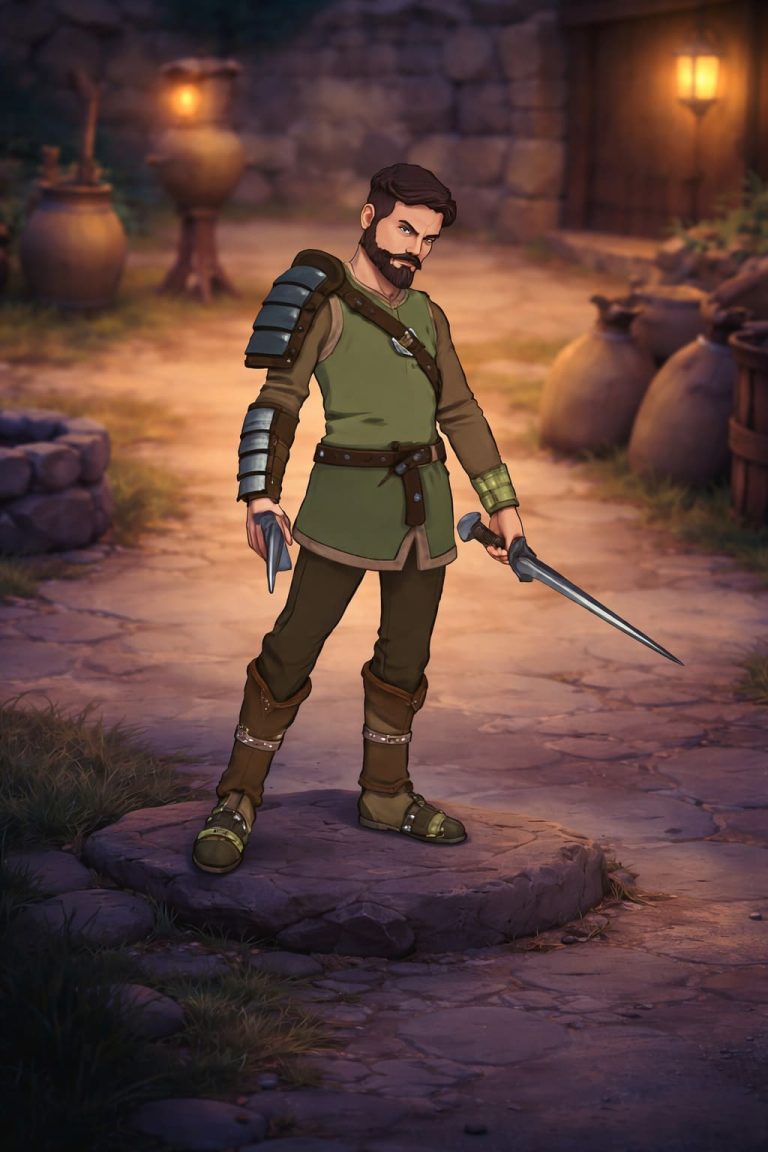
Instead, the classless structure allows players to specialize in different skills and roles.
That opens the door for a much broader definition of what it means to be useful.
- A dedicated crafter supplying equipment to adventurers.
- A miner searching for valuable materials.
- A transporter moving resources between settlements.
- An explorer discovering new worlds.
- A surveyor selling useful geographical information.
- A mechanic maintaining ships and infrastructure.
- A trader building commercial relationships.
- A settlement organizer handling civic responsibilities.
And yes, potentially even the person running the local tavern.
That last example sounds silly until you remember that social roles are one of the things older sandbox MMOs did surprisingly well.
If the economy is sufficiently player-driven, being the person everyone trusts to provide a particular service can become more valuable than simply having the biggest combat damage number.
Reputation Could Actually Mean Something
This is where Stars Reach starts sounding less like a conventional MMO and more like a virtual society.
If players rely on one another for equipment, transportation, resources, construction, exploration, and services, then reputation becomes a form of currency.
A talented weaponsmith might become known across several settlements.
A reliable trader could build a network of regular customers.
An explorer who consistently provides accurate information might become the person everyone contacts before traveling into unfamiliar territory.
Meanwhile, a player who repeatedly scams people or causes problems could develop an equally memorable reputation for completely different reasons.
That is much more interesting to me than a reputation bar that says Friendly: 7/10.
Building a Settlement Is More Than Placing Buildings
The settlement system is another area where multiplayer seems deeply integrated into the game rather than bolted onto it.
Players can work together to establish communities, construct infrastructure, and develop settlements over time.
The clever part is that progression can be collective.
Individual players can perform useful activities, but those contributions can also help the wider settlement unlock additional capabilities.
That creates an interesting social incentive.
You aren’t necessarily helping the town because an NPC told you to complete 12 delivery quests.
You might help because your own future depends on the settlement becoming better.
Better infrastructure means better services. Better services can attract more players. More players can mean more trade, more specialization, more opportunities, and potentially more political complexity.
That is a feedback loop I would love to see work in practice.
Politics and Territory Could Get Wild
Once players can establish settlements and control territory, things naturally become more complicated.
Who gets to build?
Who pays the taxes?
Who decides which activities are allowed?
Who protects the settlement?
What happens when two groups want the same territory?
These questions can transform a simple multiplayer sandbox into a surprisingly deep social game.
The possibility of different planetary rulesets is particularly interesting because it could allow different communities to develop completely different identities.
One area might focus heavily on cooperative PvE.
Another could embrace competitive PvP.
A third might become an economic hub where trading and crafting are more important than fighting.
That means the galaxy could potentially contain different kinds of player cultures instead of one universal ruleset imposed everywhere.
And that is exactly what makes sandbox MMOs fascinating when they work.
Is Stars Reach Good for Solo Players? Comprehensive 2026 Sandbox MMO Review
The Real Test Will Be Player Behavior
Of course, this is where I want to keep my expectations under control.
Everything sounds fantastic on paper.
A persistent shared universe is fantastic until technical problems make it frustrating. Player economies are exciting until a small group discovers how to exploit them. Political systems sound incredible until players inevitably find ways to abuse them.
And emergent gameplay is unpredictable by definition.
But I actually think that unpredictability is part of Stars Reach’s appeal.
The best sandbox MMOs aren’t memorable because every system worked perfectly. They’re memorable because players created situations the developers never could have written themselves.
That is the dream here.
Why Stars Reach Multiplayer Has My Attention
For me, the most exciting part of Stars Reach isn’t any single feature.
It’s how the systems potentially connect.
A player explores a planet.
That player sells information to another player.
A mining group follows those coordinates.
A crafter buys the resulting materials.
A settlement uses the equipment produced by that crafter.
Transport players move resources between locations.
The settlement grows.
Another faction arrives.
A political disagreement begins.
Suddenly, a simple exploration trip has become part of a much larger player-created story.
That’s what I want from an MMO.
Not another checklist of daily quests.
Not another endless gear treadmill where yesterday’s legendary sword becomes worthless next Tuesday.
I want a world where knowing the right person can matter, where a stranger can unexpectedly become an ally, where a settlement can have a history, and where the things players build can become part of the game’s identity.
Stars Reach is taking a pretty ambitious swing at that idea.
Whether all of these systems can survive contact with a huge real-world player population remains the big question. But if Playable Worlds can make the shardless architecture, social gameplay, player economy, environmental simulation, and settlement systems work together as intended, Stars Reach could deliver something that modern MMOs desperately need: a world that feels like it belongs to the players.
And honestly, after years of increasingly theme-park-style online games, I’m more than ready to get lost in a galaxy where the players are the content.