Onimusha Way of the Sword Weapon Tier List: Best Oni Armaments Ranked
There’s something wonderfully old-school about Onimusha: Way of the Sword. Capcom could have simply dusted off the franchise, thrown a samurai into an open-world map and called it a comeback. Instead, the studio seems determined to make combat the star again.
And that matters because Miyamoto Musashi is only as dangerous as the weapon you put in his hands.
Way of the Sword revolves around timing, deflections, posture breaks, Issen counters, and the constant battle to turn Genma souls into another advantage. The Oni Armaments aren’t just different skins for the same sword. They can completely change how a fight feels.
After spending a lot of time thinking about how these weapons fit different encounters, I’ve put together my Onimusha: Way of the Sword weapon tier list. This isn’t simply a damage ranking. I’m looking at speed, posture pressure, Oni Magic, soul economy, crowd control and, most importantly, how practical each weapon feels when the game stops being polite.
My biggest takeaway? The weapon with the highest damage number isn’t automatically the weapon I want equipped. In a game built around reaction timing, consistency is king.
Onimusha: Way of the Sword Weapon Tier List
| Tier | Weapon | Best Use | My Verdict |
|---|---|---|---|
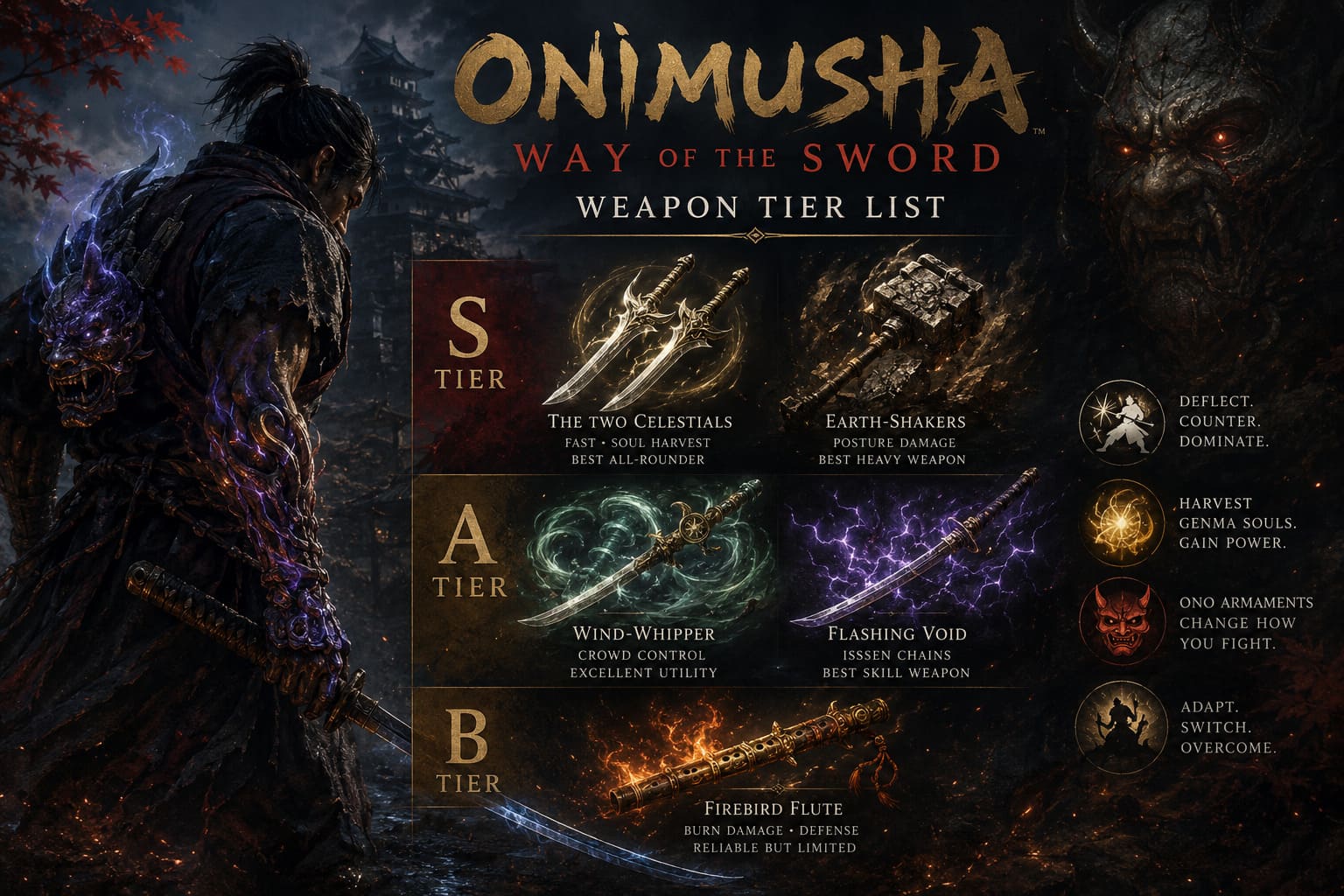
| S | The Two Celestials | General Combat, Soul Farming | Best All-Rounder |
| S | Earth-Shakers | Posture Breaks, Elite Enemies | Best Heavy Weapon |
| A | Wind-Whipper | Crowd Control, Airborne Genma | Excellent Utility |
| A | Flashing Void | Bosses, Issen Chains | Best Skill Weapon |
| B | Firebird Flute | Sustained Damage, Defense | Reliable But Limited |
S-Tier: The Weapons I’d Never Want to Be Without
S-Tier is reserved for armaments that remain useful regardless of what the game throws at you. These are the weapons I would happily upgrade first because they don’t become dead weight once the difficulty ramps up.
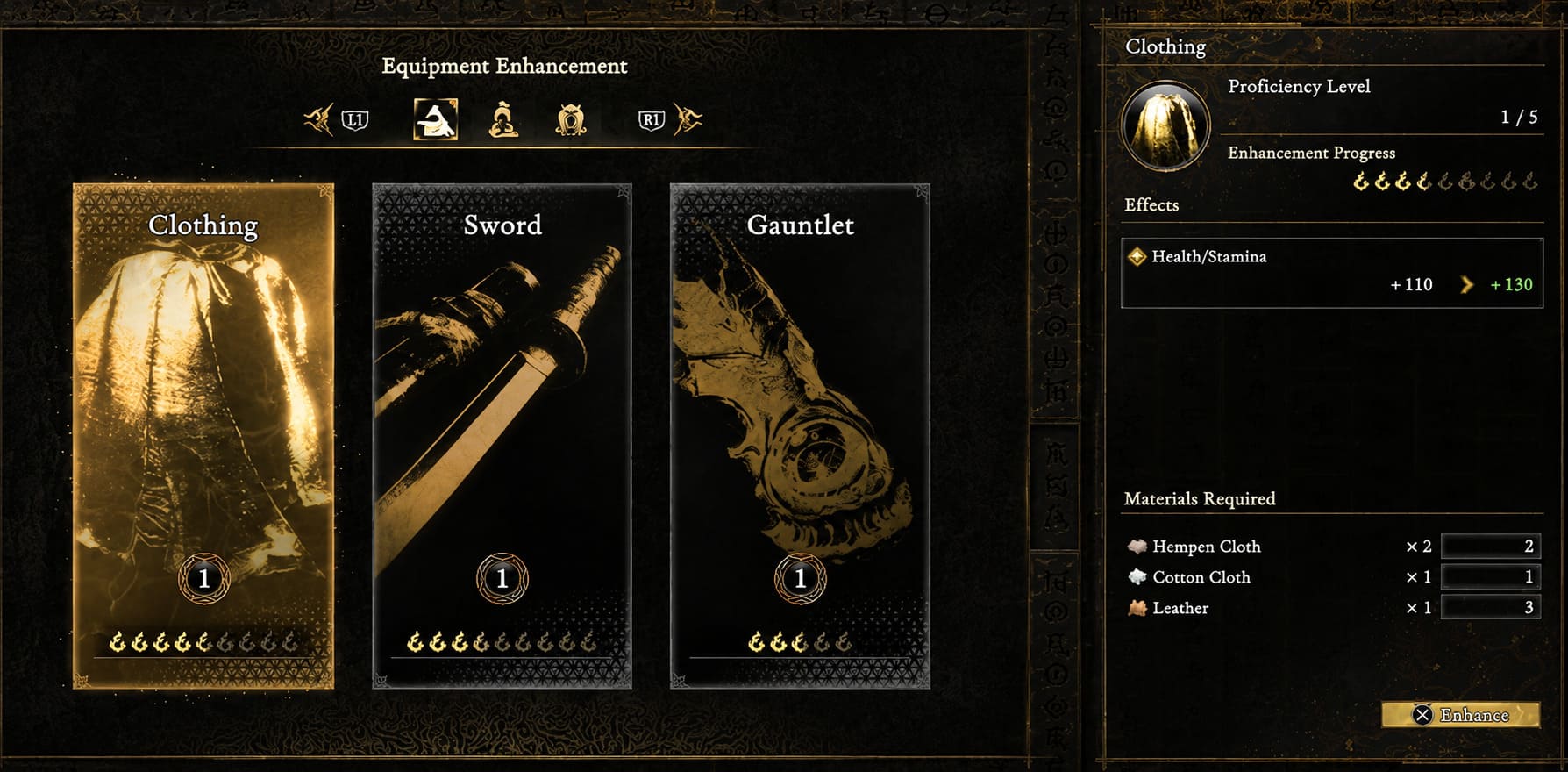
1. The Two Celestials – The Weapon I’d Keep Equipped Most of the Time
Weapon Type: Dual Daggers / Light Blades
Element: Light / Soul Harvest
Best For: Fast combat, sustain, soul generation
If I had to pick only one weapon to carry through most of Onimusha: Way of the Sword, it would probably be The Two Celestials.
They’re fast, responsive and forgiving in a way that becomes increasingly valuable as enemy encounters get nastier. The individual hits aren’t spectacular, but that’s missing the point. These blades are about maintaining momentum.
The standout feature is the weapon’s Combo Strength mechanic. During certain attack strings, the blades produce visual cues that let you land enhanced inputs. Hit those timings correctly and the weapon suddenly feels much more aggressive.
That’s where The Two Celestials become special.
Perfectly timed attacks can improve the flow of the combo, increase posture pressure and, most importantly, generate large amounts of Yellow Souls. And Yellow Souls aren’t just another collectible. They help keep Musashi alive.
That creates a fantastic combat loop:
- Attack quickly.
- Trigger the enhanced combo timing.
- Generate souls.
- Recover resources.
- Stay aggressive instead of retreating.
- Repeat.
For me, that’s exactly what a great action-game weapon should do. It rewards good play without demanding that every encounter be perfectly executed.
The lower damage per hit is a fair trade. You’re getting speed, sustain and flexibility instead of giant numbers.
Verdict: S-Tier without hesitation. If you’re unsure what to upgrade first, start here.
2. Earth-Shakers – When Subtlety Stops Working
Weapon Type: Heavy Hammer / Greatsword
Element: Earth
Best For: Armored enemies, posture damage, elite Genma
There are moments in games like this when you stop caring about elegance.
An enemy blocks your attacks. Their posture barely moves. You’re dodging around them for what feels like an eternity. Then you pull out Earth-Shakers and solve the problem with violence.
This is the weapon for players who want every swing to feel like it has consequences.
Earth-Shakers specialize in posture damage. Heavy strikes can smash through defensive positions that would otherwise take considerably longer to dismantle. Against armored Genma and tougher enemies, that difference is enormous.
The downside is obvious: they’re slow.
You can’t button-mash your way out of trouble with Earth-Shakers. The recovery animations leave you vulnerable, and mistiming a heavy attack can be punished hard. But that’s also what makes them satisfying.
The weapon’s temporary hyper-armor during certain attacks is particularly useful. When it activates, minor enemy hits won’t necessarily interrupt your swing, allowing you to commit to an attack rather than constantly worrying about being staggered.
And then there’s the Oni Magic seismic attack.
When Musashi slams the weapon into the ground and sends a shockwave through nearby enemies, it provides exactly the kind of emergency crowd control a heavy weapon needs.
I wouldn’t use Earth-Shakers for every enemy in Kyoto. But against something huge, armored and angry?
Absolutely.
Verdict: S-Tier. Less flexible than The Two Celestials, but arguably better when brute force is the answer.
A-Tier: Powerful Weapons With a Clear Identity
A-Tier weapons aren’t bad versions of the S-Tier choices. Quite the opposite. These are weapons I’d happily use in the right situation.
The only reason they don’t sit at the top is that their strengths are more specialized.
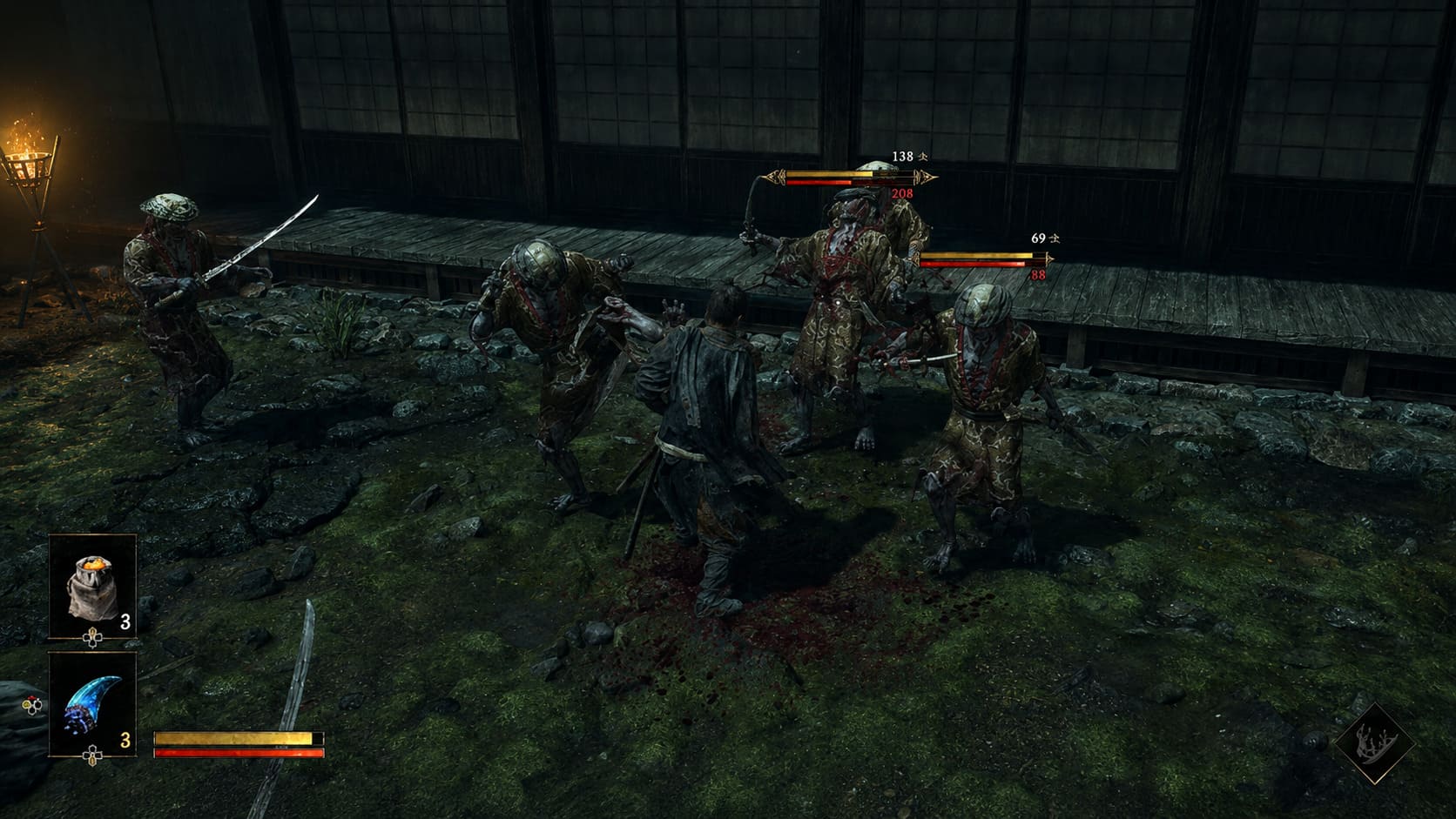
3. Wind-Whipper – The Crowd-Control Monster
Weapon Type: Double-Bladed Sword / Staff
Element: Wind
Best For: Groups, airborne enemies, battlefield control
Wind-Whipper is one of those weapons that becomes more impressive the more enemies are on screen.
Its broad attacks cover a lot of space, making it much easier to control groups than with a narrow single-target weapon. When several Genma start surrounding Musashi, that extra reach can be the difference between maintaining control and getting boxed into a corner.
But the real attraction is its Oni Magic.
The weapon summons a tornado-like attack that tears through nearby enemies and can repeatedly strike targets caught inside it. Against airborne Genma, it becomes particularly useful because it can drag enemies out of the air and bring them into a much more manageable position.
This is where I think Wind-Whipper will shine in challenge content.
If the game throws waves of enemies at you, having an armament capable of controlling space is incredibly valuable. You don’t necessarily need the highest single-target damage when you’re fighting five enemies at once.
Its weakness is boss damage.
Against a single target with a large health pool, Wind-Whipper doesn’t feel nearly as impressive as the Flashing Void or Earth-Shakers.
Verdict: A-Tier. Fantastic for crowd fights, slightly less exciting in a duel.
4. Flashing Void – For Players Who Actually Practice Their Issen Timing
Weapon Type: Katana / Longsword
Element: Thunder
Best For: Boss fights, precision combat, Issen chains
This is probably the weapon I’d recommend to someone who says, “I don’t care if it’s difficult. I want the coolest combat possible.”
Flashing Void is built around speed and precision.
Its attack strings recover quickly, allowing Musashi to move between offense and defense without feeling locked into lengthy animations. That becomes particularly useful when fighting enemies with recognizable attack patterns.
The weapon’s biggest attraction is its interaction with Issen counters.
Issen is already one of the most satisfying mechanics in the game. Successfully striking at exactly the right moment and turning an incoming attack into devastating punishment never gets old. Flashing Void pushes that concept even further by giving skilled players more room to work with during the counter sequence.
When you’re fighting a boss you’ve already learned, the weapon can feel ridiculous.
Deflect. Counter. Attack. Reset. Wait for the next opening. Counter again.
That’s the kind of rhythm that makes you forget you’re staring at a health bar.
The catch is its Oni Magic consumption. Flashing Void can burn through your resources quickly, so you can’t simply spam its strongest ability every time something moves.
Its weaker crowd tracking also hurts it when enemies are spread across a large area.
Still, for boss encounters, this is one of my favorite choices.
Verdict: A-Tier. Potentially S-Tier in the hands of a player who has mastered Issen timing.
B-Tier: Good Weapons That Don’t Quite Become Essential
B-Tier doesn’t mean bad.
In fact, one of the things I like about this lineup is that the lower-ranked weapon isn’t something I’d immediately throw into storage. Firebird Flute is perfectly usable; it just doesn’t offer the same level of flexibility as the weapons above it.
5. Firebird Flute – Reliable Firepower With Some Limits
Weapon Type: Bladed Flute / Fire Blade
Element: Fire
Best For: Damage over time, defensive play, zoning
Firebird Flute takes a more patient approach to combat.
Its attacks apply a burning effect that continues damaging enemies after Musashi disengages. That’s useful when you’re dealing with aggressive enemies because you can land a few hits, reposition and let the burn continue doing its work.
The defensive magic is also worth mentioning.
Rather than focusing entirely on deleting one enemy, Firebird Flute can surround Musashi with a ring of flames that damages and pushes enemies away.
That’s a very practical emergency tool.
The problem is range.
Its basic attacks don’t have the same reach as Wind-Whipper, while its combos can become predictable once you’ve used them extensively. Against enemies that punish close-range mistakes, that can become uncomfortable.
I can see Firebird Flute being particularly useful for players who enjoy a defensive, attrition-based approach. But if I’m choosing a weapon for the toughest fights, I’d generally reach for one of the higher-tier options first.
Verdict: B-Tier. Solid, dependable and fun, but not my first upgrade priority.
How I Would Build My Arsenal
One mistake I’d avoid is treating this tier list as a reason to permanently equip one weapon.
Onimusha: Way of the Sword rewards switching weapons intelligently.
The Two Celestials can handle general combat and help replenish your resources. Earth-Shakers can then come out when an armored enemy needs its posture destroyed. Flashing Void makes sense when you’ve learned a boss’s attack pattern, while Wind-Whipper can clean up crowded encounters.
That’s a much stronger strategy than trying to force one armament into every situation.
My preferred rotation would look something like this:
- The Two Celestials for exploration and resource generation.
- Earth-Shakers for heavily armored enemies.
- Wind-Whipper when several Genma attack together.
- Flashing Void for bosses and Issen-focused fights.
- Firebird Flute when sustained burn damage or defensive zoning is useful.
It also makes the upgrade system more interesting because you’re not simply chasing the weapon with the biggest damage stat.
Don’t Ignore Soul Management
The Oni Armaments are closely tied to the game’s soul system, and that means resource management can influence which weapon is actually strongest in a particular encounter.
Blue Souls are especially important because they replenish Musashi’s Oni Power, which fuels magical abilities.
This creates an interesting tactical choice.
Do you spend your Oni Power immediately for a powerful attack, or do you save it for the next elite enemy?
I’ve always preferred games where powerful abilities have an opportunity cost, and this system encourages exactly that kind of decision-making.
If you’re using Flashing Void heavily, for example, it makes sense to maintain a healthy supply of souls before committing to a major fight. Alternatively, you can switch back to a weapon such as The Two Celestials, generate resources and then return to your preferred damage weapon.
That little bit of preparation can make a surprisingly large difference on higher difficulties.
Body Breaks Can Change the Fight
Another mechanic worth learning is strategic limb breaking.
When you damage specific parts of powerful Genma, you can trigger body breaks that create additional opportunities during combat. Instead of blindly attacking the center mass of an enemy, pay attention to the visual indicators and think about what resource or opening you need.
Purple structural breaks are particularly valuable because they can rapidly refill your Oni Armament resources.
And this is where experienced players will probably separate themselves from casual players.
You don’t want to treat body breaks as something that happens accidentally. Once you understand the system, they become another part of your resource-management strategy.
Break the right part. Get the right resource. Spend it at the right moment.
That sounds simple, but in the middle of a chaotic Genma fight, it becomes a completely different story.
Issen Is Still the Skill Check
If there’s one mechanic I’d tell every new player to practice, it’s Issen.
The basic idea is simple: attack at the precise moment an enemy strike is about to connect.
The execution is anything but simple.
At first, you’ll mistime it constantly. Then you’ll start recognizing attack animations. Eventually, you stop reacting to the weapon itself and start reacting to the enemy’s movement.
That’s when Issen becomes addictive.
Weapons like Flashing Void naturally appeal to players who want to build their entire combat style around this mechanic. Once you’ve learned enemy patterns, Chain Issen sequences can turn what looked like an impossible room into a beautifully choreographed execution.
But don’t feel pressured to play this way immediately.
The Two Celestials offer a much more forgiving path toward learning the game’s timing systems, while Earth-Shakers give you another way to control difficult enemies.
Onimusha Way of the Sword Oni Gauntlet Upgrade Path Guide: Max Your Oni Power Fast
Final Ranking
After looking at the weapons from both a numbers-and-mechanics perspective and simply asking myself which ones I’d actually want to use for hours, my final Onimusha: Way of the Sword weapon tier list is:
S-Tier
- The Two Celestials – Best overall weapon and my first upgrade choice.
- Earth-Shakers – Incredible against armored enemies and posture-heavy encounters.
A-Tier
- Wind-Whipper – Superb crowd control and airborne enemy utility.
- Flashing Void – Fantastic for bosses and Issen specialists.
B-Tier
- Firebird Flute – Useful damage-over-time and defensive options, but less versatile.
How to Fix Onimusha: Way of the Sword Crashing on Startup on PC
So, What’s the Best Weapon in Onimusha: Way of the Sword?
If you want my personal answer, it’s The Two Celestials.
Not because they necessarily produce the biggest damage numbers, but because they make Musashi feel consistently capable. They generate souls, move quickly, maintain pressure and give you tools for both survival and offense.
Earth-Shakers would be my second choice, especially for encounters where posture damage matters more than speed.
And if you’re the sort of player who learns boss attacks until every animation is burned into your brain, I’d seriously consider Flashing Void. Its ceiling is enormous.
Ultimately, the best Oni Armament isn’t simply the one sitting highest on a tier list. It’s the one that matches the way you actually play. Way of the Sword’s combat is at its best when you stop thinking about weapons as equipment and start treating them as different fighting styles.
Upgrade intelligently, learn your deflections, manage your souls and don’t be afraid to swap weapons mid-run.
Kyoto is full of Genma.
You might as well make sure Musashi has the right answer for each of them.