Aniimo Sky Floating Metropolis Secrets: Ultimate Guide to Pawprint Studio’s New RPG
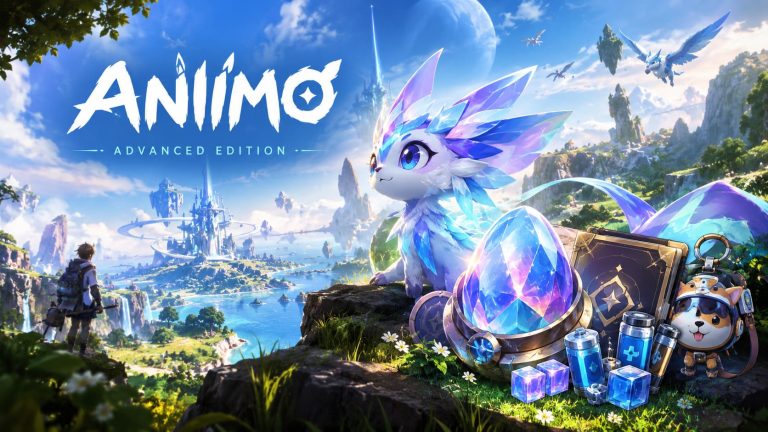
There is something instantly appealing about a game that looks at the familiar creature-collecting formula and decides it is not enough. That is exactly the impression I get from Aniimo, Pawprint Studio’s upcoming free-to-play action RPG, especially when it comes to its enormous sky-floating metropolis. With the global launch scheduled for September 16, 2026, Aniimo is shaping up to be much more than another open-world creature collector. It combines exploration, monster catching, combat, progression, multiplayer activities, and a surprisingly ambitious vertical world.
Players step into the role of Pathfinders and explore the continent of Idyll, a world filled with forests, volcanic landscapes, ruins, islands, strange creatures, and hidden locations. But if you ask me, the most interesting destination may not actually be on the ground. Floating above the continent is a huge futuristic metropolis that looks like the kind of place where you would expect the game’s most important secrets, strongest players, and most chaotic multiplayer moments to collide.
Aniimo Companion Handbook Tier List – The Ultimate Guide to the Best Creatures
A World Built to Be Explored Vertically
One of the things that immediately separates Aniimo from more traditional creature-catching RPGs is its approach to world design. Idyll isn’t simply a giant horizontal map where you run from one marker to another. The world is designed around vertical exploration, meaning mountains, cliffs, aerial platforms, islands, and elevated areas are all part of the adventure.
The continent reportedly contains around 15 different terrestrial regions, alongside special water-focused areas such as the Island of Peace. That already gives players plenty of room to explore, but the floating metropolis takes the concept of verticality much further. It isn’t merely something you can see in the distance while wandering around Idyll — it is a functional part of the game’s ecosystem.
And honestly, that is one of the features I’m most curious about. A creature-catching game where your movement abilities actually determine which parts of the world you can reach has a lot more potential for exploration than simply collecting creatures for combat.

The Sky-Floating Metropolis Is More Than a Pretty Landmark
At first glance, the floating city might look like an impressive backdrop designed to make Aniimo’s world feel larger. In reality, it appears to be one of the game’s central hubs.
The metropolis functions as a major multiplayer gathering point where Pathfinders can meet other players, show off their creatures, prepare for activities, and move between different gameplay systems. Instead of feeling like a menu disguised as a town, the city is intended to be a living social space.
That makes it particularly important for players who want to experience Aniimo beyond solo exploration.
Inside the city, players can:
- Meet other Pathfinders and form groups.
- Show off rare or powerful creatures.
- Prepare for multiplayer missions.
- Access competitive activities and arenas.
- Interact with systems connected to endgame progression.
I especially like this idea because social hubs can completely change how an online RPG feels. A good hub gives players somewhere to simply exist between adventures, rather than making every interaction feel like another loading screen or menu.
The Lost Isles and Aniimo’s PvEvP Endgame
This is where the floating metropolis becomes particularly interesting. Some of the game’s more dangerous multiplayer activities are connected to the city, including the highly talked-about Egg Heist and Diamond Egg Heist modes.
These activities reportedly send teams into the Lost Isles, where the objective isn’t simply to defeat monsters or collect resources. Players have to deal with both environmental threats and other players, creating a genuine PvEvP experience.
That combination sounds considerably more exciting to me than standard PvP. You aren’t just fighting another player’s carefully optimized team in a controlled arena. You have to worry about wild creatures, positioning, objectives, resources, and rival squads at the same time.
The basic concept creates plenty of room for unexpected moments. A team might be dominating against another squad only to get interrupted by a powerful wild creature, or players could decide to avoid a fight entirely and sneak away with valuable loot. Those are the kinds of situations that can turn an otherwise familiar multiplayer mode into something memorable.
The City’s Arenas Could Shape the Combat Meta
For players who care more about competitive combat than exploration, the floating metropolis also serves another important purpose: arenas.
The city contains dedicated areas for structured PvP and competitive battles, giving Pathfinders a place to test their creature combinations against other players. This is where the creatures you’ve been training, evolving, and optimizing finally get to prove whether they are actually good.
That progression loop is important. Catching a rare creature is fun, but there is a different satisfaction in taking something you’ve spent hours developing and discovering how it performs against another player’s strategy.
I expect the metropolis to become particularly busy once players start figuring out the game’s competitive meta. Certain creatures will inevitably become popular, unusual combinations will emerge, and players will start experimenting with builds that nobody expected during the early days of launch.
Hidden Lore May Be One of the City’s Best Secrets
Not everything in the floating metropolis appears to be about combat or multiplayer progression. There are also hints of deeper lore systems hidden inside the city’s architecture.
Community discussions have drawn attention to ecological archives that appear to be connected to collectibles found throughout Idyll. Items such as the mysterious Shelly collectibles can reportedly contribute to unlocking information stored within these archives.
This is exactly the kind of optional content I enjoy in open-world games. You aren’t forced to stop and read every piece of lore, but if you’re the type of player who wants to understand why a world looks the way it does, these discoveries can gradually reveal a much bigger picture.
More importantly, the information stored in these archives may provide clues related to unusual creature variants, including Alpha and Prismana forms. That gives exploration a practical purpose instead of making collectibles feel like meaningless items scattered around the map.
Twining Is the Key to Reaching the Sky
The floating metropolis would not be nearly as interesting if every player could simply teleport straight into it. Aniimo’s movement system is built around its creatures, and the game’s signature Twine mechanic is a major part of that philosophy.
Twining allows a Pathfinder to physically merge with an Aniimo rather than simply commanding it from a distance. The resulting form provides different movement and traversal capabilities depending on the creature involved.
That means your creature collection isn’t only about combat statistics. Some creatures can fundamentally change how you interact with the world.
Need to climb a difficult surface? A climbing-focused creature may be the answer. Want to travel through the air? You’ll need a creature capable of flying. Suddenly, the question isn’t just, ‘Which Aniimo is strongest?’ but also, ‘Which Aniimo can get me where I need to go?’
For an open-world RPG, that distinction could make exploration much more rewarding.
Flying Creatures and Exploration Levels
Not every flying creature appears to be equally useful. Different Aniimo can have different exploration capabilities, with lower-level flying traits being suitable for basic gliding and stronger creatures offering significantly greater mobility.
Larger creatures such as Inforgon are particularly interesting because of their apparent ability to reach higher altitudes. Players can also improve these exploration traits through progression and resource investment.
This creates another layer of decision-making. Your favorite creature might be incredibly strong in combat, but that doesn’t automatically mean it is the best choice for exploring Idyll.
For me, that is one of the strongest ideas in Aniimo’s design. The best creature may depend entirely on what you’re doing at that moment.
| Activity | What Matters Most |
|---|---|
| Open-World Exploration | Movement and traversal abilities |
| Aerial Exploration | Flying level and stamina |
| PvP | Combat stats and abilities |
| Egg Heist | Team composition and mobility |
| Lore Hunting | Exploration access and collectibles |
| Creature Progression | Training, evolution, and resources |
Weather and Time Can Change the World
Aniimo also appears to be putting considerable emphasis on environmental conditions. Creature appearances, routes, and certain events can be influenced by factors such as weather, time of day, elemental conditions, and unusual phenomena.
That means the same location might not necessarily offer the same experience every time you visit it.
An area that looks ordinary during the day could become significantly more interesting during a storm or another special event. An unusual creature might appear only under specific circumstances, while certain routes or activities may become available when environmental conditions change.
This kind of system can make exploration feel much less predictable. Instead of simply clearing an area once and moving on, players have a reason to return later and see what has changed.

Your Homeland Is the Other Half of the Progression Loop
Before spending all your time in the floating city, you’ll need a reliable base of operations. Every Pathfinder has access to a personal RV located at a campsite within their Homeland.
Homeland acts as a personal space where players can manage their creatures, grow crops, collect resources, and customize their surroundings. It may sound like a side feature, but these systems are closely connected to the game’s larger progression loop.
Your base can support several important activities:
- Egg Hatching for obtaining new creatures.
- Resonance Training for improving combat performance.
- Evolution for unlocking stronger forms and abilities.
- Twine Optimization for improving the effectiveness and duration of creature merging.
The farming and automation mechanics are especially useful because they can reduce some of the repetitive resource gathering involved in long-term progression. Once your Homeland starts working efficiently, you can spend more time doing what most players probably came for in the first place: exploring Idyll and hunting down interesting creatures.
Aniimo PC System Requirements
If you’re planning to explore the sky metropolis on PC, hardware requirements are worth checking before launch. The game lists Windows 10 as the minimum operating system and requires 12 GB of RAM, alongside hardware in the range of an Intel Core i7-9700 or AMD Ryzen 5 3600X and an NVIDIA GTX 1060 or AMD Radeon RX 6600.
The recommended configuration moves up to 16 GB of RAM, an Intel Core i7-12700F or AMD Ryzen 7 7700X, and an NVIDIA RTX 3070 or AMD Radeon RX 6800. Storage requirements are listed at 45 GB, with a broadband internet connection required for the online features.
For a busy multiplayer hub filled with other players, creatures, effects, and environmental detail, I’d personally aim for the recommended specifications rather than treating the minimum requirements as the target. A stable frame rate will matter quite a bit when you’re jumping into PvP or trying to navigate a crowded area.
Why I’m Keeping an Eye on Aniimo
The biggest appeal of Aniimo, at least from what has been shown so far, is that its systems seem designed to connect with one another. Creature collecting affects combat, combat affects progression, progression affects exploration, exploration feeds resources back into your Homeland, and your upgraded creatures can then take you into harder areas.
The sky-floating metropolis sits right in the middle of many of those systems. It is a social hub, a competitive destination, a gateway to dangerous multiplayer activities, and potentially a place where some of the game’s lore is hidden in plain sight.
That makes it much more interesting than a city that exists simply because every RPG needs a central town.
Final Thoughts
Aniimo has a lot to prove when it launches on September 16, 2026, but the floating metropolis is one of the features that makes me genuinely curious about the game. The combination of vertical exploration, Twining, flying creatures, PvEvP activities, competitive arenas, social systems, and hidden lore gives the sky city a purpose beyond simply looking impressive.
If Pawprint Studio manages to make these systems work together smoothly, the metropolis could become one of those places players naturally associate with the game — somewhere you return after a long expedition, meet other players, prepare your next creature build, and decide where to head next.
And personally, that’s what I want from an open-world creature-catching RPG. Give me a world that rewards curiosity, creatures that actually change how I explore it, and places that feel like they have a life of their own. If Aniimo can deliver on that promise, the city above Idyll might end up being one of its biggest strengths.