Dimraeth Crafting Recipes Guide: Cooking, Alchemy, and Gear Lists (2026)
There are a lot of systems in Dimraeth, but crafting is the one I would strongly recommend taking seriously from the start. You can absolutely run around collecting random materials and hoping your character will carry you through the next zone, but sooner or later the game is going to remind you that preparation matters.
Mudtek’s Dimraeth launched into Early Access on September 15, 2026, and its crafting system is already one of the more important parts of the progression loop. This isn’t one of those RPG crafting systems where you occasionally make a potion because the game told you to. Food, tools, healing items, combat potions, throwing weapons, and even powerful Spellbooks can all depend on materials you picked up several hours earlier.
And yes, inventory management can get annoying.
But once you understand what each station does and which materials are actually worth hoarding, the whole system becomes much easier to manage.
For players looking for a Dimraeth crafting recipes guide, here’s the practical breakdown of Cooking, the Crafting Bench, the Alchemy Table, and Personal Crafting, along with the recipes you should know about.
How Crafting Works in Dimraeth
Dimraeth splits production into four different categories. Each one has its own purpose, and knowing where an item is made saves a surprising amount of time when you’re standing in front of your inventory wondering why you can’t craft something.
| Crafting Type | Main Purpose | What You Usually Make |
|---|---|---|
| Cooking | Food and basic recovery | Meat, stews, tea, broth |
| Crafting Bench | Tools and basic equipment | Axes, pickaxes, gloves, planks |
| Alchemy Table | Potions and tactical items | Health, stamina, magic and rage potions |
| Personal Crafting | Portable utility and combat items | Rope, knives, flasks, Spellbooks |
The game currently has 48 core recipes before counting upgrade tiers, so there is plenty to keep track of.
My advice: don’t try to memorize everything. Instead, learn which ingredients appear constantly. Droop Gelo, Tenderberries, Brush Flax, monster teeth, monster cores, and basic ores are the kinds of materials you will be happy to have later.
Cooking Recipes
Cooking is probably the easiest crafting category to understand. You collect meat, plants, water, and monster materials, then turn them into food or drinks.
The important thing is not to dismiss basic ingredients. A random berry or piece of meat sitting in your storage might look worthless now, but several recipes use these simple materials as components.
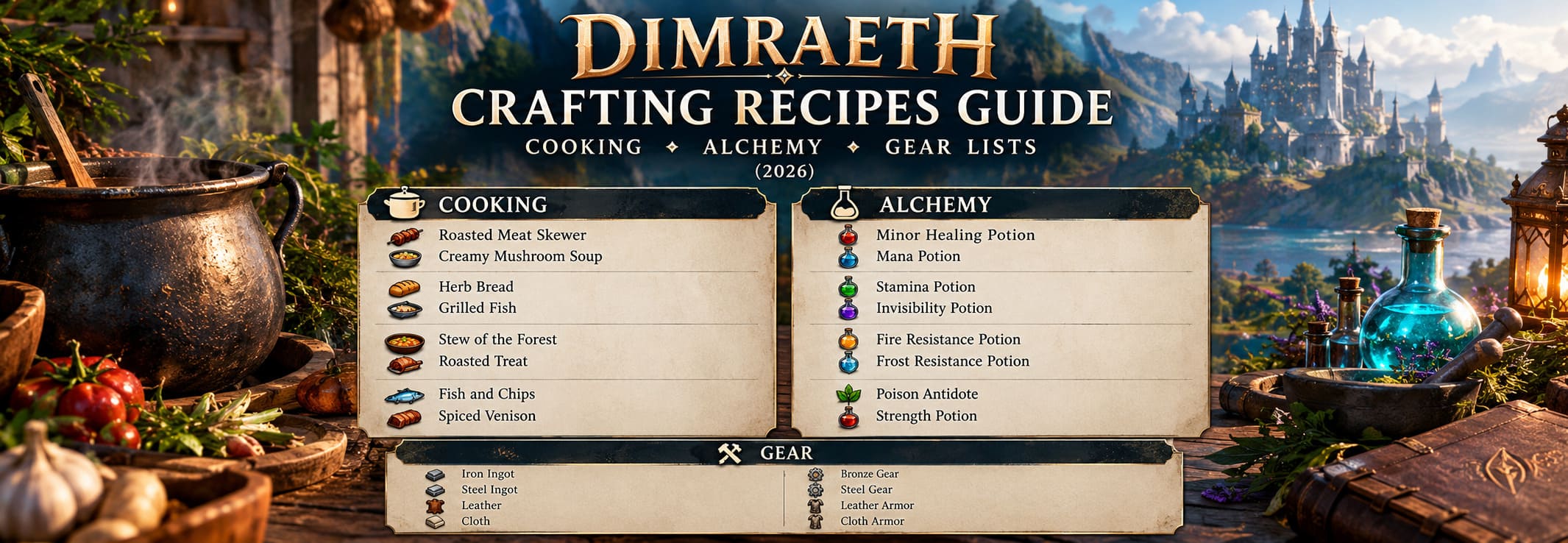
Cooking Recipe List
| Recipe | Ingredients | Purpose |
|---|---|---|
| Cooked Beast Meat | 1x Beast Meat | Basic prepared food |
| Cooked Critter | 1x Critter Meat | Simple small-game ration |
| Hunters Stew | 1x Critter Meat, 1x Droop Gelo, 1x Beast Meat | Hearty mixed-meat meal |
| Natures Ward Steak | 1x Treant Wood, 1x Beast Meat, 1x Thaumablossom | Special infused meat dish |
| Roasted Droop Core | 1x Droop Core | Converts a monster core into food |
| Tender Berry Tea | 1x Tenderberry, 1x Water | Basic restorative drink |
| Thaumablossom Tea | 1x Thaumablossom, 1x Water | Magical floral infusion |
| Thickblood Broth | 1x Large Goblin Tooth, 1x Water, 1x Apple | Unusual survival broth |
The Hunters Stew and Natures Ward Steak are the recipes I’d pay particular attention to if you’re trying to get more value from your exploration materials. They require a combination of resources rather than a single drop, so it’s easy to accidentally burn through something you later need elsewhere.
Crafting Bench Recipes
The Crafting Bench is where Dimraeth starts feeling like a proper survival RPG.
This is your home for basic tools, processed wood, early equipment, and other physical items. Tools are especially important because better gathering efficiency means better crafting efficiency. It’s a simple loop, but it works.
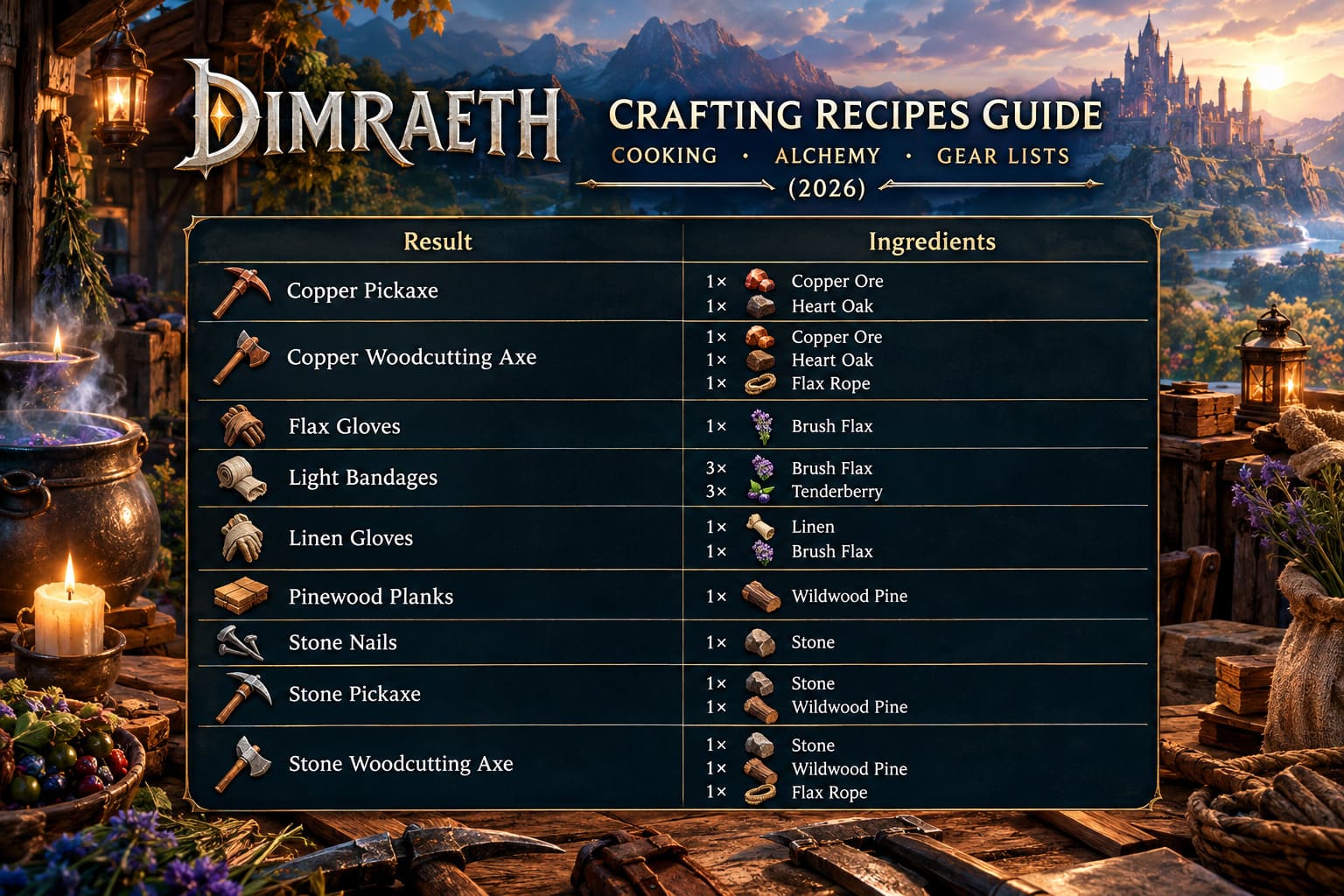
Crafting Bench Recipe List
| Recipe | Ingredients | Purpose |
|---|---|---|
| Copper Pickaxe | 1x Copper Ore, 1x Heart Oak | Improved mining tool |
| Copper Woodcutting Axe | 1x Copper Ore, 1x Heart Oak, 1x Flax Rope | Improved woodcutting tool |
| Flax Gloves | 1x Brush Flax | Basic hand protection |
| Light Bandages | 3x Brush Flax, 3x Tenderberry | Basic healing supplies |
| Linen Gloves | 1x Linen, 1x Brush Flax | Improved hand protection |
| Pinewood Planks | 1x Wildwood Pine | Processed construction material |
| Stone Nails | 1x Stone | Basic building fasteners |
| Stone Pickaxe | 1x Stone, 1x Wildwood Pine | Early mining tool |
| Stone Woodcutting Axe | 1x Stone, 1x Wildwood Pine, 1x Flax Rope | Early woodcutting tool |
The Stone Pickaxe and Stone Woodcutting Axe are particularly important early on because they’re part of the progression into better resource gathering.
Then you move into copper tools, which is where the game starts asking for more specific materials.
One thing I learned quickly with systems like this: don’t immediately convert every piece of wood or flax you find. Raw materials can have multiple uses, and crafting yourself into a shortage is one of the easiest ways to slow your own progression.
Alchemy Table Recipes
Alchemy is where the crafting system becomes much more useful during difficult combat.
The Alchemy Table lets you turn monster drops and gathered ingredients into healing, stamina, magic, poison resistance, and damage-enhancing consumables. If you’re pushing into tougher areas, this is the station you should probably be checking most often.
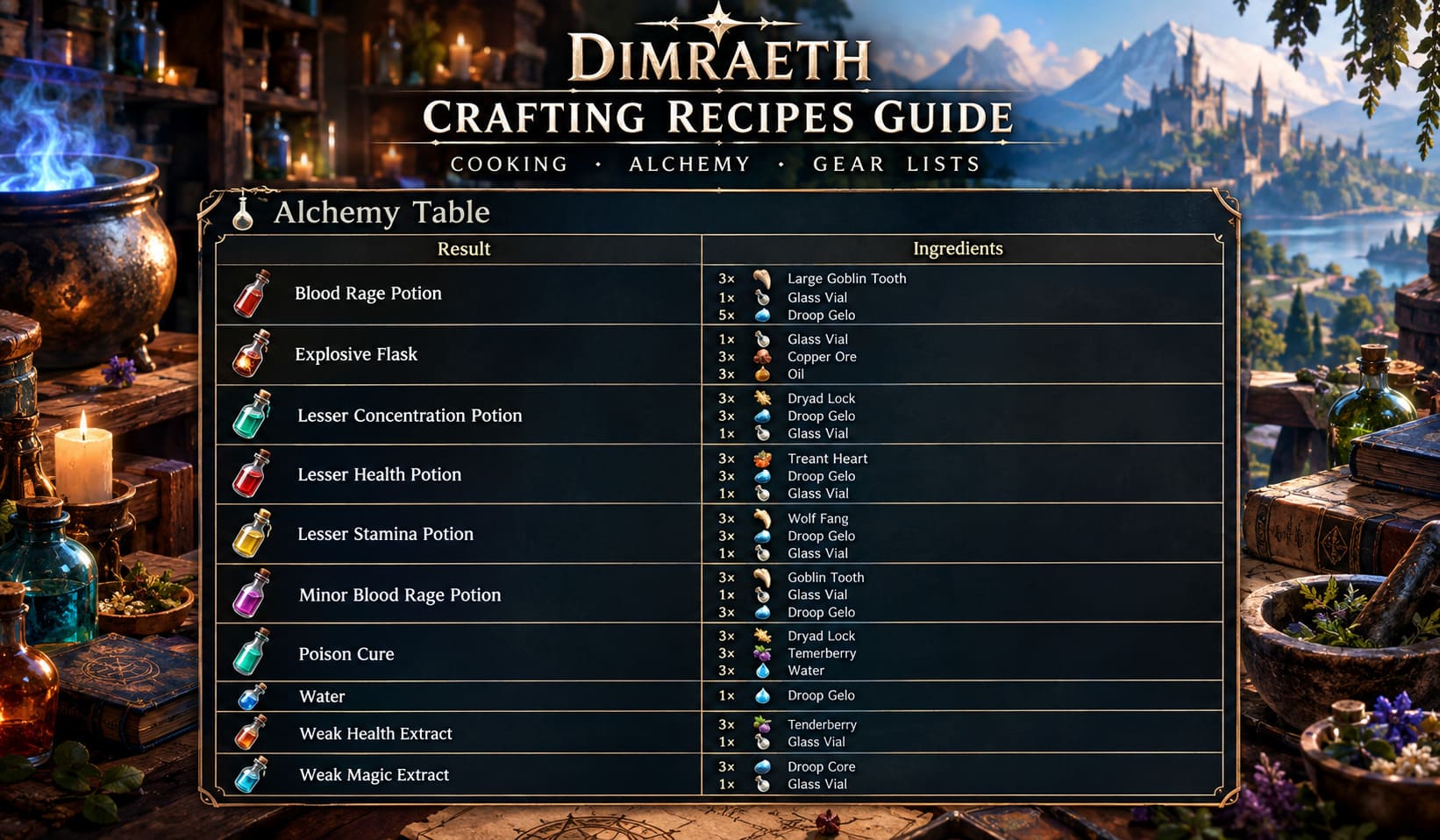
Alchemy Recipe List
| Recipe | Ingredients | Purpose |
|---|---|---|
| Blood Rage Potion | 3x Large Goblin Tooth, 1x Glass Vial, 5x Droop Gelo | Major combat damage boost |
| Explosive Flask | 1x Glass Vial, 3x Copper Ore, 3x Oil | Explosive throwable |
| Lesser Concentration Potion | 3x Dryad Lock, 3x Droop Gelo, 1x Glass Vial | Restores magical resources |
| Lesser Health Potion | 3x Treant Heart, 3x Droop Gelo, 1x Glass Vial | Instant health recovery |
| Lesser Stamina Potion | 3x Wolf Fang, 3x Droop Gelo, 1x Glass Vial | Restores stamina |
| Minor Blood Rage Potion | 3x Goblin Tooth, 1x Glass Vial, 3x Droop Gelo | Smaller combat damage boost |
| Poison Cure | 3x Dryad Lock, 3x Tenderberry, 3x Water | Counters poison effects |
| Water | 1x Droop Gelo | Produces water |
| Weak Health Extract | 3x Tenderberry, 1x Glass Vial | Basic healing |
| Weak Magic Extract | 3x Droop Core, 1x Glass Vial | Basic magic recovery |
If there is one ingredient I would put a giant mental warning sign next to, it’s Droop Gelo.
It appears in so many recipes that running out can effectively shut down your potion production. Health, stamina, concentration, Blood Rage and other crafting paths all compete for the same resource.
So when you see Droop-related enemies during exploration, don’t just walk past them because their loot looks unimpressive.
Pick up the Gelo.
You’ll thank yourself later.
Personal Crafting: The Stuff You Can Make Anywhere
Personal Crafting is probably the most convenient category because you don’t need to return to a station every time you need something.
It’s particularly useful when you’re exploring and suddenly realize you’re missing a rope, throwing weapon, flask, or other utility item.
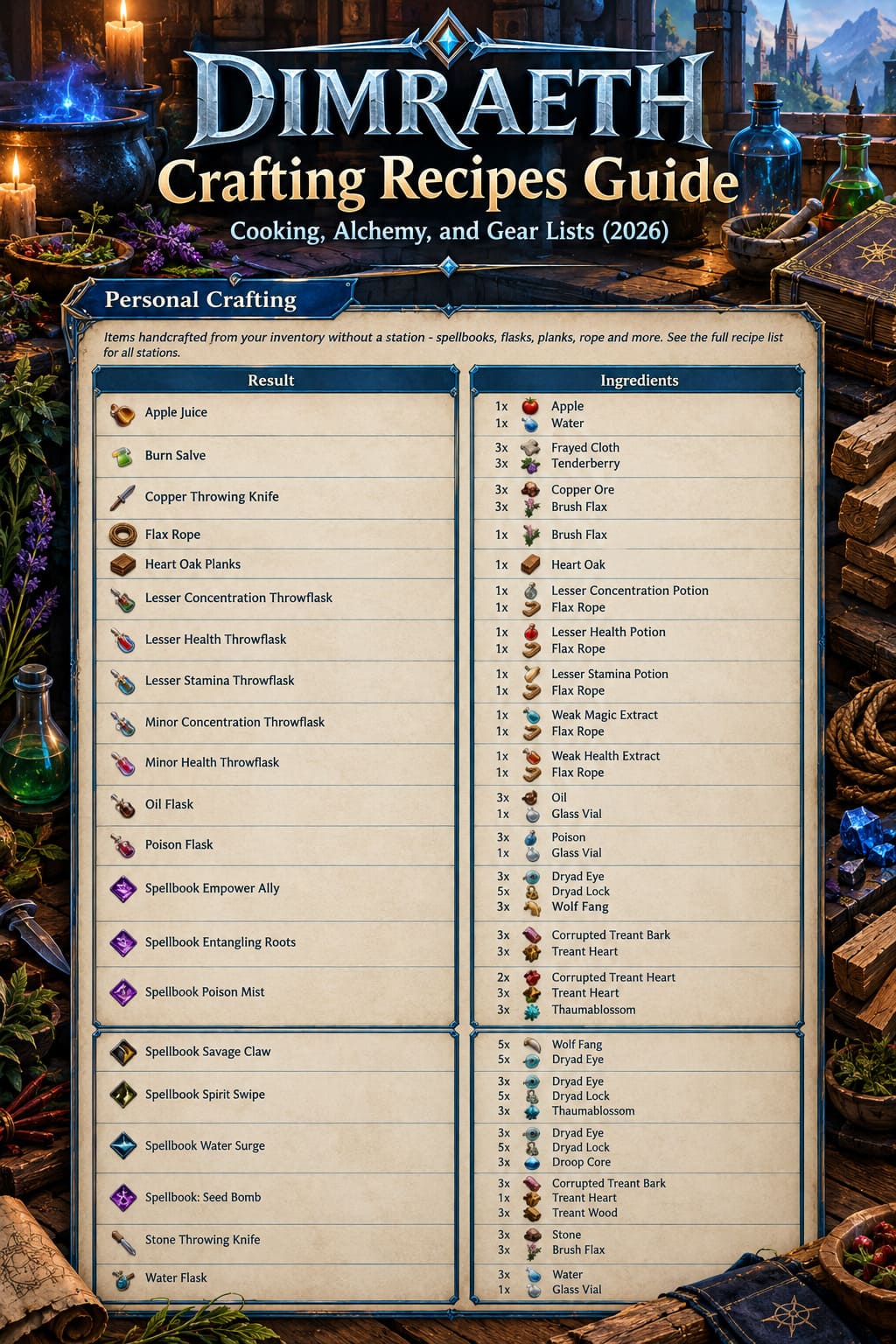
Personal Crafting Recipes
| Recipe | Ingredients | Purpose |
|---|---|---|
| Apple Juice | 1x Apple, 1x Water | Simple field drink |
| Burn Salve | 3x Frayed Cloth, 3x Tenderberry | Fire-related protection |
| Copper Throwing Knife | 3x Copper Ore, 3x Brush Flax | Ranged throwing weapon |
| Flax Rope | 1x Brush Flax | Basic rope material |
| Heart Oak Planks | 1x Heart Oak | High-grade wood material |
| Lesser Concentration Throwflask | Varies by recipe tier | Portable magical utility |
| Stone Throwing Knife | Basic stone-based materials | Early ranged projectile |
| Water Flask | Water-related materials | Portable water utility |
Personal Crafting also opens up one of the more interesting parts of the entire system: Spellbooks.
These aren’t just throwaway survival items. Spellbooks can become meaningful parts of a character’s combat setup, especially when you’re building around specific abilities or utility options.
The known Spellbook crafting paths include:
- Spellbook Empower Ally
- Spellbook Entangling Roots
- Spellbook Poison Mist
- Spellbook Savage Claw
- Spellbook Spirit Swap
- Spellbook Water Surge
- Spellbook Seed Bomb
There are also multiple throwflask variants covering Concentration, Health, Stamina, Oil, and Poison effects.
The exact resource requirements become increasingly important as you move toward higher-value recipes, so this is where having a properly organized storage setup starts paying off.
The Materials You Should Never Ignore
If you’re wondering what to collect while exploring, I’d prioritize materials based on how often they feed into other recipes rather than how impressive the item looks.
Droop Gelo is the obvious number-one resource to keep. It is effectively an alchemy bottleneck.
Brush Flax is another material that deserves more attention than it initially gets. It can become rope, gloves, bandages, and components for throwing weapons.
Tenderberries are also deceptively useful. They appear in food, healing, and poison-related recipes.
For monster drops, keep an eye out for Wolf Fangs, Goblin Teeth, Large Goblin Teeth, Treant Hearts, Dryad Locks, Droop Cores, and other specialized creature materials.
This is one of those games where blindly selling everything you don’t immediately need can backfire.
I’d much rather have a slightly messy storage chest full of materials than discover that I sold 20 ingredients I suddenly need for a potion before a difficult run.
Dimraeth Races and Classes Guide: Archetype List for character Building
A Better Dimraeth Crafting Strategy
You don’t need to craft everything.
That’s probably the biggest trap with a system like this.
Instead, think about crafting in layers:
- Upgrade gathering tools first. Better tools improve your ability to collect future resources.
- Maintain a healing supply. Don’t enter difficult areas with an empty potion inventory.
- Keep Droop Gelo stocked. It feeds a ridiculous number of important recipes.
- Save specialized monster drops. Don’t waste rare materials on something you won’t use.
- Craft utility items when needed. Personal Crafting exists specifically to help with this.
- Use food and drinks as preparation tools. Don’t treat Cooking as a cosmetic side system.
The biggest improvement you can make is simply learning to recognize what your build actually consumes.
A melee-focused character may care more about stamina and Blood Rage options. A magic-heavy build will naturally put more pressure on concentration and magic recovery. A player who constantly explores dangerous areas may burn through healing and poison cures much faster.
That means there isn’t one perfect crafting priority for everyone.
How to Fix Dimraeth Multiplayer Not Working: Connection and Co-op Guides (2026)
Final Thoughts
The Dimraeth crafting system looks complicated when you first see all the stations, ingredients, and recipes, but it becomes surprisingly logical once you understand the basic structure.
Cooking keeps you supplied. The Crafting Bench handles your physical progression. The Alchemy Table turns monster parts into combat advantages. Personal Crafting fills the gaps when you’re far away from your base and need something immediately.
And honestly, that’s the part I like most.
Crafting doesn’t feel completely detached from the rest of the game. Exploration feeds crafting, crafting improves preparation, preparation makes difficult combat more manageable, and combat sends you back out looking for better materials.
The main thing to avoid is treating every ingredient as disposable loot.
Keep the Droop Gelo. Keep the Flax. Keep the berries. Keep those specialized monster drops.
Your future self will almost certainly need them.
As Dimraeth continues through Early Access, the crafting system may expand with additional recipes and progression tiers, but these core recipes already give you a solid foundation for understanding how the game’s production loop works in 2026.