Forsaken Realms: Vahrin’s Call Attributes Guide – Priority Allocation Tips and How to Reset Skill Points (2026)
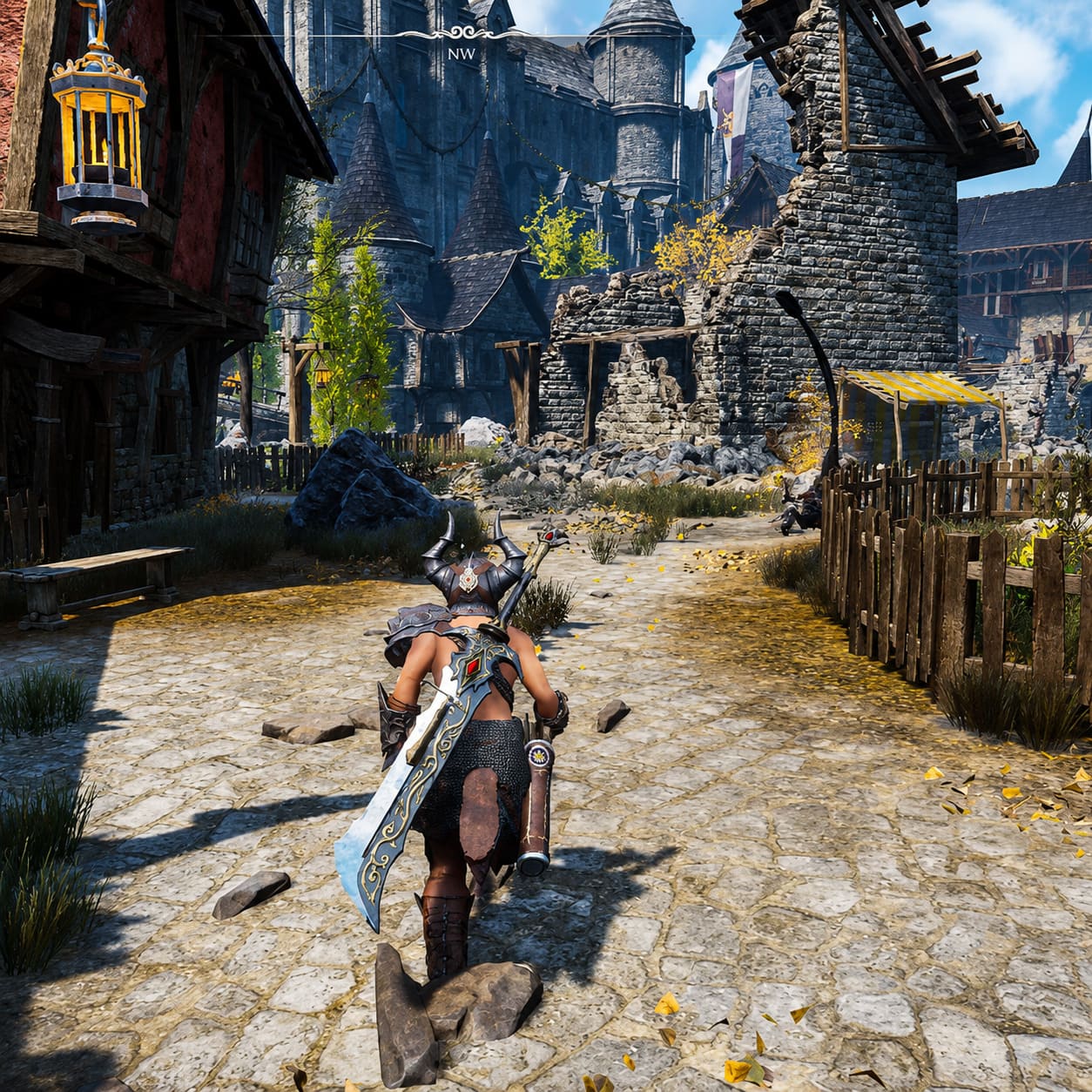
When I first jumped into Forsaken Realms: Vahrin’s Call, I expected another action RPG with the usual warrior, mage, and rogue classes waiting at character creation. Instead, Titan Roc threw that idea out the window. There are no permanent class choices locking you into a single playstyle. Every weapon, spell, and profession grows stronger simply because you keep using it.
That freedom is easily one of the game’s greatest strengths—but it’s also where many players accidentally sabotage their characters.
I’ve seen countless builds that try to become a swordmaster, archer, battlemage, alchemist, tank, and trap specialist all at once. It sounds exciting on paper, but once elite enemies begin appearing across the Vale of Vahrin, those “jack-of-all-trades” builds usually collapse under pressure.
If you want a mercenary capable of surviving the toughest encounters in 2026, your Attribute Points need a clear direction from the beginning. This guide explains exactly how the progression system works, which attributes deserve your investment for every major playstyle, and how you can completely reset your build if you decide it’s time for a fresh start.
Understanding How Character Progression Works
One thing I immediately appreciated is that Vahrin’s Call separates character growth into two completely different systems.
Many RPGs mix everything into a single talent tree. Here, your raw statistics and your specialized abilities evolve independently.
| Progression System | Purpose | How You Earn It |
|---|---|---|
| Character Points | Increase your base attributes | Character leveling, contracts, exploration, bosses |
| Perk Points | Unlock passive bonuses and active abilities | Improving individual weapon and profession masteries |
This distinction matters much more than people initially realize.
Increasing your Strength makes every heavy weapon stronger immediately.
Unlocking advanced Greatsword Perks, however, only happens after spending enough time actually fighting with greatswords.
The system constantly rewards sticking with a preferred weapon instead of endlessly swapping gear every few minutes.
Every Primary Attribute Explained
Understanding each attribute is the foundation of creating an efficient build.
| Attribute | Main Benefits | Best For |
|---|---|---|
| Constitution | Maximum health, stagger resistance, durability | Tanks, melee fighters |
| Strength | Physical melee damage, blocking efficiency, equipment load | Greatswords, axes, shields |
| Agility | Attack speed, movement, dodging, ranged damage | Bows, daggers, fast melee |
| Intelligence | Spell power, mana, elemental scaling | Pure magic builds |
| Focus / Utility | Trap efficiency, alchemy, critical bonuses | Trappers, hybrid builds |
A mistake I see players making is distributing points evenly because every attribute sounds useful.
It isn’t.
Specialization wins almost every time.
An enemy cannot exploit your missing Intelligence if they’re already lying on the ground after two devastating axe swings.
Best Attribute Priorities For Every Build
Heavy Warrior Build (Greatsword, Axe & Shield)
If your dream is walking directly into a group of enemies without backing down, this remains one of the strongest and safest choices.
Priority Order
- Strength
- Constitution
- Agility
Strength should dominate your early levels.
Your goal isn’t simply increasing raw damage.
Higher Strength lets you stagger enemies more consistently, interrupt dangerous attacks, and shorten fights before your stamina becomes an issue.
Constitution comes shortly afterward.
No matter how confident you become with parries, bosses eventually land hits. Larger health pools leave far more room for mistakes during difficult encounters.
Agility only deserves moderate investment.
A few points improve attack responsiveness without stealing valuable levels from your primary damage scaling.
Ranger & Trap Specialist
Archery feels surprisingly satisfying in Vahrin’s Call.
Instead of becoming a stationary turret, you’re constantly repositioning, planting traps, and punishing aggressive opponents before they ever reach melee range.
Priority Order
- Agility
- Focus / Utility
- Constitution
Agility powers nearly everything important.
- Movement speed.
- Arrow damage.
- Attack speed.
- Evasion.
Once Agility reaches a comfortable level, Focus becomes incredibly valuable.
Many players underestimate traps early on, but later encounters completely change that opinion. Properly upgraded explosive and slowing traps can dramatically reduce incoming pressure during elite fights.
Constitution serves mainly as insurance.
Even expert archers occasionally get clipped by ranged attacks or surprised by hidden enemies.
Pure Mage Build
Magic is devastating—but only if you fully commit to it.
Trying to become half-warrior and half-sorcerer too early usually leaves both sides feeling weak.
Priority Order
- Intelligence
- Focus
- Constitution
Almost every damaging spell scales directly from Intelligence.
Higher values increase elemental damage while expanding your mana pool for longer engagements.
Focus complements spellcasting beautifully by improving secondary magical mechanics and boosting critical spell performance.
Constitution shouldn’t be ignored entirely.
Glass cannons are exciting right until an unexpected ambush sends you back to the nearest checkpoint.
Spellsword Hybrid
This ended up becoming one of my favorite playstyles.
Mixing enchanted blades with offensive magic creates an incredibly flexible combat rhythm.
You can soften enemies with ranged spells before diving into melee, or coat your weapon with elemental effects for sustained damage.
Priority Order
- Strength
- Intelligence
- Constitution
Unlike pure builds, your first two attributes should grow together.
Whenever new equipment demands additional Strength, prioritize it.
If stronger spellbooks become available first, temporarily lean toward Intelligence.
Finding that balance is what makes the Spellsword so rewarding.
Why Balanced Builds Usually Fail
Freedom can sometimes become a trap.
It feels tempting to create a character capable of using every weapon in the game.
The problem is simple.
Enemy scaling eventually assumes your primary damage attribute has received serious investment.
If your points are evenly spread between five different statistics, you’ll likely experience:
- Noticeably slower boss fights.
- Weaker healing efficiency.
- Reduced damage output.
- Poor survivability.
- Inefficient perk progression.
Choosing a combat identity early doesn’t limit your options—it actually makes the game significantly smoother.
How Perk Progression Really Works
One of the smartest mechanics Titan Roc implemented is tying Perk progression directly to gameplay instead of experience levels.
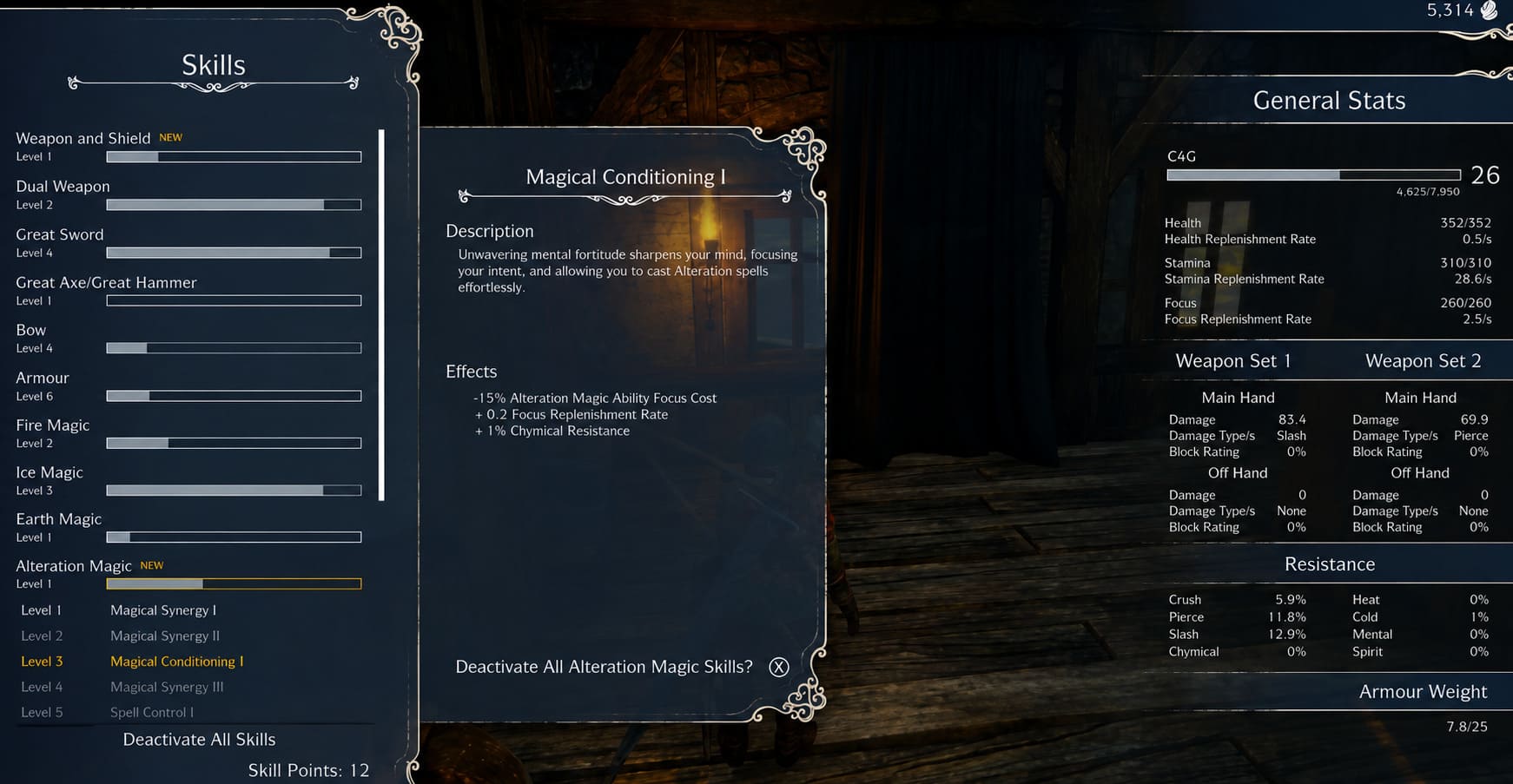
If you constantly use:
- Greatswords
- Longbows
- Daggers
- Alchemy
- Trap crafting
Those individual disciplines naturally improve over time.
Each milestone awards Perk Points that unlock unique combat bonuses, passive improvements, and entirely new abilities.
This system rewards commitment instead of experimentation every few minutes.
Ironically, players who constantly switch weapons usually unlock advanced perks much slower than specialists.
Can You Reset Your Character?
Thankfully, yes.
Considering how much experimentation the game encourages, permanent mistakes would have been incredibly frustrating.
Fortunately, Titan Roc allows full respecialization once certain conditions are met.
How To Respec Your Character
Resetting your build isn’t available directly from the pause menu.
You’ll need to travel back to civilization first.
Step 1 — Visit A Mentor
Major settlements contain specialized Mentor NPCs responsible for retraining mercenaries.
These characters are usually marked with distinctive icons on the town map, making them fairly easy to locate.
Step 2 — Pay The Required Cost
Respecialization always comes with a price.
During early progression, you’ll mostly spend Gold Coins.
Later in the game, complete rebuilds may require valuable consumables such as an Amnesia Elixir alongside the standard currency cost.
The stronger your character becomes, the more expensive rebuilding generally gets.
Step 3 — Choose What To Reset
The retraining interface allows separate resets for different progression systems.
You can usually choose between:
| Reset Option | Effect |
|---|---|
| Attribute Reset | Returns all Character Points. |
| Perk Reset | Refunds invested Perk Points. |
| Complete Respec | Clears both systems simultaneously. |
After confirming your decision, every refunded point immediately becomes available for redistribution.
Forsaken Realms Vahrin’s Call: Magic and Alchemy Synergy Guide
Smart Tips Before Resetting
Before committing to a completely different playstyle, it’s worth spending a few extra minutes preparing.
- Check available equipment first. Switching from heavy armor into an Agility build doesn’t help much if your inventory only contains oversized warhammers.
- Remember that masteries stay practical. Changing attributes won’t instantly make your Bow mastery equal to your Greatsword mastery. Weapon specialization still improves through actual combat experience.
- Don’t abandon utility completely. Even heavily armored warriors benefit enormously from decent Alchemy and Utility progression. Reliable healing potions, poisons, and crafted consumables remain useful throughout the entire adventure.
Forsaken Realms Vahrins Call Archer Mage Build Guide: Hybrid Build
Final Thoughts
One of the reasons Forsaken Realms: Vahrin’s Call stands out among modern action RPGs is how much freedom it gives players without completely removing meaningful decisions.
Every attribute investment genuinely shapes how your mercenary performs on the battlefield. Whether you’re crushing enemies beneath a colossal greataxe, dancing around opponents with a bow, or vaporizing monsters through devastating elemental magic, focused specialization almost always outperforms scattered point allocation.
The good news is that experimentation isn’t punished forever. If your original build no longer feels enjoyable, simply visit a Mentor, pay the retraining cost, and reinvent your character around an entirely different combat philosophy.
That’s exactly the kind of flexibility I wish more RPGs embraced. Instead of forcing players to restart after dozens of hours, Vahrin’s Call encourages experimentation while still rewarding thoughtful planning. Build with purpose, stay committed to your preferred weapon mastery, and you’ll have a much easier time surviving everything the brutal lands of Leyda can throw at you.