Soulbound: Online Weapon Archetypes Tier List (2026 Early Access Guide)
When I first jumped into Soulbound: Online, I honestly expected another roguelite with MMO elements slapped on top. A few hours later I realized I was completely wrong. The game constantly throws difficult choices at you, especially once you enter dangerous zones where dying means watching your backpack full of valuable loot disappear forever. Suddenly, every weapon choice matters, and experimenting becomes expensive.
I’ve spent dozens of hours testing different builds, reading community discussions, watching experienced players break down mechanics, and comparing my own results with theirs. While every archetype can work if you’re stubborn enough, some clearly outperform the others in the current Early Access version. If you’re wondering where to spend your crafting materials and Power Cores, this guide should save you a lot of frustration.
Shift at Midnight Guide: How to Spot Every Doppelganger and Survive the Night Shift
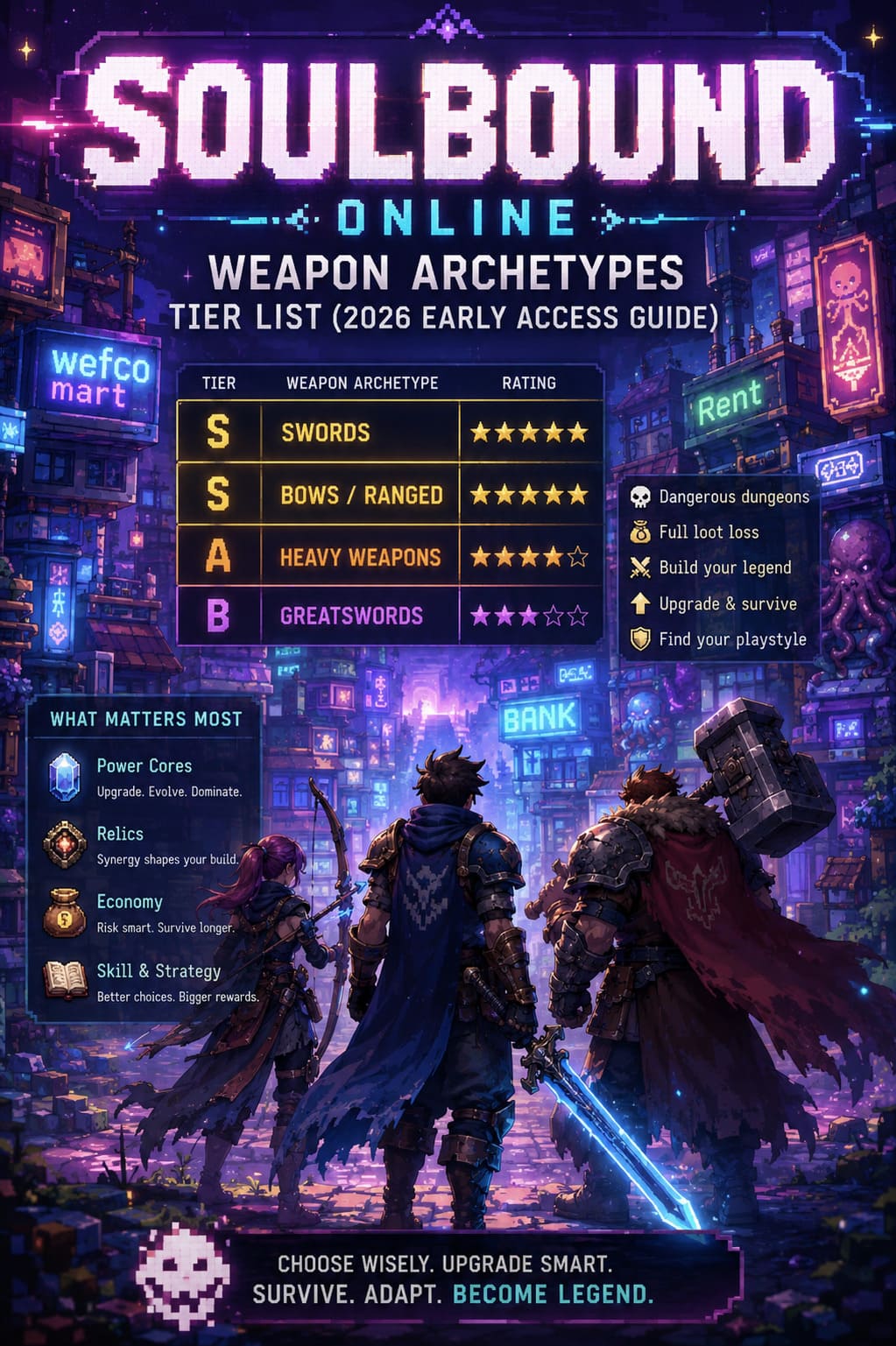
My 2026 Weapon Tier List
| Tier | Weapon Archetype | Overall Rating |
|---|---|---|
| S | Swords | ★★★★★ |
| S | Bows / Ranged | ★★★★★ |
| A | Heavy Weapons | ★★★★☆ |
| B | Greatswords | ★★★☆☆ |
Of course, future balance patches could completely change the rankings, but right now this is where I think every major weapon stands. The Early Access meta is still evolving, yet after plenty of dungeon runs and more deaths than I’d like to admit, these rankings have remained surprisingly consistent.
S Tier – The Weapons That Simply Make Life Easier
Swords Are Still King
If someone asked me what weapon to recommend without knowing anything about their playstyle, I’d say Swords every single time. They are fast, forgiving, and surprisingly flexible. You never feel locked into long attack animations, which is incredibly important once bullet patterns start covering half the screen. A quick slash, a short dodge, another slash—it all feels smooth and natural.
What impressed me the most wasn’t the raw damage but how consistent swords feel. Whether you’re clearing trash mobs, farming resources, or fighting elite enemies, they always perform well. They don’t really have obvious weaknesses, and that reliability is exactly what makes them so strong.
Fast attacks also mean relics that trigger on every hit become absurdly powerful. Lifesteal, elemental explosions, poison stacks, and other status effects constantly activate because you’re swinging almost nonstop. Even after experimenting with other weapons, I always end up returning to swords whenever I simply want to relax and enjoy a productive farming session.
Why Swords Dominate
- Excellent crowd control
- Very high attack speed
- Reliable damage throughout the game
- Fantastic synergy with on-hit effects
- Easy for beginners while rewarding experienced players
Bows Reward Smart Players
Normally I don’t enjoy ranged weapons in action RPGs because they often feel underpowered during the early hours. Surprisingly, Soulbound handles bows much better than I expected. A properly built ranged character feels incredibly safe compared to melee builds, and that alone changes the rhythm of almost every encounter.
Boss fights become much less intimidating because positioning mistakes aren’t punished as harshly. You have more time to react, keep moving, and continue dealing damage while dangerous mechanics fill the arena. The ability to attack from a distance is a massive advantage once dungeon difficulty begins to spike.
The only real downside is that bows demand more precision. Missing several shots during difficult encounters noticeably lowers your damage output. Still, once projectile-enhancing skills and relics start working together, ranged builds become absolute monsters capable of deleting enemies before they even reach you.
Why Bows Earn Their Place
- Outstanding boss damage
- Safe and comfortable gameplay
- Excellent late-game scaling
- Powerful projectile upgrades
- Fantastic solo progression
A Tier – Massive Damage With Noticeable Trade-Offs
Heavy Weapons Feel Amazing… Until They Don’t
Few things in Soulbound are as satisfying as smashing an elite enemy with an enormous hammer and watching an entire group collapse from the resulting shockwave. Heavy Weapons deliver some of the highest burst damage in the game, making every successful hit feel incredibly rewarding.
Axes and hammers excel against armored enemies, bosses with shield phases, and situations where raw impact matters more than constant attacks. Unfortunately, their slow animations become a real liability during hectic bullet-hell encounters. There were countless moments where I knew exactly why I died—it wasn’t bad gear or poor relic choices. I simply committed to one swing too many and couldn’t dodge in time.
That doesn’t make Heavy Weapons weak. Tank-focused builds can offset their biggest weakness by investing into survivability and defensive bonuses. Once you become comfortable reading enemy attacks, the enormous damage output feels more than worth the slower pacing.
Heavy Weapons Work Best For
- High burst damage
- Stunning enemies
- Defensive builds
- Team-based gameplay
- Destroying elite monsters
B Tier – Better Than People Give Them Credit For
Greatswords Require Patience
Greatswords are probably the most misunderstood weapon archetype in the current meta. Many players dismiss them because they immediately compare them to regular swords, but that comparison doesn’t really tell the full story. Greatswords are designed around a completely different approach to combat.
Instead of sweeping across large areas, they specialize in piercing straight through enemy lines. Inside narrow dungeon corridors or tight choke points, they perform surprisingly well and can eliminate entire groups with a single attack. However, open-world encounters and circular boss arenas expose their biggest weakness, since enemies frequently surround you from every direction.
The narrow attack pattern forces you to think more carefully about positioning than almost any other weapon archetype. Players who enjoy controlling enemy movement can absolutely make Greatswords work, but they demand patience and experience before they truly shine.
Your Weapon Isn’t Everything
One mistake I constantly see newer players making is assuming their weapon alone determines success. In reality, Soulbound’s progression systems are just as important. Some of my strongest dungeon clears happened with supposedly weaker weapons simply because I had excellent relic combinations supporting them.
A B-Tier weapon with incredible upgrades will often outperform an S-Tier weapon that hasn’t received proper investment. Learning how different systems interact is far more valuable than blindly copying someone else’s tier list.
Power Cores Can Completely Change Your Build
Power Cores are one of the biggest reasons two players using the exact same weapon can have completely different experiences. Every upgrade dramatically increases your overall effectiveness, making previously average weapons suddenly feel incredibly strong.
Rather than constantly chasing new equipment, I eventually realized it was smarter to invest resources into improving weapons I already enjoyed using. An upgraded weapon you’re comfortable with will usually outperform a theoretically stronger option that you’re still learning.

Relics Matter More Than I Expected
The Relic system quietly becomes one of the deepest mechanics in Soulbound. Instead of simply increasing damage numbers, relics let you reshape your entire build. After experimenting with dozens of combinations, I found that covering your weaknesses usually produces better results than simply stacking more damage.
| Weapon | Recommended Relic Focus |
|---|---|
| Swords | On-hit effects, Lifesteal, Elemental Procs |
| Bows | Projectile Count, Critical Chance, Range |
| Heavy Weapons | Attack Speed, Mobility, Defense |
| Greatswords | Piercing Damage, Cooldown Reduction |
This simple philosophy consistently produced stronger characters than focusing entirely on offensive bonuses. Every archetype has obvious weaknesses, and relics offer the perfect opportunity to smooth them out.
Don’t Ignore the Economy
One feature that completely changes the current meta is Soulbound’s full bag-loss system. Losing expensive equipment after a single mistake hurts far more than losing a dungeon run. Because of that, many experienced players don’t actually farm with their absolute best gear.
Instead, they rely on reliable mid-tier equipment that’s affordable enough to replace if disaster strikes. Ironically, this has made swords and bows even more popular because they’re efficient, dependable, and don’t require risking your entire in-game economy every time you enter dangerous regions. Sometimes surviving another farming run is far more valuable than squeezing out an extra five percent damage.
Final Thoughts
After spending well over one hundred hours exploring everything Early Access currently offers, I keep coming back to the same conclusion: Swords remain the safest and most consistent weapon archetype in Soulbound: Online. They’re flexible enough for almost every activity and forgiving enough that mistakes rarely become catastrophic.
That said, don’t let tier lists stop you from experimenting. Some of my favorite moments happened while testing builds that supposedly weren’t meta. Heavy Weapons can produce hilarious burst damage, Greatswords reward careful positioning, and Bows become devastating once their projectile upgrades come online. The game is still changing with every update, so today’s strongest build could easily become tomorrow’s average option.
If your goal is smooth progression with minimal frustration, it’s difficult to argue against the reliability of swords or the safety of ranged builds. Pick the weapon that feels natural to you, learn its strengths, invest wisely into upgrades and relics, and you’ll enjoy Soulbound far more than someone who simply copies the latest popular build without understanding why it works.