EA Sports College Football 27 Player XP Guide: How to Level Up Fast in Ultimate Team, Road to Glory, and Dynasty
There is one thing that becomes obvious after only a few hours in EA Sports College Football 27: playing more games does not automatically mean leveling faster.
That may sound strange, especially if you came from older football games where simply finishing match after match eventually rewarded you with plenty of experience. College Football 27 approaches progression differently. Every mode has its own rhythm, and the biggest XP gains come from understanding how the game rewards smart play instead of endless grinding.
After spending plenty of time experimenting with different modes and comparing strategies shared by experienced players across the community, one pattern became impossible to ignore. The people reaching elite overall ratings first were not necessarily playing more—they were simply playing more efficiently.
If your goal is to create a superstar in Road to Glory, develop a dynasty capable of winning championships every season, or climb through Ultimate Team rewards as quickly as possible, these are the methods that consistently provide the best results.
Stop Treating XP Like a Passive Reward
One mistake almost every new player makes is assuming XP happens automatically.
It doesn’t.

The game constantly evaluates your performance, difficulty settings, weekly activities, coaching choices, and progression options before deciding how much experience you actually earn.
Think of XP as something you actively optimize instead of something you simply collect.
Making a few changes before your first season can dramatically improve long-term progression.
Increase XP Multipliers Immediately
If you’re playing offline modes, there is very little reason to ignore the built-in XP settings.
Higher XP sliders simply mean every positive football action becomes more valuable.
That includes:
- Successful drives
- Touchdown passes
- Defensive stops
- Big rushing plays
- Position-specific accomplishments
Those small gains add up surprisingly fast over an entire season.
Unless you’re intentionally looking for a slower simulation experience, increasing XP modifiers early saves dozens of hours later.
Dynasty Players Should Remove Unnecessary Restrictions
This is one setting that many players overlook.
If you prefer manually managing player progression inside Dynasty Mode, the game applies a built-in penalty designed to slow attribute growth.
For competitive realism that makes sense.
For players trying to build programs efficiently, it mostly becomes an unnecessary obstacle.
Reducing that manual progression penalty lets every earned XP point work at full value, making roster development noticeably smoother throughout multiple seasons.
Road to Glory Is Won During the Week—Not on Saturday
The actual games matter.
But surprisingly, the biggest difference between average players and elite players often happens before kickoff.
Weekly preparation has a massive influence on how quickly your athlete develops.
Instead of randomly selecting weekly activities, build a routine and stick with it.
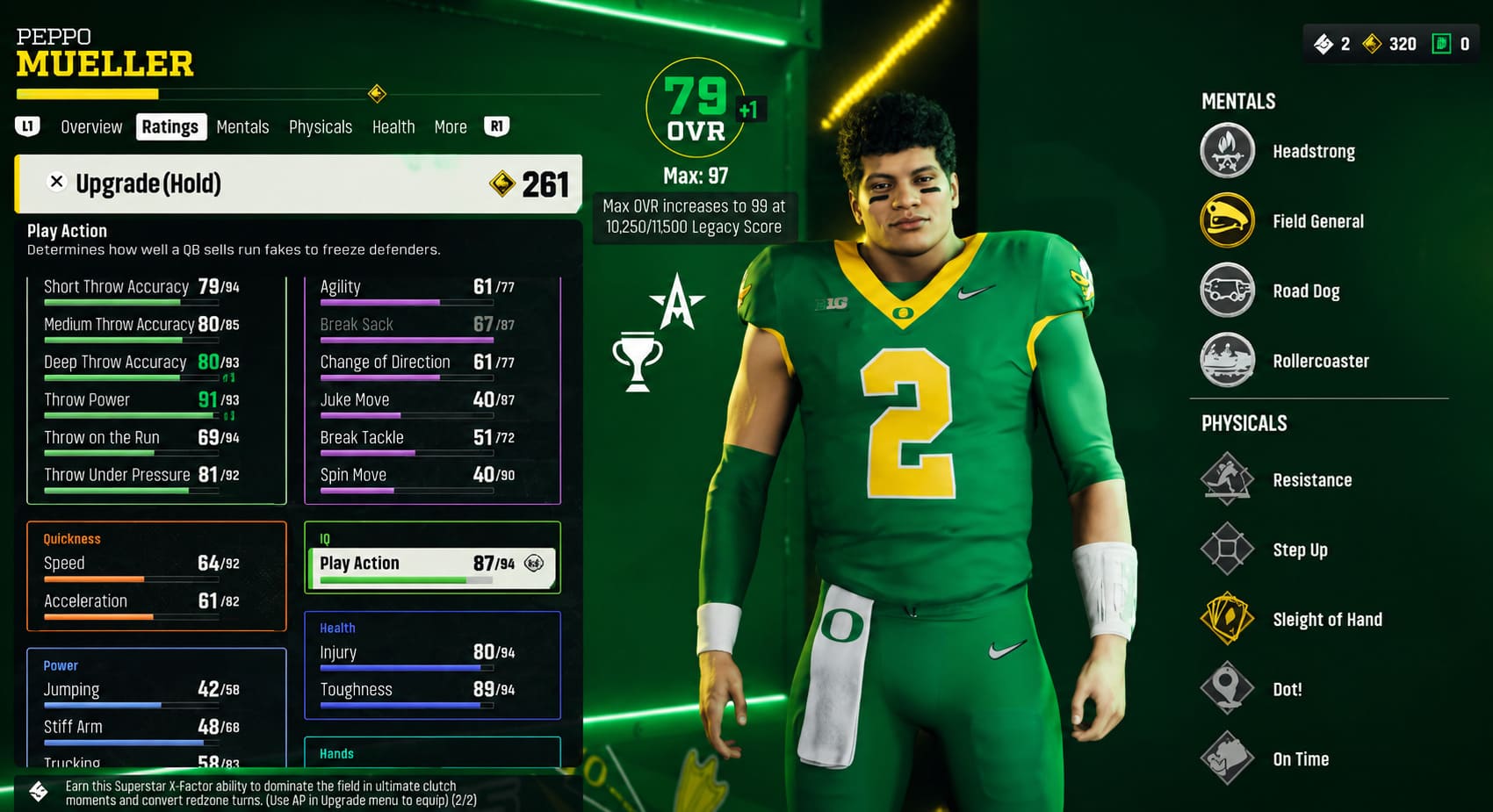
A simple order works extremely well:
- Prioritize fitness.
- Complete every available practice drill manually.
- Play your scheduled game.
Skipping practice may save a few minutes today, but it usually costs valuable progression opportunities later in the season.
Practice drills remain one of the easiest sources of consistent Skill Point growth.
Forget Highlight Plays—Earn an A+ Performance Instead
One habit carried over from older football games is chasing unrealistic stat lines.
Throwing six deep touchdowns might look impressive.
It isn’t always the fastest way to level.
College Football 27 rewards efficient football far more consistently than reckless hero-ball.
Quarterbacks benefit from:
- High completion percentage
- Smart RPO decisions
- Avoiding interceptions
- Sustaining long drives
Wide receivers level efficiently by combining reliable catches with quality blocking and limiting dropped passes.
Defensive players gain excellent progression through disciplined assignments, solid tackling, and limiting blown coverage.
The common factor is simple:
A clean A+ teammate grade usually produces better long-term XP than chasing flashy highlight moments.
Don’t Ignore Academics
This surprised me more than almost anything else.
Academics can quietly become one of the biggest progression bottlenecks in Road to Glory.
Players who ignore studying eventually lose valuable weekly activity time because they have to recover academically.
That means fewer training opportunities.
The better strategy is surprisingly simple.
Invest enough academic hours early in each semester to comfortably stay ahead.
Once you’re safely above the required threshold, shift nearly all remaining weekly time into training and player development.
That balance keeps progression flowing without unexpected interruptions.
Save Cap Breakers Until They Truly Matter
Cap Breakers are tempting.
The moment you unlock one, it’s easy to spend it immediately.
I’d recommend resisting that temptation.
These upgrades are limited, making every decision important.
Rather than spreading them across average attributes, focus on characteristics that define your position.
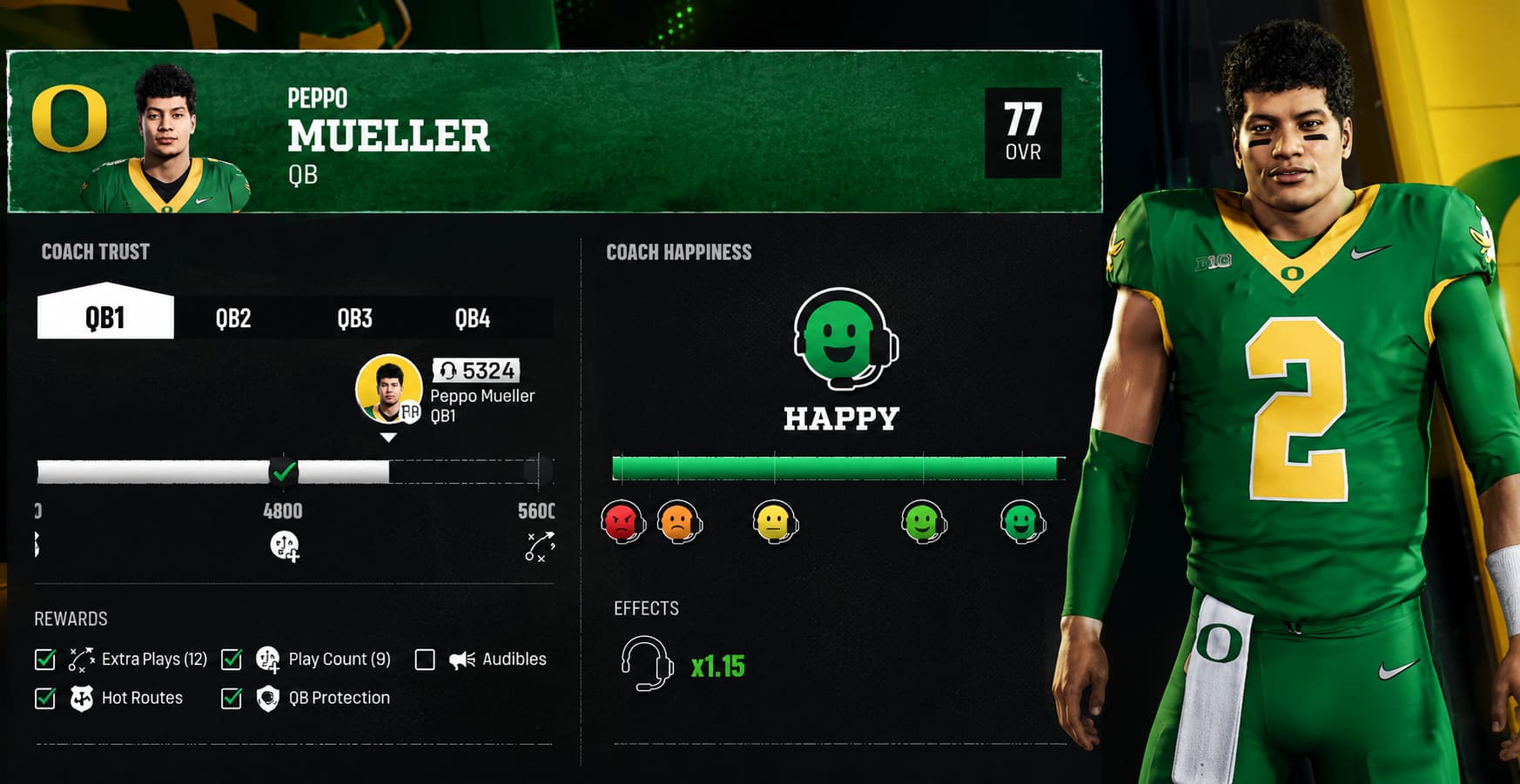
Examples include:
- Speed
- Acceleration
- Throw Power
- Agility
Elite physical traits remain valuable throughout an entire career, while smaller attribute increases often become less noticeable as overall ratings climb.
Dynasty Mode Rewards Long-Term Planning
Dynasty is probably the deepest mode in College Football 27.
Building a championship program isn’t only about recruiting five-star prospects.
Coach progression matters just as much.
One approach many experienced Dynasty players have adopted is rotating coaching archetypes throughout the season instead of staying committed to only one specialization.
It takes a little planning, but the payoff is significant.
| Season Phase | Recommended Focus | Primary Goal |
|---|---|---|
| Regular Season | Tactician | Maximize coach XP through victories |
| Recruiting Window | Recruiter | Improve recruiting efficiency and signing rewards |
| Offseason Training | Motivator | Accelerate player development |
| New Season | Return to Tactician | Restart the XP cycle |
The beauty of this rotation is that every archetype shines exactly when its strengths matter most.
Instead of trying to make one coaching tree solve every problem, you let each one do its job during the optimal point in the calendar.
Over multiple seasons, the difference becomes very noticeable.
Spend Coaching Points Carefully
Another trap I fell into early was purchasing every available perk simply because I had points available.
That feels rewarding initially.
Later, it becomes frustrating.
Holding points until you know exactly which archetype you’ll need next usually creates a much stronger coach build than buying random upgrades immediately.
Patience wins here.
Ultimate Team XP Is About Efficiency
Ultimate Team introduces an entirely different progression philosophy.
Winning games is great.
Winning games while completing multiple objectives simultaneously is even better.
Players who simply queue into random online matches often progress slower than those who organize every session around active objectives.
A productive daily routine looks something like this:
- Finish Daily Objectives first.
- Complete Weekly Objectives before anything else.
- Track current Program challenges.
- Use remaining time farming fast game modes.
It sounds simple, but consistency matters far more than marathon sessions.
Logging in every day for twenty minutes often produces better seasonal progress than playing six hours only on weekends.
House Rules Is Still One of the Best Time Investments
If your primary goal is maximizing XP per hour, House Rules deserves serious attention.
Shorter matches create more opportunities to:
- Earn victories
- Complete objectives
- Finish seasonal challenges
- Collect Field Pass XP
- Unlock additional rewards
Traditional online seasons remain enjoyable, but from a pure efficiency standpoint, House Rules usually offers much better value for your time.
Solo Challenges Still Have Their Place
Not everyone enjoys online competition.
Fortunately, Solo Challenges continue to provide reliable progression.
The key is choosing short objectives instead of lengthy scenarios.
Challenges requiring quick passing yards, a single touchdown drive, or one defensive stop can often be completed much faster than full-length games.
Repeating efficient challenges may sound repetitive, but they’re excellent for completing milestone objectives without unnecessary stress.
The Biggest XP Mistakes I See Players Make
After watching plenty of gameplay and experimenting myself, several mistakes appear again and again.
| Mistake | Better Approach |
|---|---|
| Simulating practice | Complete drills manually |
| Ignoring teammate grade | Focus on consistent execution |
| Spending upgrades instantly | Save resources for important attributes |
| Playing random Ultimate Team games | Prioritize active objectives |
| Neglecting academics | Secure study requirements early |
| Buying every coaching perk | Plan long-term archetype progression |
Avoiding these mistakes alone can noticeably improve your progression speed.
EA Sports College Football 27 Dynasty Mode Guide: Blueprint to Build a Powerhouse
Final Thoughts
One thing I genuinely appreciate about EA Sports College Football 27 is that progression finally feels connected to football decisions rather than endless repetition.
You don’t need to exploit broken mechanics or spend hundreds of hours grinding meaningless games.
Instead, the game rewards preparation, efficient play, and smart planning.
If I had to recommend only a handful of priorities for new players, they would be these:
- Optimize your XP settings before starting a serious save.
- Never skip Road to Glory practice sessions.
- Play for efficient teammate grades instead of unrealistic statistics.
- Rotate coaching archetypes throughout Dynasty seasons.
- Complete Daily and Weekly Ultimate Team objectives before anything else.
- Save premium progression resources until you’re certain they’re worth using.
None of these strategies are particularly complicated on their own.
Together, however, they create a progression path that feels dramatically faster than simply playing game after game and hoping the XP eventually catches up.
Whether you’re chasing a Heisman Trophy, building the next college football powerhouse, or assembling an Ultimate Team packed with elite talent, smart progression will always outperform endless grinding—and in College Football 27, that’s one lesson worth learning early.