Mastering the Skies and Minds: A Complete Guide to Glider Controls and Mind Control in Styx: Blades of Greed
Mind Control Changes Everything in Styx: Blades of Greed – A Stealth Fan’s Take
When I first booted up Styx: Blades of Greed, the third chapter in the goblin stealth saga from Cyanide Studio, I expected tighter level design, smarter AI, maybe a few new tricks. What I didn’t expect was a mechanic that would completely flip the stealth formula on its head.

Mind Control isn’t just another gadget in Styx’s dirty toolbox—it’s a power move that transforms every guard from a walking obstacle into a potential asset.
In previous entries, stealth was about distraction, shadows, and careful positioning. In Blades of Greed, you still need those fundamentals—but now you can literally hijack the battlefield. The introduction of Mind Control changes how you read patrol routes, approach vertical spaces, and even plan Ghost or No Kill runs.
Unlocking Mind Control Through Quartz Progression
Unlike the old XP and Amber-focused progression, Blades of Greed leans heavily into its Quartz-based skill system. It feels more deliberate and exploration-driven, rewarding players who comb through the massive sandbox-style maps of the Iserian Continent.
- Collect Pure Quartz – Scattered across huge, vertically layered playgrounds, these shards are the backbone of your progression.
- Invest in the Right Branch – Mind Control sits in the manipulation-focused path of the skill tree, not the invisibility or alchemy branches.
- Enhance with Runes – Upgrades refine the power into something truly game-breaking.
What I love most is how the upgrades don’t just buff numbers—they expand possibilities.
| Upgrade Type | Gameplay Impact |
|---|---|
| Duration Extension | Maintain control longer for deeper infiltration setups. |
| Action Expansion | Command guards to attack, interact with levers, or sabotage allies. |
| Range Increase | Infect targets safely from shadows without exposing Styx. |
How Mind Control Works in Practice
Mechanically, it’s elegant. Activate Amber Vision to track targets through walls, line up your opportunity, and then trigger the infection. It costs a hefty chunk of energy, so you can’t spam it—but that limitation makes each use feel tactical rather than cheap.
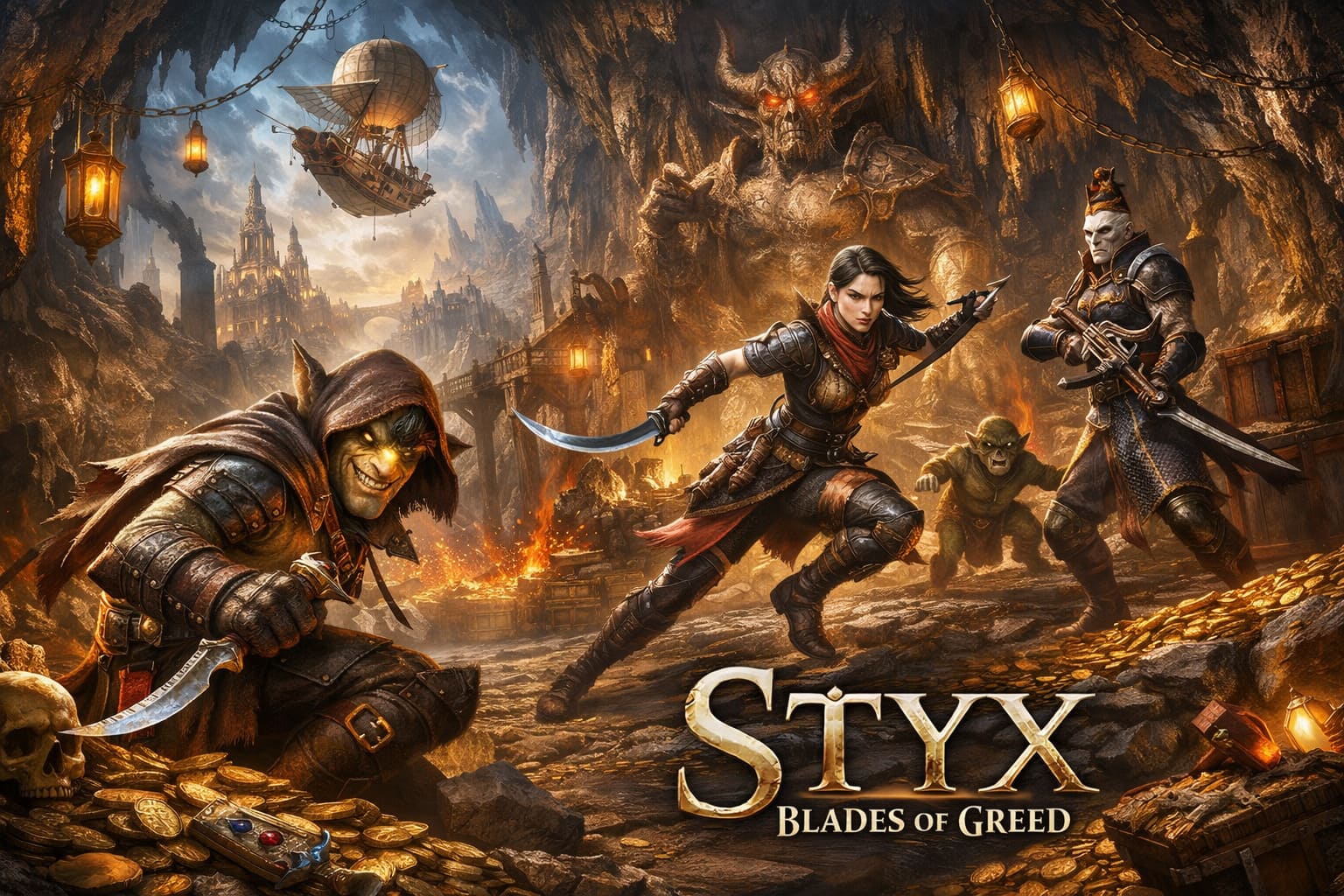
The moment your camera shifts into the guard’s perspective is pure stealth-game bliss. You walk freely among patrol routes that would normally mean instant detection. You can casually stroll a soldier away from a chokepoint or guide them toward an unfortunate “accident.” And the best part? Styx never even gets his hands dirty.
This is where Blades of Greed really shines. In traditional stealth games, elimination often equals risk. Here, a controlled guard can quietly remove himself from existence, keeping alert levels untouched. For Ghost runs, that’s gold.
Advanced Tactics That Make You Feel Like a Genius
The real magic happens when you combine Mind Control with Styx’s other tools.
- Clone Synergy – Send a clone into risky territory, get close enough, and infect from unexpected angles.
- Checkpoint Clearing – Control one guard to create space at tight doorways or vertical ladders.
- Silent Eliminations – Orchestrate “accidents” that look natural to nearby AI.
In the massive, vertically oriented maps, this power feels tailor-made. Instead of avoiding enemies, you begin to think in terms of repositioning them. It’s less about sneaking past danger and more about reshaping it.
Discover more: REANIMAL: Edition Comparison (Deluxe vs. Standard) and Switch 2 Status Explained
Why This Mechanic Redefines Stealth
From a long-time stealth fan perspective, Mind Control is one of the boldest mechanics the series has introduced. It doesn’t replace traditional stealth—it amplifies it. You still need patience, map awareness, and timing. But now, every patrol pattern is a puzzle piece you can rearrange.
Blades of Greed feels less like a corridor stealth experience and more like a manipulation sandbox. And honestly? That’s exactly what the series needed. If Cyanide Studio continues evolving mechanics this way, Styx won’t just be a cult stealth favorite—it’ll stand alongside the genre’s biggest names.
Sky Is the New Shadow: Why the Glider Reinvents Stealth in Styx: Blades of Greed
When I first unlocked the Glider in Styx: Blades of Greed, it didn’t just feel like a new gadget—it felt like the moment the game truly opened up. What started as a traditionally horizontal and vertical stealth experience suddenly became fully three-dimensional.
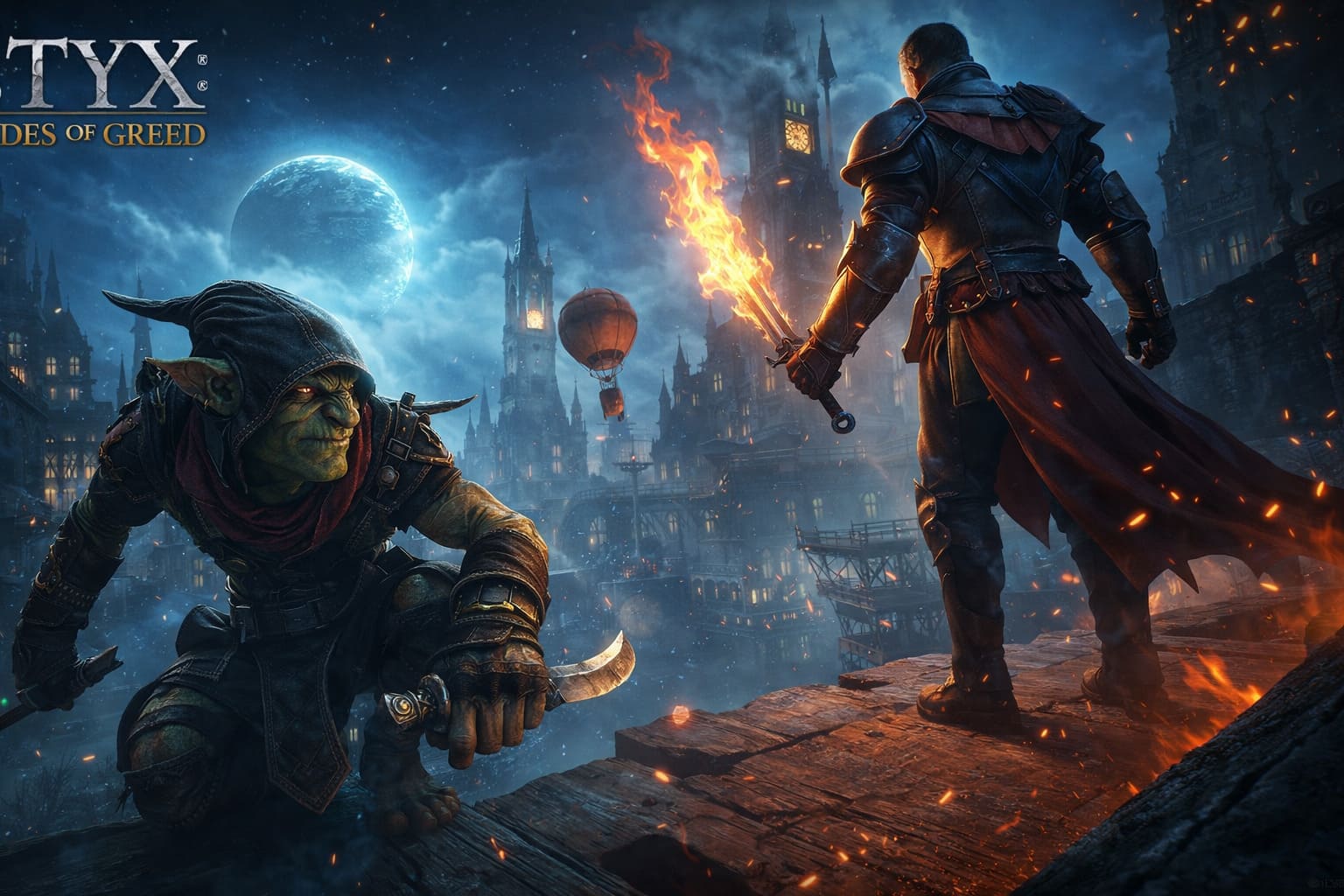
The rooftops stopped being set dressing. The skyline stopped being background art. The air itself became a stealth route.
Unlocked toward the end of Act II, the Glider completely transforms how you read a level. Patrol routes that once forced slow, patient ground movement can now be bypassed entirely. Hidden ledges, secret Quartz shards, and those classic “that’s probably just skybox” areas suddenly reveal themselves as deliberate, Metroidvania-style rewards waiting for players willing to think vertically.
Understanding the Feel: It’s Physics, Not a Double Jump
The biggest mistake new players make is treating the Glider like a glorified double jump. It’s not. It’s a momentum-based traversal tool that rewards awareness and punishes panic inputs. Once you internalize that, it becomes one of the most satisfying movement systems in modern stealth games.
- Deployment: You must already be airborne. Hold the Jump button (Space on PC / A or Cross on consoles) to spread the wings and begin gliding.
- Pitch Control: Pull back to gain slight lift at the cost of speed; push forward to dive and build serious momentum.
- Banking: Gentle turns preserve speed; sharp cuts bleed momentum and drop you faster than you expect.
- Manual Cancel: Release glide or hit Crouch to drop instantly—perfect for quick rolls or surprise kills.
The real magic happens when you start converting dive speed into lift. Dive aggressively, then pull up at the last second and you’ll squeeze out just enough altitude to clear obstacles or reach ledges that initially looked impossible. It feels earned every time.
Advanced Movement: Playing the Sky Like a Playground
Once you’re comfortable, the Glider stops being transport and starts becoming a tactical weapon. Massive zones like The Wall or Turquoise Dawn are clearly built with aerial routes in mind, and exploiting them feels borderline unfair—in the best way.
The Glider-to-Grapple Chain is where things get ridiculous. Glide low, spot a grapple point, hook upward for instant vertical recovery, then redeploy the Glider and continue flying. Done correctly, you can cross entire sections without touching the ground. It’s fast, fluid, and makes you feel like you’re breaking the intended path—even when you’re not.

Silent Descent is critical for Ghost runs. The glide itself is whisper-quiet, but the landing isn’t. Aim for haystacks, rugs, or carts to soften impact noise. Alternatively, land directly into a crouch to shrink the sound radius. Clean landings separate good players from obsessive perfectionists.
Aerial Assassinations might be my favorite addition. If you’re at least three meters above a target, you’ll get the prompt. Trigger it and Styx folds his wings, dropping like a dagger from the sky. It’s quick, lethal, and incredibly stylish.
Discover more: Styx: Blades of Greed Quartz abilities guide: How to unlock and use Mind Control
Momentum Management at a Glance
| Action | Effect | Best Use Case |
|---|---|---|
| Dive (Push Forward) | Lose altitude, gain speed | Crossing wide gaps, building lift for a final pull-up |
| Pull Back | Gain slight lift, reduce speed | Clearing ledges, softening approach angles |
| Sharp Turn | Bleeds speed quickly | Emergency repositioning only |
| Ledge Grab Transition | Maintain stealth and vertical safety | Avoiding rooftop patrol sightlines |
Height Is Power: Strategic Backtracking
What truly elevates the Glider beyond a cool mechanic is how it reinforces the game’s Metroidvania DNA. Once unlocked, earlier missions beg to be revisited. Locations that once seemed unreachable suddenly become accessible from a high-altitude launch point. That “decorative” tower in the Prologue? Probably hiding a Blueprint. That awkward cliff edge? Almost certainly concealing Quartz.
Even better, you can activate Amber Vision mid-glide to scout enemies and traps below. In high-security zones like Akenash, that real-time reconnaissance is invaluable. You’re not just traveling—you’re planning your descent like a predator circling above prey.
Final Thoughts: A New Dimension of Stealth
The Glider doesn’t just expand movement—it redefines level design. It turns ceilings into highways and rooftops into safe lanes. It rewards players who think spatially and experiment with flow. Most importantly, it makes stealth feel dynamic instead of methodical without sacrificing tension.
For me, this is the feature that pushes Styx: Blades of Greed from “solid stealth title” to something far more memorable. Once you taste true aerial freedom, it’s hard to go back to hugging walls all the time. Sometimes the best place to hide… is above everyone.